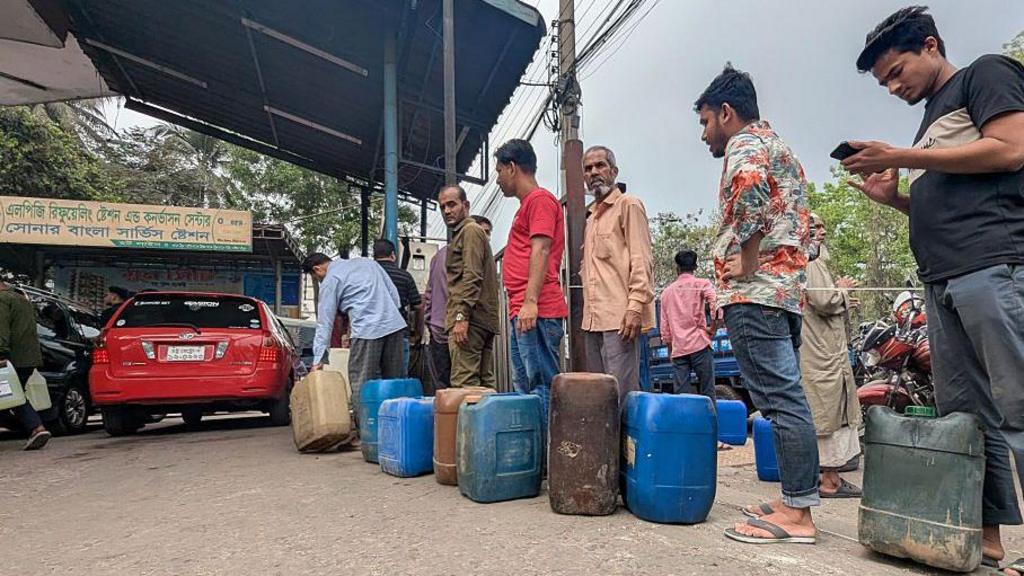
The recent conflict in Iran has served as a brutal mirror, reflecting the global economy's fragile energy dependence. As tensions escalated in the Strait of Hormuz—a critical chokepoint for roughly 20% of the world's oil—international markets experienced extreme volatility, with the price of Brent crude surpassing $95 per barrel and threatening to break the psychological $100 barrier. This episode is not an isolated event but a symptom of a structural vulnerability that has defined geopolitics for decades: the concentration of hydrocarbon reserves in an unstable region.
The historical context is clear. Since the oil shocks of the 1970s, the global economy has danced to the tune of Persian Gulf producers. The Organization of the Petroleum Exporting Countries (OPEC), led by Saudi Arabia, maintains decisive influence over global supply. Iran, for its part, holds the world's second-largest natural gas reserves and is among the top five holders of crude oil. Any disruption to its production or nearby maritime shipping routes sends immediate shockwaves through global supply chains, affecting everything from gasoline prices in the United States to manufacturing costs in Asia.
The data is eloquent. According to the International Energy Agency (IEA), Gulf region countries (Saudi Arabia, Iraq, the United Arab Emirates, Kuwait, Iran, and Qatar) collectively account for nearly 30% of global oil production and hold about 48% of proven reserves. More critically, the Strait of Hormuz is the transit route for almost all crude exported by Saudi Arabia, Iran, the UAE, Kuwait, and Iraq. A blockade or severe conflict in this zone, just 21 miles wide at its narrowest point, would paralyze a massive portion of global energy trade within days.
"The dependence is not just about volumes, it's about infrastructure and routes," stated energy analyst Fatih Birol, Executive Director of the IEA, in a recent communication. "The lesson from this crisis is that diversification, both geographical and in terms of sources, is not a green policy option; it is a national and economic security necessity for importing countries." For his part, OPEC Secretary General Haitham Al Ghais warned of the risks of volatility: "Markets need predictability. Continued investment in production capacity is vital for long-term stability, but this investment is deterred by geopolitics and poorly designed energy transition policies that demonize hydrocarbons."
The impact of this exposed dependence is multifaceted and profound. In the short term, it translates into imported inflation for consumer economies, putting pressure on central banks at an already delicate time due to the aftermath of the pandemic and previous conflicts. Energy-intensive industries, such as chemicals, aviation, and shipping, see their margins drastically compressed. Geopolitically, it reinforces the influence of Gulf states, giving them considerable bargaining power in international forums, while forcing powers like the United States, China, and the European Union to maintain complex and often contradictory relationships with the region, balancing human rights, strategic rivalries, and the imperative need for energy.
In the longer term, the conflict acts as a powerful accelerator for energy security and transition agendas. Countries in Europe and Asia are urgently reevaluating their energy mixes, driving investments in renewables, nuclear power, and infrastructure to import Liquefied Natural Gas (LNG) from other regions such as the United States, Africa, and Australia. However, the transition is slow and costly. The reality is that, despite the growth of renewables, the world will continue to depend on Gulf hydrocarbons for at least the next two to three decades. The conclusion is inescapable: the Iran war did not create this dependence; it simply laid it bare for a world that had preferred to look the other way. Stability in the Persian Gulf, therefore, is not a regional problem but a global public good. The international community must find more robust mechanisms to ensure the security of energy flows while advancing, with realism and determination, towards a more diversified and less vulnerable energy future.