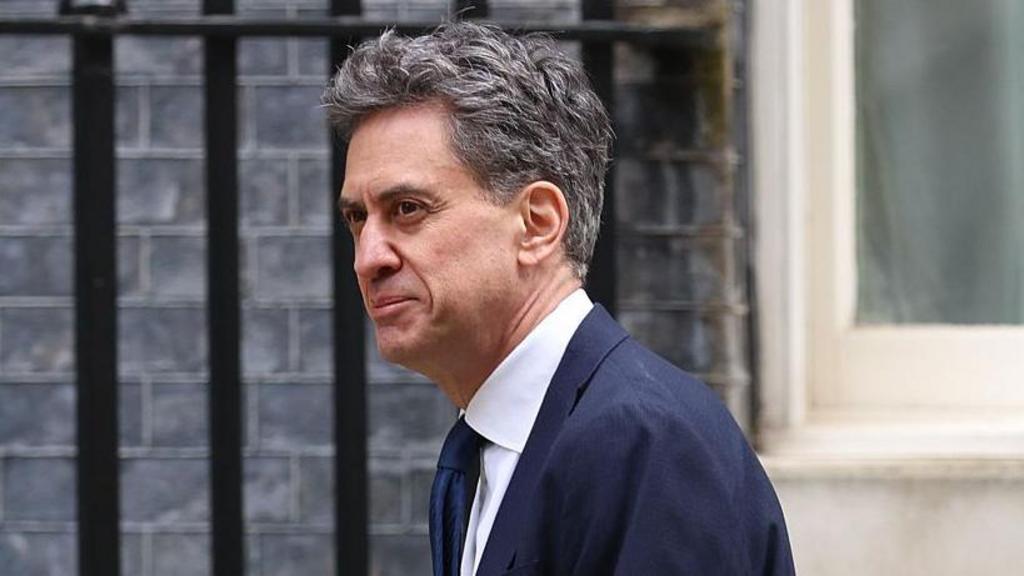
The UK's Secretary of State for Energy Security and Net Zero, Ed Miliband, has issued a stern warning to energy companies, stating that the government "will not tolerate" profiteering from oil prices at the expense of consumers and the economy. The statement comes at a time of volatility in global energy markets, with prices fluctuating due to geopolitical tensions, OPEC+ production adjustments, and an ongoing energy transition. Miliband emphasized that while companies have the right to operate profitably, the government will use all tools at its disposal to prevent abusive practices that artificially inflate the cost of energy for households and businesses.
The context for this warning is complex. Brent crude prices have experienced significant swings in recent months, influenced by factors such as production cuts from Saudi Arabia and other OPEC+ members, uncertainty about global demand amid uneven economic growth, and the lingering effects of the war in Ukraine on energy flows. In the UK, while wholesale prices have receded from the 2022 peaks, the translation of these drops to consumer bills has been slow, generating criticism about the asymmetry in price transmission. Miliband noted that his department is closely monitoring company margins across the supply chain, from extraction to retail.
"The British public has borne a huge burden during the cost-of-living crisis, driven largely by energy prices," Miliband stated in an official release. "While we recognize the challenges of the global market, there is no justification for companies exploiting this situation to make excessive profits at the expense of people struggling to heat their homes or keep their businesses afloat. Oil price profiteering will not be tolerated." The government has reiterated its commitment to the Energy Price Guarantee and other support mechanisms, but Miliband hinted that stricter regulatory measures could be considered if anti-competitive behavior is detected.
The impact of this governmental stance is multifaceted. For major oil and gas companies, it signals a period of heightened political and regulatory scrutiny, similar to the Energy Profits Levy (windfall tax) implemented previously. For consumers and small businesses, it is a message that the government intends to act as a counterweight to the market power of big energy firms. However, some sector analysts warn that an overly interventionist approach could discourage necessary investments in energy security and transition projects, just as the UK seeks to consolidate its energy independence.
In conclusion, Ed Miliband's firm declaration draws a line in the sand for UK energy policy. It reflects the ongoing political pressure to balance market stability, fairness for consumers, and the imperatives of the green transition. While the words are strong, their effectiveness will depend on the government's ability to translate them into credible regulatory oversight and concrete actions that prevent abuse without undermining investment. The global energy market will remain volatile, but London's message is clear: the pursuit of profit must not come at the expense of the economic well-being of the public. The coming months will be crucial to observe whether this stance holds and how key industry actors respond.