The release of 1348 Ex Voto promised to transport players to one of the darkest periods in European history: the Black Death that ravaged the continent in the 14th century. Developed by an independent studio with considerable narrative ambitions, this adventure-survival title sought to combine elements of exploration, resource management, and moral decision-making in a historically inspired setting. However, following its arrival on PC and next-gen consoles, specialized critics and the gaming community agree that the final experience falls considerably short of its initial aspirations, offering a proposal that, while technically competent, lacks the emotional impact and depth needed to stand out in an increasingly saturated genre.
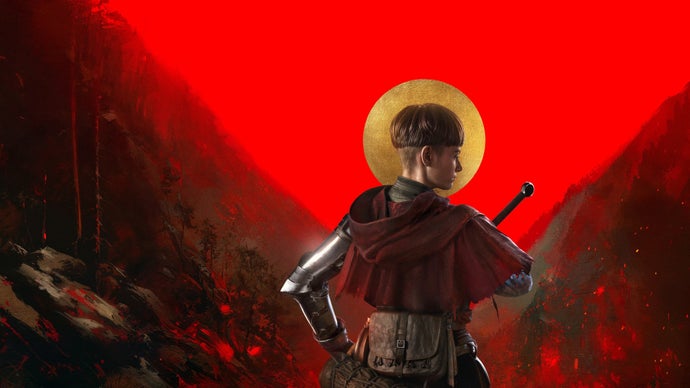
The game places the player in the role of a pilgrim who must traverse regions devastated by the pandemic, making decisions that affect both their immediate survival and the fate of the NPCs encountered along the way. The branched dialogue system and mechanics for managing provisions and health constitute the core of the experience. Technically, 1348 Ex Voto presents artistic direction that ranges from acceptable to irregular, with environments that manage to convey a certain atmosphere of desolation but suffer from a lack of variety and detail in interior and landscape design. The soundtrack, meanwhile, has been highlighted as one of the title's strongest points, with ambient compositions that reinforce the feeling of hopelessness and abandonment.
Where the game stumbles most evidently is in its narrative execution and the depth of its mechanics. Secondary characters rarely transcend basic archetypes, and moral decisions, though presented as complex dilemmas, often boil down to binary choices with predictable consequences. 'We aspired to create an interactive reflection on human resilience in times of crisis,' the project's creative director commented in a recent interview, 'but we acknowledge that the final implementation did not capture all the complexity we had imagined in the design stages.' This disconnect between intention and execution becomes apparent throughout the approximately twelve-hour main campaign, where the repetition of tasks and lack of evolution in gameplay dynamics ultimately dilute the initial interest.
The impact of 1348 Ex Voto on the market has been moderate, with sales figures falling below the studio's initial projections. On digital platforms like Steam, user reception remains in 'mixed' territory, with praise directed at the historical setting and criticism focused on repetitive gameplay and technical bugs that persist after several patches. For the industry, this case serves as a reminder that historical scenarios rich in dramatic potential require not only rigorous research but also an effective translation into interactive systems that engage and surprise the player. In a landscape where titles like 'Kingdom Come: Deliverance' or 'A Plague Tale: Innocence' have raised the bar for period narratives, half-measures are increasingly difficult to justify.
In conclusion, 1348 Ex Voto stands as a laudable project in intention but flawed in execution. It offers isolated moments of tension and reflection, anchored in a fascinating historical context, but fails to weave these elements into a cohesive and memorable experience. For players more interested in the historical period than in gameplay innovation, it might represent a passing curiosity; for others, it will likely go unnoticed among more polished and ambitious offerings. The studio has announced it will continue to support the title with content updates, though it remains to be seen whether these will be enough to remedy the fundamental shortcomings identified by critics.