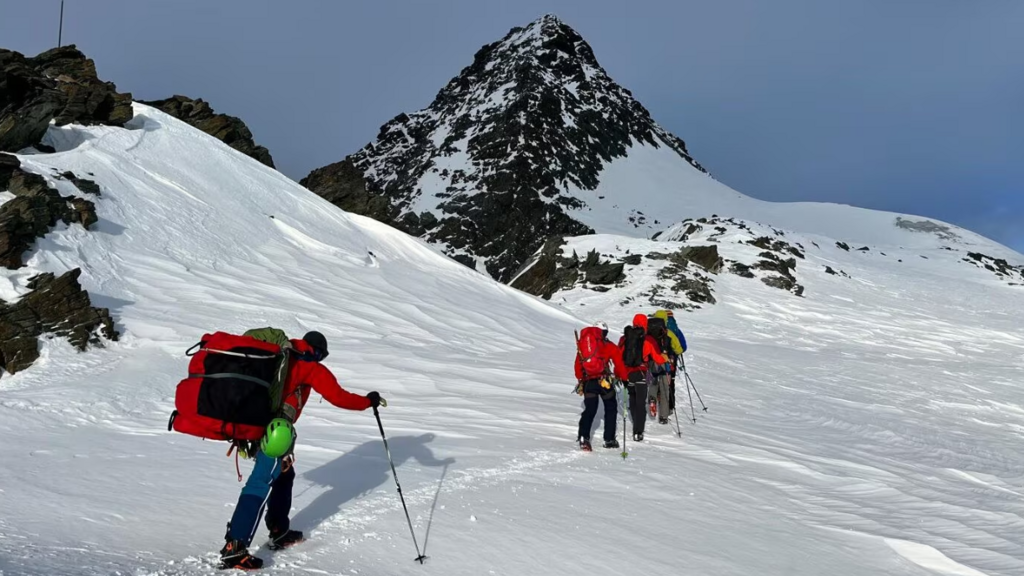
An Austrian court has found a 37-year-old mountaineer guilty of negligent homicide following the tragic death of his girlfriend, who succumbed to hypothermia during an expedition in the Alps. The verdict, delivered this week, sets a significant legal precedent in the realm of responsibility in high-risk sports and has reignited debate over the ethical and legal boundaries in mountain activities. The incident occurred during a winter ascent of the Großvenediger, one of Austria's highest peaks, where temperatures can plummet to extremely dangerous levels.
According to the judicial investigation and evidence presented, the couple, both experienced climbers, were on a multi-day traverse when they were caught by a sudden deterioration in weather conditions. The victim, a 34-year-old woman, began showing signs of severe exhaustion and hypothermia. Instead of seeking immediate shelter or activating an emergency device, the accused, as per the prosecution, decided to continue the ascent, leaving his girlfriend behind in an attempt to reach the summit. Hours later, upon his return, he found her lifeless. Rescue teams, finally alerted by another hiker, confirmed that death was caused by freezing.
The trial focused on the concept of 'duty of care' in shared-risk situations. The prosecutor argued that the accused, as the more experienced member of the climbing party and as her partner, had a legal and moral obligation to prioritize his companion's safety above any sporting objective. 'Abandoning a person in a vulnerable state in a hostile environment constitutes gross negligence,' stated the prosecutor during the trial. The defense, meanwhile, maintained that it was a tragic accident in a sport with inherent risks, and that their client made decisions under extreme pressure and with limited information.
This case has shocked the international alpine community, creating divisions between those who defend individual autonomy and risk assumption in the mountains, and those demanding greater legal responsibilities for guides and climbing partners. Several mountaineering associations have issued statements reiterating basic safety protocols, which include never separating from the group in adverse conditions and giving absolute priority to the well-being of all members over summit success. 'This verdict sends a clear message: in the mountains, you are not alone. Your responsibility extends to those with you,' commented the president of the Austrian Alpine Club.
The impact of the sentence could extend beyond Austrian borders, influencing future legislation and the interpretation of criminal liability in adventure sports accidents in other countries. The convicted man, whose identity has not been fully disclosed due to local privacy laws, faces a penalty that could include a suspended prison sentence and a ban from working as a mountain guide. The victim's family has expressed, through their lawyer, a mix of relief at the verdict and profound grief over a loss they consider avoidable. This tragic event serves as a somber reminder that in the relentless wilderness, human decisions, especially those driven by ambition, can have irrevocable consequences.