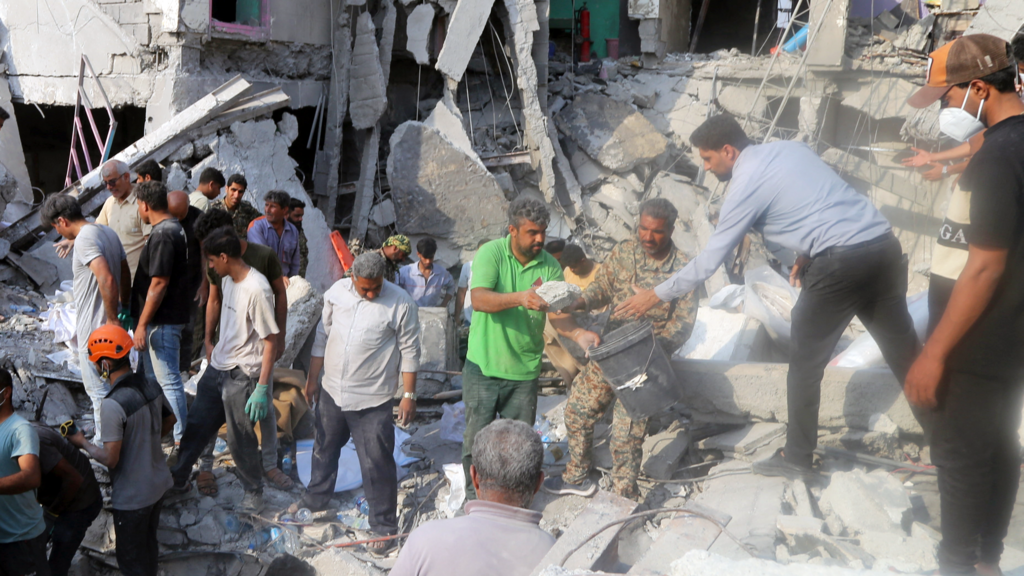
Tension in the Gaza conflict reached a new and tragic peak on Thursday, after Iran's Ministry of Foreign Affairs reported that an Israeli airstrike on a school serving as a shelter in the Nuseirat refugee camp, in central Gaza Strip, had killed at least 153 people. The figure, if confirmed, would represent one of the single deadliest incidents for civilians since the war between Israel and Hamas began on October 7th. Iranian ministry spokesman Nasser Kanaani strongly condemned the action, calling it an "atrocious war crime" and demanding an immediate response from the international community.
The context of this devastating report is framed by the intensification of Israeli military operations in central Gaza, specifically in the Deir al-Balah area and the Nuseirat camp. Israeli forces have stated they are conducting operations against Hamas infrastructure, arguing that the militant group uses civilian facilities, such as hospitals and schools, to hide fighters and store weapons. However, humanitarian organizations and witnesses on the ground have repeatedly denounced the high cost in civilian lives, especially among women and children, who represent the majority of the more than 37,000 Palestinian deaths reported by the Hamas-controlled Gaza Health Ministry.
As of now, the Israel Defense Forces (IDF) have not issued an official comment specifically on the reported incident at the Nuseirat school. In general statements about recent operations, an Israeli military spokesperson reiterated that "the IDF operates in accordance with international law and takes feasible measures to minimize harm to non-combatant civilians." Nevertheless, the scale of the casualties reported by Iran has triggered a wave of global condemnations. The United Nations Relief and Works Agency for Palestine Refugees (UNRWA), which manages numerous school-shelters in Gaza, expressed its "deep dismay" and underscored the inviolability of protected civilian installations under international humanitarian law.
The impact of this news transcends the immediate humanitarian sphere, with profound political and diplomatic repercussions. Iran, the main regional sponsor of Hamas and a staunch enemy of Israel, has used the event to intensify its rhetoric against the Jewish state and its Western allies. Kanaani stated: "This bloodbath is further proof of the US-backed genocide against the Palestinian people. The silence of the self-proclaimed human rights defenders is complicit." This accusation comes at a time of extreme sensitivity in indirect negotiations for a ceasefire and a hostage exchange, which appear more stalled than ever. Furthermore, it increases the risk of regional escalation, putting pressure on other actors like Hezbollah in Lebanon or Iran-backed groups in Iraq and Yemen.
For the civilian population trapped in Gaza, this report exacerbates an already unbearable humanitarian catastrophe. Health systems are collapsed, the shortage of food and potable water is critical, and mass displacements continue. Each new incident of high civilian casualties further erodes the already fragile hope for peace and deepens the collective trauma. The international community once again faces the urgent need to ensure the protection of civilians, facilitate the unobstructed entry of humanitarian aid, and restart a credible political process to end a cycle of violence that seems endless. Independent verification of the facts amid an active conflict remains a monumental challenge, but the scale of the reported tragedy demands transparent investigation and accountability.