The European Union and the United Kingdom have issued a formal and joint demand to the Israeli government to take immediate and decisive action to curb the alarming surge in violence by Israeli settlers against Palestinian communities in the occupied West Bank. This urgent appeal comes amid a regional escalation and following the recent open conflict between Israel and Iran, which, according to international observers and human rights organizations, has created a security vacuum and an atmosphere of impunity that the most radical settlers are exploiting.
Since the onset of hostilities with Iran, organizations such as the UN Office for the Coordination of Humanitarian Affairs (OCHA) have documented an increase of over 40% in violent incidents attributed to settlers, compared to the previous period. These acts include physical assaults, arson attacks on homes and agricultural property, livestock theft, and the systematic intimidation of Palestinian populations, forcing in some cases forced displacements. The violence has been concentrated in areas such as the Jordan Valley and the South Hebron Hills, strategic regions where the settlement movement seeks to consolidate its control.
"The international community cannot remain silent in the face of this wave of violence that is shattering Palestinian lives and undermining any possibility of a peaceful two-state solution," declared the EU's High Representative for Foreign Affairs, Josep Borrell, at a press conference in Brussels. For his part, British Foreign Secretary David Cameron added: "We urge the Israeli government to fulfill its obligation, as the occupying power, to protect all civilians. Impunity for these acts of violence must end. It is essential to disarm extremist groups and bring those responsible to justice."
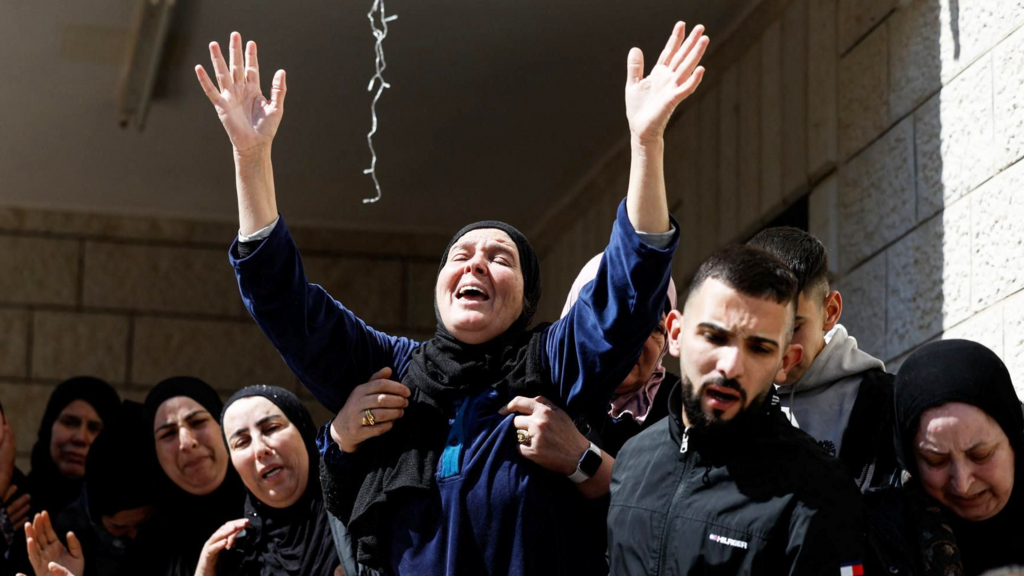
The humanitarian impact is severe. Palestinian families live under constant threat, with their access to land and water restricted by harassment. The agricultural economy, vital for many communities, is being strangled. Furthermore, this violence undermines the already weakened Palestinian Authority and fuels a cycle of retaliation that further ignites tension in an already volatile territory. Analysts warn that this dynamic is not only a humanitarian crisis but a strategic threat to Israel's long-term security, by eroding any basis for coexistence.
The EU and UK demand includes concrete measures: the reinforced deployment of Israeli security forces to prevent attacks, the effective investigation and prosecution of perpetrators, and clear public condemnation by the highest Israeli authorities. The initial response from the Israeli government has been ambivalent, promising to "maintain order" but without announcing a substantial operational change. The situation tests diplomatic relations at a critical time and underscores the profound disconnect between actions on the ground and discourses of stability. The conclusion is clear: without robust and immediate action to stop this violence, the horizon for the West Bank is one of greater fragmentation, suffering, and a prolonged and even more intense conflict.