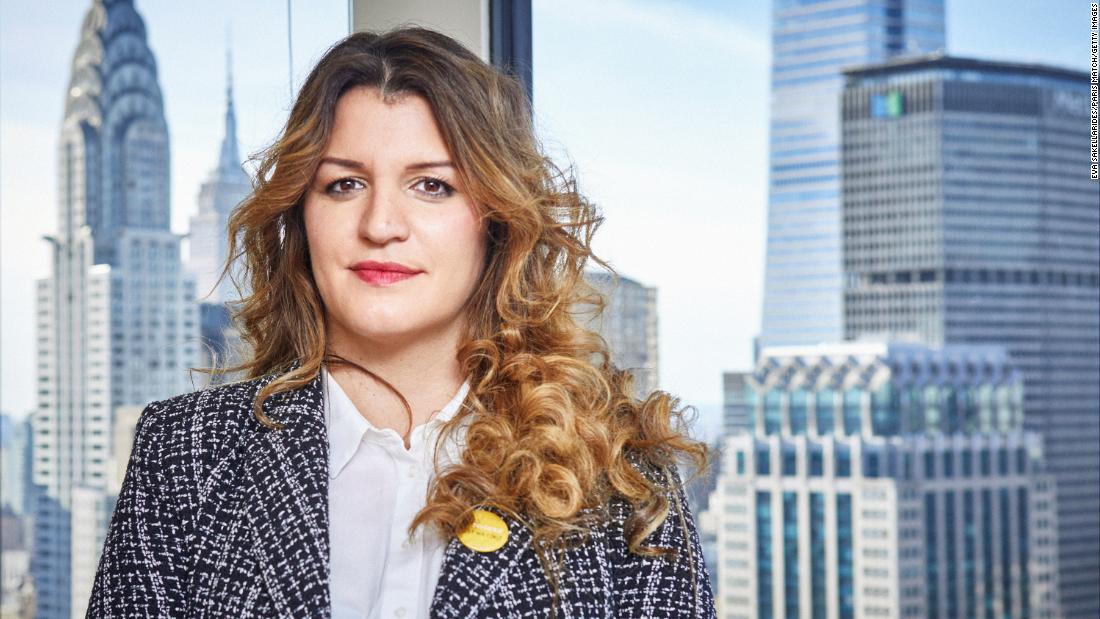
French Minister Delegate for the Social and Solidarity Economy, Marlene Schiappa, is at the center of a political storm after appearing on the cover of the April issue of Playboy magazine. The publication, which includes a extensive 12-page interview, has sparked a wave of criticism from various factions within her own party, Renaissance (formerly La République En Marche), and has reopened the debate on the boundaries between the public and private lives of elected officials, as well as on the instrumentalization of women's images in politics.
Schiappa, 40, a figure known for her advocacy for women's rights and author of several novels, posed for the cover photograph wearing a white blazer over a nude body, in an image the magazine itself describes as "elegant and powerful." In the interview, the minister addresses topics such as feminism, secularism, and her political career. However, several colleagues from her party have labeled the decision as "inappropriate" and "counterproductive" for the image of the government, led by President Emmanuel Macron, at a time of high social tension due to protests against the pension reform.
Among the most prominent critics is MP and former Interior Minister Christophe Castaner, who told the press that "a serving minister must show exemplarity in all their public acts." He added that while he defends individual freedom, "there are spaces and formats that are not compatible with the dignity of the office." Meanwhile, the spokesperson for the Les Républicains (right-wing) party, Annie Genevard, called the move a "useless provocation" and called for Schiappa's resignation, arguing that it "undermines the government's authority."
The minister herself defended her decision on social media, writing: "I can be on the cover of Playboy and in a Council of Ministers meeting at the same time. Women are allowed to be complex. Feminism is also about the freedom to dispose of our own bodies." This stance has found support among feminist sectors and part of her party's grassroots, who see the criticism as a sign of hypocrisy and double standards, especially directed at a woman in a position of political responsibility.
The context is significant: France is experiencing weeks of massive mobilization against the reform that raises the retirement age from 62 to 64. Some political analysts suggest the controversy could serve as a smokescreen to divert attention from social problems, while others see it as a symptom of deep divisions within the presidential majority. Historically, the relationship between French politicians and magazines considered "sensual" has been sporadic and controversial. In 1984, then Culture Minister Jack Lang appeared in Playboy's 100th issue, though in an interview section without a cover photo.
The impact of this controversy goes beyond the anecdotal. It raises fundamental questions about the representation of women in power: Should women in politics be subjected to stricter dress and behavior codes than men? Is claiming sexual freedom compatible with holding a ministerial office? Political communication experts consulted by news agencies point out that in the age of social media, the personal image of leaders has become a double-edged sword, capable of generating both support and visceral rejection.
In conclusion, the case of Marlene Schiappa illustrates the unresolved tensions between individual emancipation and collective expectations of public figures. Beyond the cover story, the debate reflects a French society in full ferment over gender roles and ethics in politics. Whether the minister remains in her position may depend on the evolution of this controversy and President Macron's willingness to face internal criticism at a particularly delicate time for his government.