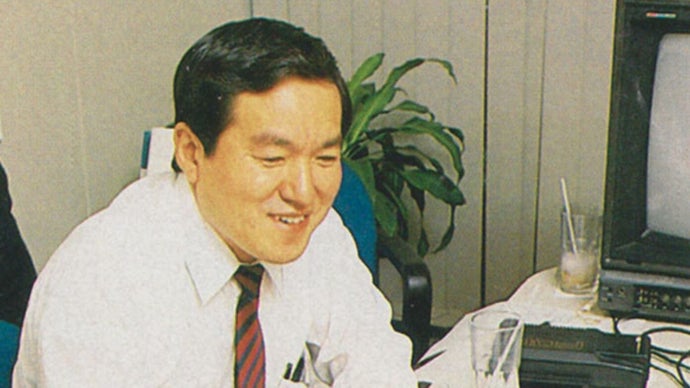
The video game industry is in mourning. Hideki Sato, a pivotal figure in Sega's history and the designer responsible for the hardware architecture of all the company's consoles, from the SG-1000 to the Dreamcast, has passed away. The news, confirmed by sources close to the company and reported by Japanese specialized media, has shocked the global gaming community, reminding us of the legacy of an engineer whose work defined an era of consumer electronics and competed head-on with giants like Nintendo and Sony. His death marks the end of a crucial chapter in the history of interactive entertainment.
Hideki Sato joined Sega in the 1970s, coming from a background in electrical engineering. His first major project was the SG-1000, launched in 1983, Sega's first home console that competed directly with Nintendo's Famicom in Japan. From there, his career became intimately intertwined with Sega's hardware. He was the lead architect for the Master System, the console that brought Sega to Western markets. His work culminated with the iconic Mega Drive (known as Genesis in America), a machine whose powerful and efficient design allowed Sega to capture a massive market share and define the brand's 'cool' identity with campaigns like 'Genesis does what Nintendon't'.
His ingenuity did not stop there. Sato led the hardware development for the Sega Saturn, a complex console with a dual-processor architecture that, while commercially problematic, was a technical milestone. Finally, he was the mastermind behind Sega's final console, the Dreamcast. Launched in 1998 in Japan and 1999 in the West, the Dreamcast was a pioneer in many technologies, including a built-in modem for online gaming, a controller with an LCD screen (VMU), and impressive 3D graphics for its time. Despite its commercial failure that led Sega to exit the hardware market, the Dreamcast is fondly remembered by enthusiasts and its design is considered visionary. 'Mr. Sato didn't just design circuits; he understood the player's experience. Every hardware decision, from processor speed to the Dreamcast's modem port, was made to enable new forms of play,' commented a former Sega colleague who preferred to remain anonymous.
The impact of Hideki Sato goes beyond the consoles he created. His design philosophy, which prioritized raw power and technological innovation often ahead of cost considerations or development simplicity, defined Sega's DNA during its golden years. This mindset led to unique experiences and games that pushed the hardware to its limits, but also contributed to some of the company's commercial challenges. After the discontinuation of the Dreamcast, Sato remained at Sega, contributing to arcade hardware development and other internal technologies, remaining a vital link to the company's technical heritage. His legacy lives on in every emulator, in every retro console that powers on, and in the collective memory of a generation that grew up with the distinctive sound of 'Sega' at the start of their games.
In conclusion, the passing of Hideki Sato is not just the loss of a brilliant engineer, but the symbolic closing of the era when Sega was a console manufacturer. His work laid the foundation upon which unforgettable digital worlds were built, from the hills of Green Hill Zone in Sonic the Hedgehog to the pioneering online battles in Phantasy Star Online. As the industry moves towards the cloud and subscriptions, figures like Sato remind us of the magic and challenge of creating the physical machine that makes fantasy possible. His contribution to video game culture is indelible.