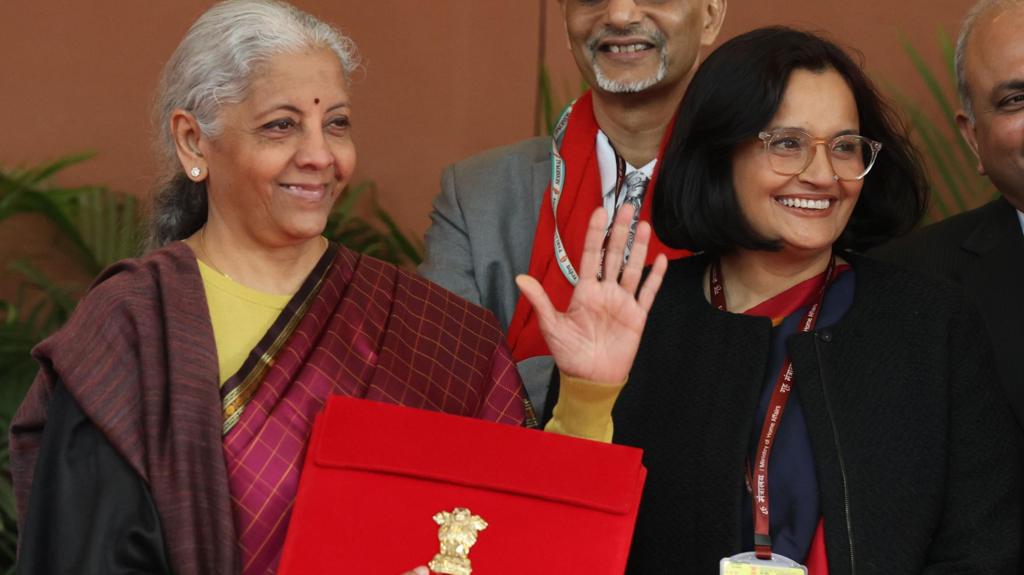
Amid a geopolitical landscape defined by rising tensions and fragmented supply chains, the Indian government has unveiled a federal budget that places unprecedented strategic emphasis on developing critical infrastructure, national defense, and fostering investment in key technological sectors. The fiscal package, recently announced, includes significant tax incentives for data centre investments and a determined push to boost the local rare earths industry, vital elements for manufacturing a wide range of high-tech products, from smartphones to advanced weapon systems. This move is interpreted as a direct response to the global dependence on China, which currently dominates over 80% of the world's processing of these strategic minerals, and to the need to secure the country's digital and technological sovereignty.
The context for this decision is complex and multifaceted. Globally, the technological rivalry between the United States and China, coupled with supply chain disruptions caused by the pandemic and regional conflicts, has led nations to reassess their economic resilience. India, with its ambition to become a manufacturing and digital power, is no exception to this trend. The country seeks to position itself as a trusted alternative in the global supply chain, a strategy dubbed 'China +1' by many international investors. Developing a domestic rare earths industry is fundamental to this vision, as these 17 elements are essential components in high-performance permanent magnets, catalysts, metal alloys, and batteries, all pillars of the energy transition and defense industry.
Data reveals the urgency of India's strategy. India is estimated to hold 6% of the world's rare earth reserves, a significant figure whose potential is underutilized due to a lack of processing and refining capabilities. Concurrently, the country's digital economy is booming, with data volume expected to multiply tenfold in the next five years, according to industry estimates. Without a robust, local data centre infrastructure, this data explosion would face critical bottlenecks in terms of latency, cost, and data sovereignty. The new tax incentives, which include exemptions and credits for companies building and operating data centres, aim to attract investments that could exceed $10 billion in the coming years.
Statements from senior Indian government officials underscore the strategic focus. 'We cannot allow our technological security and our digital future to depend on vulnerable supply chains,' stated a minister on condition of anonymity. 'This budget sends a clear signal: India is building its own fortress in the sectors that will define the 21st century.' Economic analysts have reacted positively. 'The combination of stimuli for data centres and rare earths is brilliant,' commented Priya Sharma, chief economist at a major investment bank in Mumbai. 'It attacks two fronts simultaneously: the infrastructure of the digital economy and the material inputs for the physical industry. This creates a synergistic ecosystem for advanced manufacturing.'
The impact of these measures will be profound and far-reaching. Domestically, it is expected to create hundreds of thousands of high-skilled jobs in mining, chemical processing, infrastructure engineering, and cybersecurity. Geopolitically, it strengthens India's position as a strategic partner for blocs like the Quad (United States, Japan, Australia, and India) and the European Union, who are seeking to diversify their sources of critical materials and data hosting. For the global technology industry, this represents a new and significant option for investment and sourcing, potentially reducing risks concentrated in East Asia.
In conclusion, the Indian budget transcends mere fiscal figures to outline a doctrine of strategic autonomy in the digital age. By integrally prioritizing rare earths and data centres, the government is not only responding to immediate global tensions but is laying the groundwork for India to compete as a major player in the reconfiguration of global technological supply chains. The success of this initiative will depend on efficient implementation, public-private collaboration, and the ability to attract global capital and talent, but the message of self-reliance and technological ambition has already been sent clearly to the world.