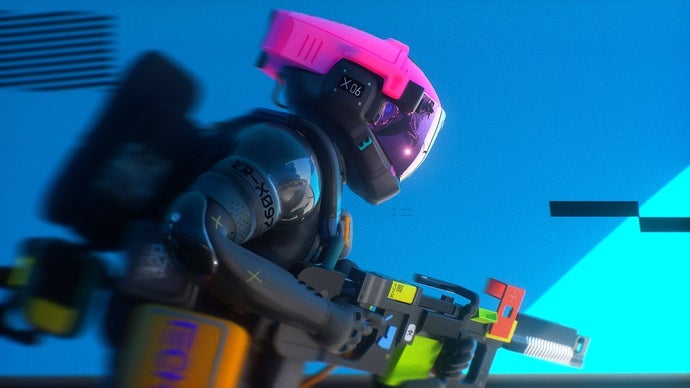
The gaming community finds itself divided after the first week of Marathon's early access, Bungie's new shooter that promises to redefine the genre with an uncompromising design philosophy. Described by its creators as a "hostile yet fair experience," the title abandons the typical concessions of modern games to offer pure challenge where every mistake carries a heavy price. Players assume the role of cybernetic runners on the lost colony of Tau Ceti IV, where survival depends as much on precise reflexes as on the strategic management of extremely limited resources.
The core of the debate lies in its partial permadeath system. Upon falling in combat, players lose all equipment accumulated during the raid, retaining only permanently unlocked character upgrades. This approach, inspired by hardcore survival games like Escape from Tarkov, has generated intense reactions. "You either passionately love it or furiously hate it," creative director Christopher Barrett stated on social media. "We're not looking for a middle ground. Marathon is for those who crave that adrenaline of having something real at stake."
Initial data supports this division: according to leaked internal metrics, 42% of players dropped out within the first 5 hours, while the remaining 18% average over 25 hours of weekly playtime. This extreme commitment is reflected in specialized forums, where defenders praise the tactical depth and satisfaction of overcoming seemingly insurmountable obstacles, while detractors criticize the "vertical" learning curve and the feeling of frustrated progression.
The impact on the shooter ecosystem could be significant. Marathon represents Bungie's return to pure genre after years focused on Destiny, and its bet on hardcore gaming coincides with a resurgence of demanding titles. Analysts predict that, regardless of its commercial success, it will influence the design of future AAA games, normalizing high-risk mechanics that until now were limited to the indie niche. The conclusion is clear: Marathon does not aim to conquer the masses, but to cultivate a devoted community willing to accept its hostility as a fundamental part of the experience. Its legacy will be measured not by sales figures, but by the intensity of the debate it generates.