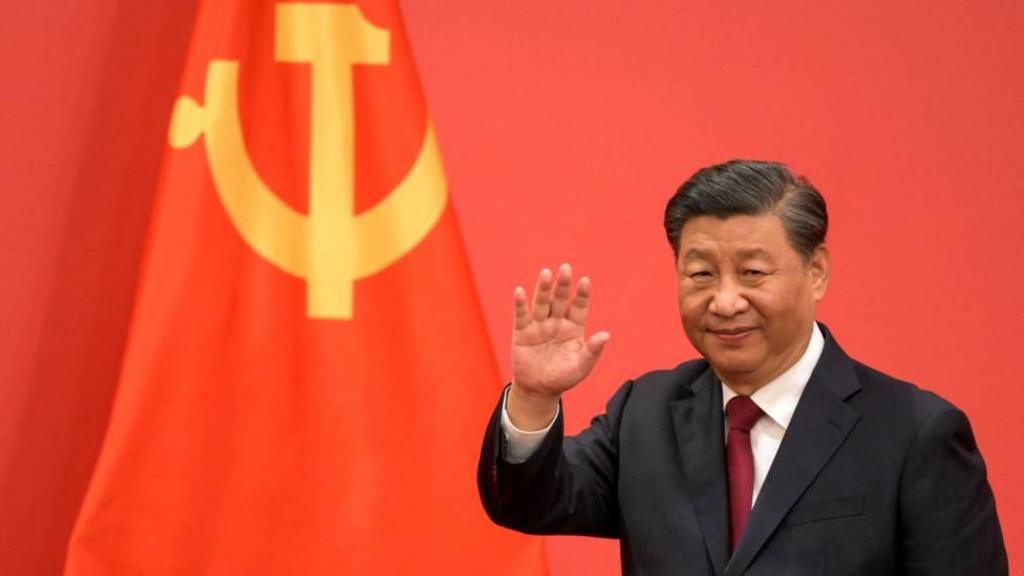
A decade after its launch, President Xi Jinping's anti-corruption campaign, dubbed 'hunting tigers and swatting flies,' remains a central pillar of his governance. According to recently published official data, over 4.7 million officials of the Chinese Communist Party (CCP) have been investigated and disciplined since 2012. This monumental figure, which includes both high-ranking cadres ('tigers') and low-level bureaucrats ('flies'), raises a persistent question in political and analytical circles: Why does an operation of such scale and duration remain active, and what does it reveal about governance challenges in China? The answer intertwines with Xi's consolidation of power, the party's quest for legitimacy, and the deep systemic roots of corruption within the world's largest state apparatus.
The context of this campaign dates back to the CCP's 18th National Congress in 2012, when Xi Jinping assumed leadership and warned that corruption could lead to the collapse of the party and state. Immediately, the Central Commission for Discipline Inspection (CCDI), the supreme anti-corruption body, intensified its operations. The initial rhetoric promised a 'steel cage' for power, reinforcing regulations and oversight. However, the scale of investigations has exceeded all expectations. In 2023 alone, the CCDI reported over 590,000 disciplinary cases. Among the most prominent 'tigers' are former Politburo members like Zhou Yongkang and Sun Zhengcai, sentenced to life imprisonment, demonstrating that no one is above the law. Yet, critics argue the campaign has also served as a tool to eliminate political rivals and centralize authority in Xi's figure, who has accumulated titles and powers unprecedented in China's recent history.
Relevant data shows an evolution in the purge's focus. In its early years, it targeted traditionally corruption-prone sectors like infrastructure construction and energy. Later, it expanded to finance, public security, and more recently, strategic areas such as technology, banking, and higher education. A report from the CCP's Governance Research Center indicated that 70% of cases involve bribery, embezzlement, and abuse of power for personal gain. The CCDI has developed sophisticated methods, including 'surprise inspections' and the use of big data to track suspicious financial transactions. Despite this, public perception, measured in internal party surveys, suggests that petty corruption and nepotism remain endemic in local governments, where officials often prioritize personal loyalties over meritocracy.
Statements from senior officials reflect the official stance. Wang Qishan, former head of the CCDI, stated: 'The fight against corruption is an endless battle that requires perseverance and institutional improvement.' Meanwhile, Xi Jinping has reiterated in multiple speeches that 'party cadres must maintain absolute political purity.' However, international analysts like Minxin Pei, a professor at Claremont McKenna University, offer a more critical view: 'The campaign has been effective at terrorizing the bureaucracy and ensuring loyalty, but it has not addressed structural causes, such as the lack of transparency and an independent judiciary.' This duality between declared achievements and structural limitations partly explains the purge's continuity.
The impact of this prolonged campaign is multifaceted. Internally, it has reinforced party discipline and improved efficiency in implementing national policies, such as economic development goals and pandemic response. Externally, it has projected an image of a government determined to clean house, which may influence foreign investor confidence. However, it has also fostered a culture of extreme caution among officials, where many avoid making decisions for fear of being investigated, a phenomenon known as 'inaction due to fear.' This could slow administrative innovation and long-term economic growth. Moreover, the absence of a free press and independent citizen oversight mechanisms limits accountability, making the process almost entirely dependent on the central leadership's political will.
In conclusion, Xi Jinping's anti-corruption purge continues because it has become a dual instrument: on one hand, it responds to a genuine public demand for clean government, and on the other, it serves to consolidate a highly centralized governance model. Although it has removed thousands of corrupt officials, its persistence suggests the problem is deeply entrenched in a system where political and economic power are closely linked. As China advances toward its 'national rejuvenation' goals, the party's ability to institutionalize anti-corruption mechanisms beyond temporary campaigns will be crucial for its future stability. The fight against 'tigers and flies' may not end soon, as it reflects a constant battle for legitimacy in the world's most influential one-party system.