In a strategic move aimed at redefining the third-party support landscape, Nintendo and Capcom have formalized a high-level collaboration designed to make the upcoming Nintendo Switch 2 a benchmark platform for external developers. This alliance, revealed during an exclusive press session in Frankfurt, focuses on optimizing the performance and adaptation of AAA titles for the new console's architecture, marking a paradigm shift in Nintendo's historically complex relationship with multiplatform development.
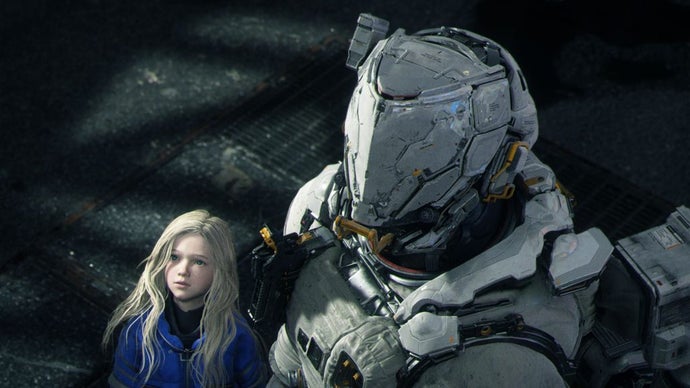
The Frankfurt event provided a tangible first look at this commitment, allowing journalists to preview two of the most ambitious third-party releases scheduled for the first quarter of 2026: 'Resident Evil: Requiem' and 'Pragmata'. These demos served not only to showcase the hardware's graphical power but also to demonstrate an unprecedented level of joint engineering work. Sources close to the development indicate that teams of engineers from Capcom have been working side-by-side with Nintendo's for months, sharing proprietary tools and APIs to extract the maximum potential from the system, particularly in critical areas like ray tracing and unified memory management.
"This collaboration goes beyond a simple port," commented an anonymous developer involved in the project during the session. "We're talking about silicon-level integration. The goal is for the Switch 2 experiences not to be scaled-back versions, but native experiences that leverage its unique features, such as its possible OLED screen and its new control schemes." This approach contrasts with the previous generation, where many third-party games arrived with notable technical concessions.
The impact of this alliance is multifaceted. For Nintendo, it represents a crucial opportunity to dispel doubts about support from major external studios, an area where it has historically had ups and downs. For Capcom, it ensures an optimized and potentially exclusive presence on a platform that, according to projections, could surpass 150 million units sold in its lifecycle. Furthermore, it sets a powerful precedent for other major publishers like Square Enix, Bandai Namco, or Sega, who may now be incentivized to invest similar resources in the platform.
In conclusion, the Nintendo-Capcom alliance is not a simple publishing deal but a strategic statement of intent. It aims to break the last major taboo of Nintendo consoles: the perception of being an isolated ecosystem for first-party games. If successful, the Switch 2 could emerge not only as the heir to a phenomenal legacy but as a truly hybrid console in its library as well, combining Nintendo's unmatched charm with the technical and narrative muscle of the modern AAA industry, all starting with Capcom's prowess in 2026.