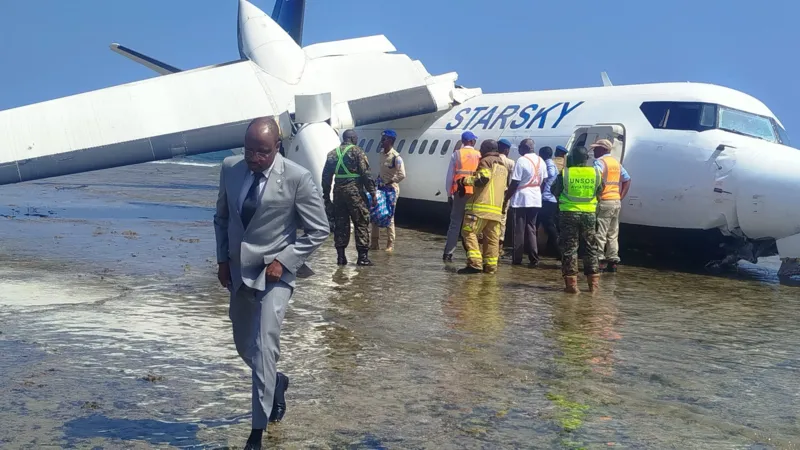
A Somali pilot has been hailed as a hero after executing a dangerous emergency landing on a beach when his passenger aircraft experienced a critical technical failure. The incident, involving an aircraft operated by a local airline, occurred during a domestic flight in Somalia, averting what could have been a major tragedy. According to preliminary reports from aviation authorities, the crew detected a mechanical issue shortly after takeoff, forcing them to immediately seek an alternate landing site.
The context of aviation in Somalia is complex, marked by infrastructure and security challenges following decades of conflict. Despite reconstruction efforts, Somali airspace continues to face obstacles in maintenance and regulation. This incident highlights the persistent risks in the civil aviation industry in regions with limited resources, where pilot skill often becomes the last line of defense. Data from the International Civil Aviation Organization (ICAO) indicates that while global aviation accidents have decreased, regions with weaker oversight systems still record higher incident rates.
Eyewitnesses and passengers described scenes of controlled panic as the plane descended toward the coastline. "The pilot remained calm and kept us informed at every moment," one passenger told local media. "I thought it was the end, but his professionalism saved us." Airline authorities issued a statement praising the captain's "exceptional skill and composure," whose name has not been released per protocol. Investigators are already examining the aircraft to determine the exact cause of the technical failure, with particular attention to control and propulsion systems.
The impact of this forced landing extends beyond the immediate event. For the Somali aviation community, it serves as a reminder of the importance of continuous training and rigorous maintenance. Furthermore, it may prompt reviews of safety protocols for airlines operating in the country. For the passengers, all of whom survived with minor or no injuries, the experience underscores the vulnerability of air travel under adverse conditions, but also human capacity to handle crises. Internationally, the incident draws attention to the need to support the strengthening of civil aviation capabilities in fragile states.
In conclusion, this event not only celebrates the individual heroism of a pilot but also exposes systemic gaps in Somalia's aviation safety. As investigations proceed, the story stands as a powerful testament to how professionalism and preparedness can make the difference between life and death in the skies. It is expected that lessons learned will contribute to improving operational standards, ensuring that future flights are safer for all who depend on this vital means of transport in the Horn of Africa.