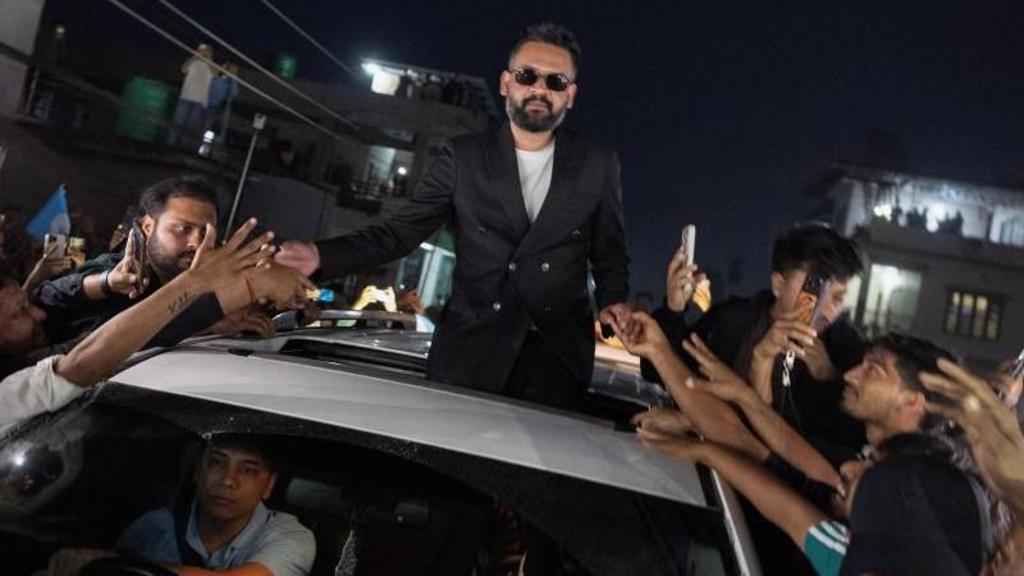
In an electoral result that has shaken Nepal's political landscape, rapper and independent politician Balendra Shah, known artistically as Baluwatar, has secured a decisive victory over former Prime Minister Madhav Kumar Nepal. The contest for the Kathmandu-10 constituency seat became the epicenter of a battle symbolizing the clash between the traditional political establishment and a new wave of public figures emerging from unconventional backgrounds. Shah, a civil engineer by training who rose to fame through his hip-hop music laden with social criticism, capitalized on deep-seated popular discontent with the ruling class, promising transparency, local development, and a break from entrenched political practices.
The context of these by-elections is set against a period of political and economic instability for Nepal. Citizens have shown growing frustration with traditional parties, perceived as corrupt and ineffective in addressing critical issues such as inflation, job scarcity, and poor public service delivery. Balendra Shah, with no party affiliation, built a grassroots campaign, leveraging his immense popularity on social media—where he boasts millions of followers—and a direct speaking style that resonated particularly with youth and urban voters. His campaign slogan, focused on "real change" and "new politics," stood in stark contrast to the image of former PM Nepal, a veteran figure associated with the Communist Party of Nepal (Unified Marxist–Leninist), one of the pillars of the country's political system.
Preliminary data from the Election Commission shows a considerable lead for Shah, who is reported to have secured over 55% of the votes in his constituency, compared to just over 35% for Madhav Kumar Nepal. This nearly twenty-percentage-point gap is not only a personal defeat for the former head of government but a severe setback for his party and the ruling coalition in power. High youth turnout, estimated to be 15% higher than in previous elections in the area, was a key factor in this outcome. Political analysts highlight that Shah did not use traditional party machinery; instead, he mobilized an army of volunteers and relied on small donations from supporters, a novel campaign model in the Nepali context.
In statements to the press after the results were known, Balendra Shah stated: "This victory is not mine, it is the people's. It is the cry of Kathmandu-10 for a different future, free from empty promises and political maneuvering. My mandate will be one of hard work and constant accountability." For his part, a visibly affected Madhav Kumar Nepal conceded defeat, noting: "I accept the verdict of the people. This must serve as a lesson for all political parties that we must reconnect with the aspirations of the common people." These statements underscore the symbolic impact of the event, interpreted as a clear rejection of traditional political elites.
The impact of this victory extends beyond the local constituency. It is expected to inspire more independent candidates and civil society figures to run for office, potentially further fragmenting Nepal's already divided parliamentary landscape. For the coalition government led by Prime Minister Pushpa Kamal Dahal 'Prachanda', the defeat of a key ally like Madhav Kumar Nepal introduces a new factor of uncertainty into legislative stability. Furthermore, Shah's triumph raises the question of whether his "outsider" politician model can be replicated and sustained, or if it will face the same institutional obstacles once inside the system.
In conclusion, Balendra Shah's victory represents a turning point in Nepali politics. It is a testament to the power of alternative narratives and direct connection with a weary electorate, particularly urban youth. While it remains to be seen how he will translate his campaign rhetoric into concrete legislative action, his election has sent a shockwave through the establishment, forcing deep reflection on political renewal. This outcome is not just the rise of a rapper into politics; it is a symptom of a broader collective desire for systemic change in a young democracy seeking to redefine its leadership and priorities for the 21st century.