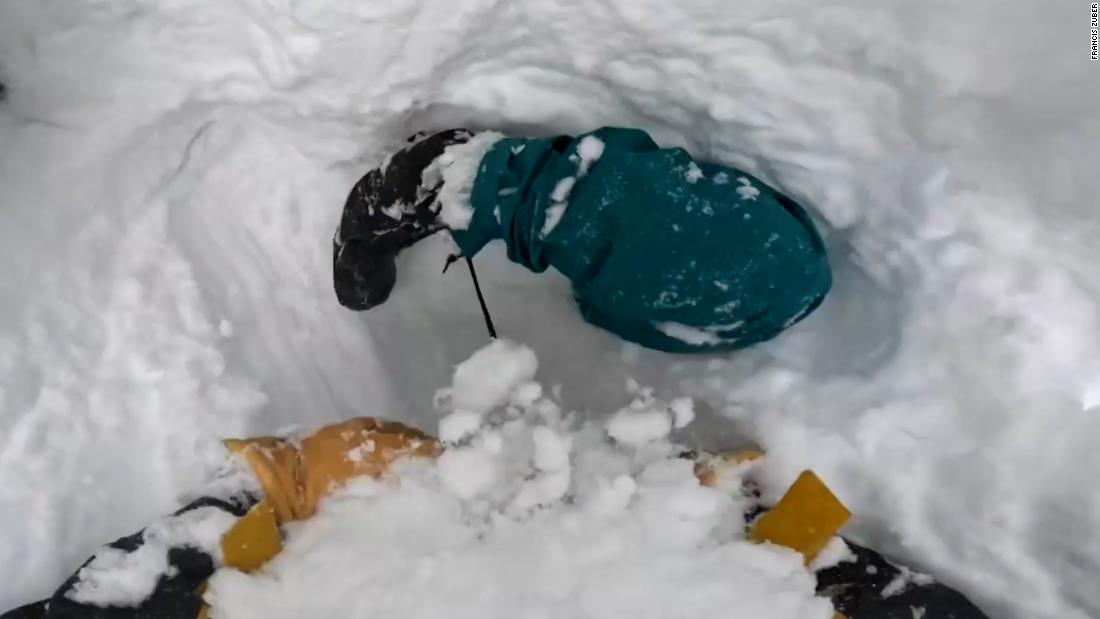
In a dramatic incident that underscores the hidden dangers of winter sports, a skier demonstrated a swift and decisive reaction that saved the life of a snowboarder trapped upside down in a tree well. The event took place in a wooded area of a mountain, where Francis Zuber, an experienced skier, spotted an anomalous situation: a snowboard protruding from the snow with no apparent movement. Upon approaching, he discovered with alarm that the rider was completely buried, in an inverted and perilous position, inside what is known as a "tree well."
Tree wells are cavities that form around the base of trees, particularly conifers, where branches prevent snow from accumulating compactly. These natural traps can be several meters deep and pose a mortal risk, as a fall into them can lead to almost instantaneous burial. The victim, whose identity has not been disclosed, had lost balance near the tree and fell headfirst into the well, becoming immobilized with breathing severely compromised. In such situations, time is critical; suffocation can occur within minutes due to the inability to expand the chest and the inhalation of fine snow.
Zuber, recognizing the gravity of the moment, acted following basic yet essential rescue protocols. First, he alerted other nearby skiers to call for help. Then, without wasting a second, he began frantically digging around the snowboarder, prioritizing clearing the area around the head and torso to allow for breathing. His knowledge, acquired through mountain safety courses, was crucial: he knew that digging directly on top of the person could cause further snow collapse. After several minutes of intense effort, he managed to free the victim, who, though dazed and showing signs of hypothermia, was conscious and able to breathe. Emergency services, alerted by other skiers, arrived shortly after to provide medical assistance and evacuate them safely.
Following the rescue, Francis Zuber has taken the opportunity to make a public appeal about the importance of safety training. "This isn't about being a hero, it's about being prepared," he stated in an interview. "An avalanche rescue or mountain first aid course doesn't just give you the tools to save others; it also makes you more aware of the risks. Everyone who practices winter sports in uncontrolled terrain should consider it an essential part of their gear." His words have resonated within the winter sports community, where tree well incidents, though less publicized than avalanches, cause numerous fatalities each season at resorts worldwide.
The impact of this event extends beyond the individual heroic act. It has reignited the debate about the need for better signage in risk zones outside controlled slopes and for increased awareness campaigns. Ski resorts and snow sports associations often focus their efforts on avalanche dangers, but tree wells represent an equally insidious threat, especially for snowboarders and skiers who venture among trees in search of fresh powder. Alpine safety experts recommend never skiing or snowboarding alone near trees, always carrying locating equipment (beacon, shovel, and probe), and, as Zuber demonstrated, having basic rescue knowledge.
In conclusion, the quick thinking and calm action of Francis Zuber turned a potential tragedy into a story of survival. This incident serves as a crucial and sobering reminder that the mountain, in its beauty, demands respect and preparation. The next time someone straps on a board or skis, they should remember that the most important skill may not be the descent technique, but knowing how to react when nature shows its most treacherous side. The dissemination of this successful rescue, hailed as a textbook example, hopes to inspire thousands of enthusiasts to get trained, making the mountains a safer place for all.