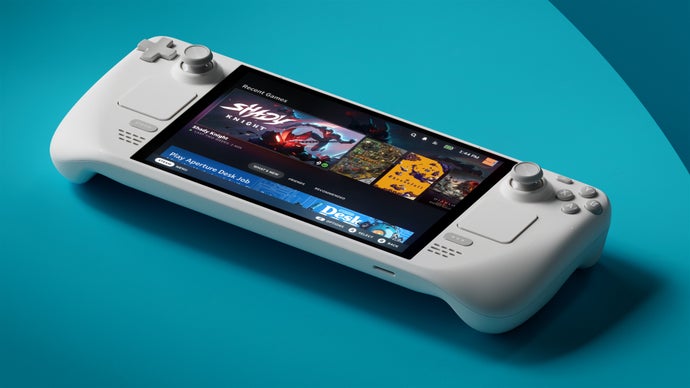
The highly anticipated Steam Deck OLED, the enhanced version of Valve's successful hybrid handheld console, is facing severe availability issues in the global market. According to supply chain reports and statements from the company itself, a critical shortage of memory and storage components is severely limiting production capacity, leaving thousands of gamers on waiting lists and frustrating the planned launch for the holiday season. This bottleneck specifically affects the high-speed LPDDR5 memory and new-generation NVMe Solid State Drives (SSDs) that are essential for the improved performance of this revision.
The context of this shortage is not isolated; the semiconductor industry continues to recover from the persistent effects of the pandemic, geopolitical tension, and unprecedented demand in sectors such as artificial intelligence and automotive. However, the impact is particularly acute for niche devices like the Steam Deck, which use specific, lower-volume component configurations, making them less of a priority for major chip manufacturers. Analysts from Jon Peddie Research estimate that current production could be operating at less than 40% of its target capacity, creating a deficit of between 200,000 and 300,000 units for the first quarter of 2024.
"We are working intensely with our supply chain partners to increase allocation volumes for these critical components," a Valve spokesperson stated to specialized media. "We recognize our community's frustration and our goal is to stabilize inventory as soon as possible. Demand for the Steam Deck OLED has exceeded all our internal projections." This statement underscores the model's success but also reveals a miscalculation in logistical planning in the face of a market eager for high-end portable gaming hardware.
The immediate impact is felt in major sales regions. In Europe and North America, estimated delivery times on the official Steam store have extended to 8-10 weeks, while in markets like Japan and Australia, the product consistently appears as "out of stock." This situation has fueled the secondary market, where resellers offer the device at markups exceeding 50% of its retail value. For consumers, the inability to acquire the hardware not only delays the gaming experience but also limits access to promotional exclusives and official warranties.
In the long term, this availability crisis could have strategic consequences for Valve. On one hand, it reinforces the Steam Deck's position as a desirable product with high perceived value. On the other, it temporarily cedes ground to established competitors like the Nintendo Switch (in its OLED variant) and new players in the burgeoning handheld PC market, such as devices based on the AMD Ryzen Z1 or the Asus ROG Ally. The inability to meet demand at a key moment in the fiscal year represents a missed opportunity for market capitalization and user loyalty.
In conclusion, the Steam Deck OLED finds itself at a manufacturing crossroads. Its technical superiority, with an HDR OLED screen, greater battery life, and improved thermals, is undeniable, but its real value for the average gamer is negated by its physical elusiveness. Resolving this crisis will depend on Valve's ability to negotiate priority in its suppliers' production lines and possibly diversify its component base. Meanwhile, the portable gaming ecosystem advances, and the window of opportunity for the Steam Deck OLED, although still open, is slowly narrowing with each week of delay.