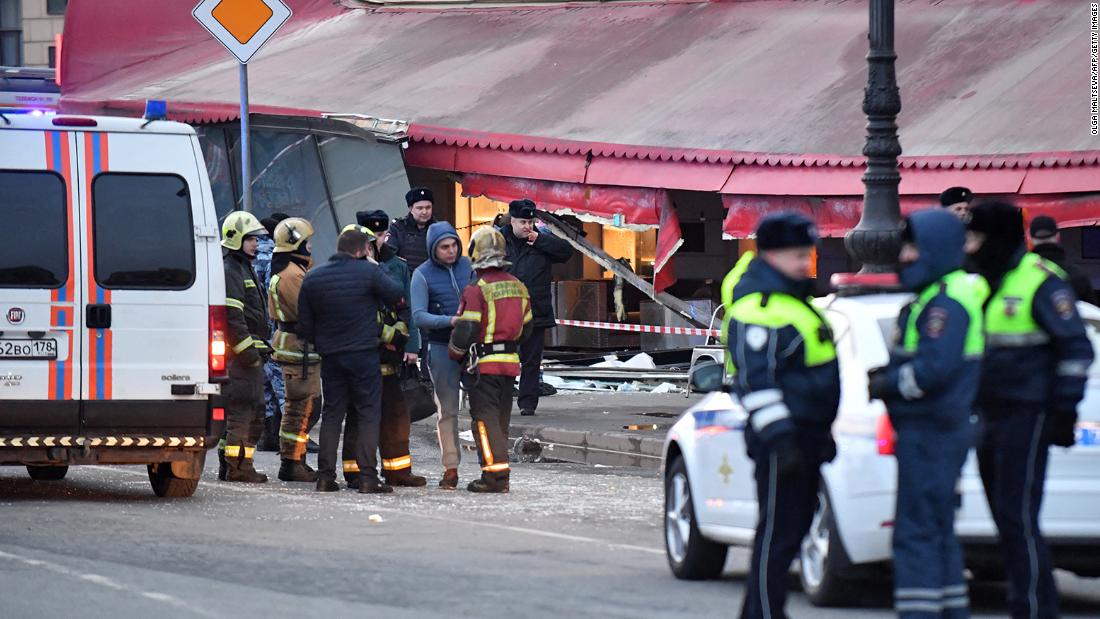
Russian authorities have announced the detention of a suspect in connection with a powerful explosion that rocked a popular cafe in central St. Petersburg, an incident that has sown panic and renewed fears about security in the country's public spaces. The event, which occurred during peak hours, caused significant material damage and, according to the latest reports, at least a dozen injuries, though fortunately no fatalities have been recorded. The blast, described by witnesses as a deafening roar followed by a cloud of smoke and broken glass, immediately triggered emergency protocols, with a massive arrival of fire crews, ambulances, and police and security service agents.
The context of this attack falls within a period of heightened tension for Russia, which maintains a state of alert for possible acts of sabotage or terrorism, especially since the onset of the conflict in Ukraine. St. Petersburg, the country's second most important city and the birthplace of President Vladimir Putin, has been the scene of similar incidents in the past, leading security forces to maintain a reinforced deployment in crowded places. The affected cafe, located in a commercial and tourist area, was frequented by both local residents and foreign visitors, adding an international dimension to the investigation. Initial inquiries point to the use of an improvised explosive device, although authorities have been cautious in confirming technical details or attributing responsibility.
Relevant data provided by the Russian Investigative Committee indicate that the detained suspect is a male Russian national, whose identity has not been disclosed for legal reasons. He is being held in a pre-trial detention center while interrogations are conducted and forensic evidence is gathered. "The individual was located thanks to collaboration between several agencies and the analysis of CCTV footage from the area," an official spokesperson stated. Furthermore, searches have been carried out in at least two residences linked to the detainee in the city's outlying districts, in search of possible accomplices, explosive materials, or documentation that sheds light on the motives behind the attack.
Statements from eyewitnesses paint a chaotic and terrifying picture. "I was having a coffee when I heard a tremendous boom; everything shook and people started screaming and running for the exit," recounted Anna Ivanova, a customer who suffered minor injuries from glass cuts. Meanwhile, the mayor of St. Petersburg, Alexander Beglov, issued a statement expressing solidarity with the victims and assuring that "all necessary resources are being mobilized to clarify this crime and ensure those responsible face justice." At the same time, Kremlin spokesman Dmitry Peskov noted that President Putin has been personally informed of the incident and is closely following the investigation's progress.
The impact of this event transcends the immediate. On the national security front, it strengthens the arguments of those advocating for stricter surveillance and control measures in public spaces, a recurring debate in Russian politics. Economically, incidents of this kind can negatively affect consumer and tourist confidence in a city heavily reliant on the service sector. Socially, it generates a climate of fear and uncertainty among the population, reminding them of their vulnerability to unpredictable acts of violence. Social media and news outlets have amplified coverage, with many citizens expressing concern and demanding quick and transparent answers from the authorities.
In conclusion, the detention of a suspect marks a crucial first step, but the investigation into the St. Petersburg cafe explosion is far from over. Key questions remain unanswered regarding the intellectual authorship, possible links to organized groups, and the exact motives behind the attack. Russian authorities now face the dual challenge of conducting a thorough investigation that meets demands for justice, while managing public perception and reinforcing security measures to prevent further incidents. This somber event serves as a reminder of the persistent risks faced by modern societies, even in their most mundane spaces of leisure.