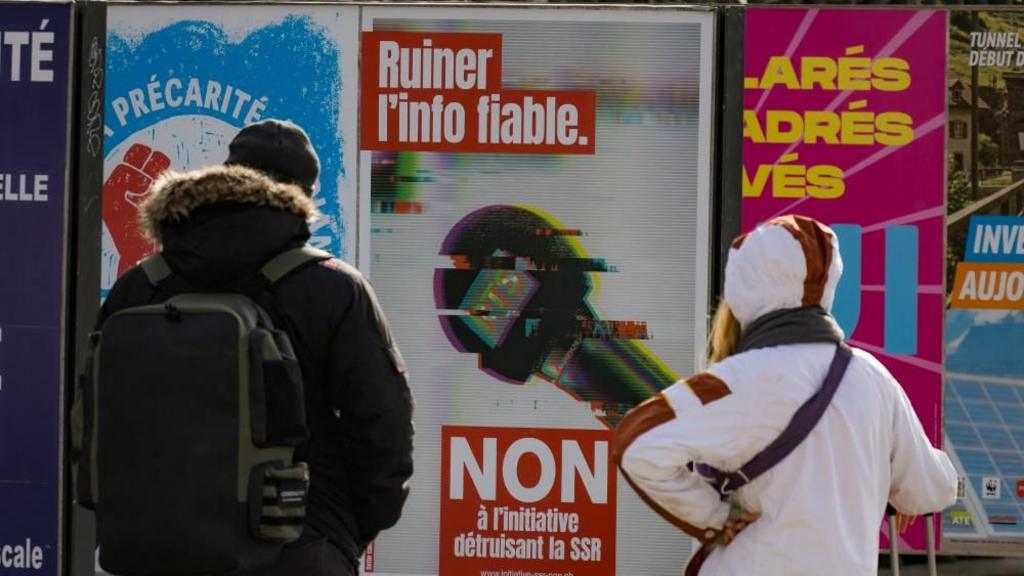
Swiss voters have resoundingly rejected a popular initiative promoted by right-wing parties that sought to drastically cut the mandatory licence fee that funds the country's public broadcaster, SRG SSR. The proposal, known as 'No Billag', was put to a referendum this Sunday and was defeated by a wide margin of 71.6% of votes against, versus 28.4% in favor. This result reinforces popular support for the public service media model in Switzerland and represents a significant setback for political sectors advocating for less state intervention in the media.
The context of this vote is part of a broader European debate about the future and funding of public service media. The 'No Billag' initiative, named after the company that collects the fee, proposed abolishing the mandatory licence fee of 451 Swiss francs per year (approximately $460) per household, which constitutes the main source of income for SRG SSR. The promoters, led by the populist right-wing party SVP (Swiss People's Party) and some liberal groups, argued that the fee was an unfair and obsolete tax in the digital age, and that SRG SSR competed unfairly with private media. They advocated for a voluntary subscription-based funding model.
However, the campaign for a 'No' vote on the initiative, backed by a broad coalition including the federal government, most of parliament, center and left-wing parties, unions, and cultural associations, warned of the serious consequences the measure would have. SRG SSR, which operates in a country with four national languages (German, French, Italian, and Romansh), manages several television and radio channels, in addition to offering online news services. Its defenders emphasized its crucial role for national cohesion, linguistic and cultural diversity, and quality information, especially in peripheral regions where private media have less presence.
Switzerland's Minister of Communications, Doris Leuthard, stated after the results were known: 'The population has sent a clear signal. It wants a strong and independent SRG. This is a vote for quality, diversity, and the cohesion of our country.' For their part, supporters of the initiative expressed disappointment but stated they had succeeded in putting an important issue on the table. 'We have started a necessary debate about the cost and scope of public service,' said one spokesperson for the 'Yes' committee.
The immediate impact of this result is the guarantee of financial stability for SRG SSR in the foreseeable future. The defeat of the initiative also sends a significant political message in a European context where public service media face similar pressures, from cuts in the United Kingdom to systematic criticism in countries like Hungary or Poland. Political analysts interpret the vote as a reaffirmation of the Swiss model of direct democracy and consensus, where proposals considered too radical are usually moderated by popular will.
In conclusion, the rejection of the 'No Billag' initiative consolidates the role of public broadcasting as a pillar of Swiss society. The vote was not only about a fee but about the value citizens place on an independent, quality information service that serves the entire community, transcending linguistic and regional barriers. The result suggests that, despite criticism and the digital transformation of the sector, there is broad social support for the idea that a robust public service media is an essential common good for democracy.