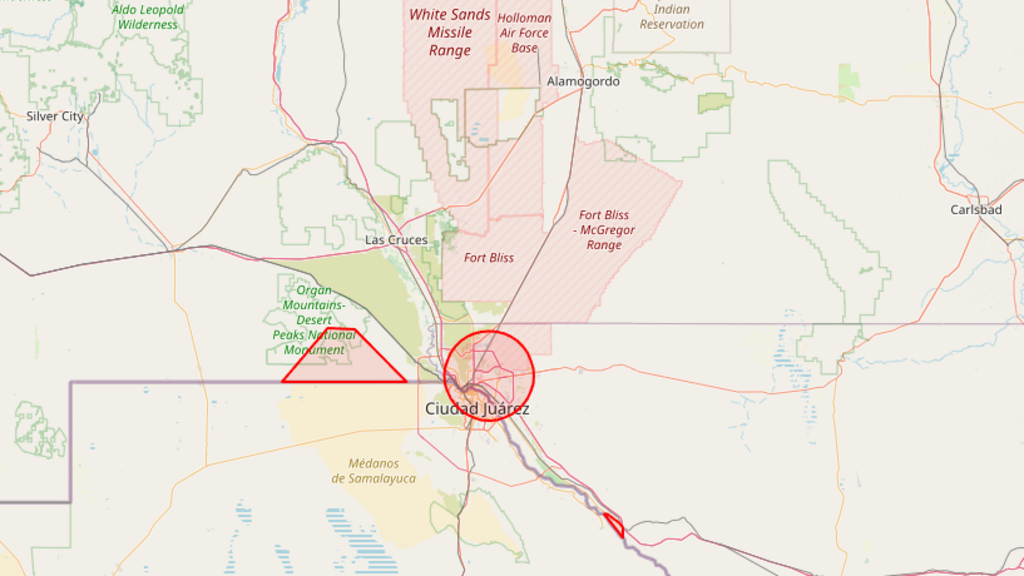
US aviation authorities have officially reopened the airspace over Eagle Pass, Texas, following a several-hour disruption that sparked concern and speculation about a potential threat to air safety. The Federal Aviation Administration (FAA) issued a statement confirming that, after a thorough investigation and coordination with national security agencies, it was determined there was no threat to commercial aviation operations. The temporary closure, implemented as a precautionary measure, primarily affected a specific air corridor used by private and training flights, while major commercial air traffic routes remained operational, albeit with some minor rerouting.
The incident occurred against a backdrop of heightened sensitivity in the border region, where national security operations and Border Patrol activities are frequent. Eagle Pass, a key city along the Rio Grande, has been a focal point in national debates on immigration and border security. The FAA, in coordination with the Department of Homeland Security (DHS) and US Northern Command (NORTHCOM), initiated the airspace closure procedure as a standard precaution after receiving unspecified information requiring verification. Officials emphasized that such measures are routine security protocols and do not necessarily indicate an imminent or verified threat.
"The safety of our airspace is our top priority. We take precautionary actions based on the information available at the time," stated an FAA spokesperson. "Following a full assessment in concert with our security partners, we have determined it is safe to reopen the area. There were no significant disruptions to commercial flights, and the public can have confidence in the robustness of our surveillance systems." Flight tracking data showed that during the closure period, approximately a dozen flights, mostly general aviation, were redirected or experienced minor delays. Major commercial airports such as San Antonio International Airport and Austin-Bergstrom International Airport reported no major operational impacts.
The impact of this event, though limited in its operational scope, highlights the complex security protocols at play in US border regions. Aviation analysts note that precautionary airspace closures, while infrequent, are a critical tool for managing unconfirmed risks, especially in areas with critical infrastructure or high national security activity. The rapid resolution and clear communication by authorities aim to mitigate the risk of misinformation or unnecessary public alarm, a constant challenge in the social media age where local incidents can be rapidly amplified.
In conclusion, the reopening of the airspace over Eagle Pass closes a brief but significant security incident that demonstrated the responsiveness and coordination among federal agencies. While the exact nature of the information that prompted the initial closure has not been made public, for operational security reasons, the outcome reinforces the official message that no threat to civil aviation materialized. The event serves as a reminder of the delicate balances between proactive security, operational continuity, and public transparency in the strategic border regions of the United States.