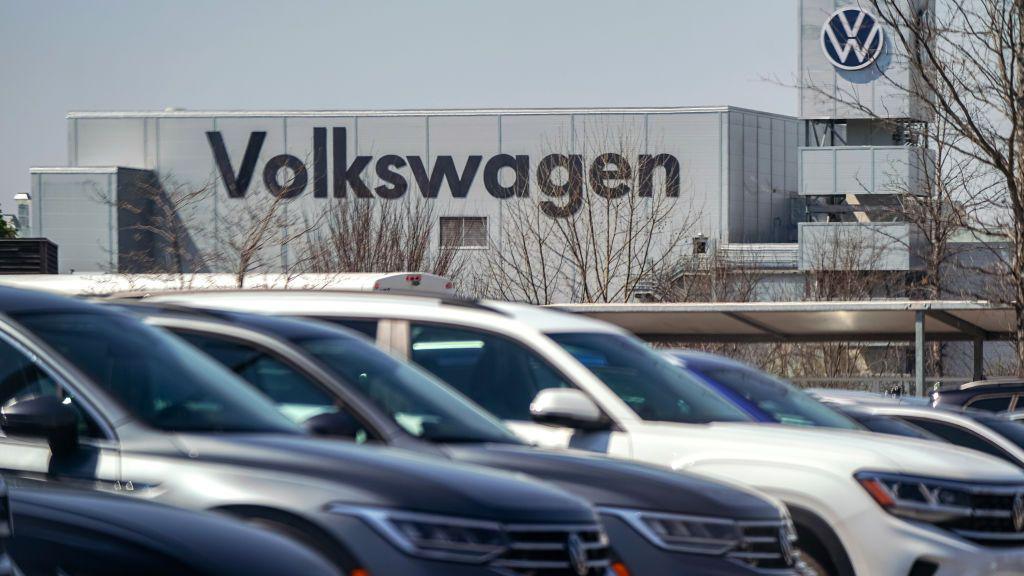
German automotive giant Volkswagen has announced a drastic restructuring plan that includes cutting up to 50,000 jobs in the coming years. This decision, one of the most significant in the recent history of the industry, comes in response to a sharp decline in its profits and the mounting financial pressures from the costly transition to electric mobility. The move underscores the profound challenges facing traditional car manufacturers as they attempt to reinvent themselves in an increasingly competitive market dominated by new technologies and agile players.
The context for this announcement is a perfect storm of economic and industry factors. Volkswagen, Europe's largest carmaker, has seen its profit margins erode due to the global economic slowdown, persistent supply chain bottlenecks, and a fierce price war in key markets like China and the United States. Furthermore, the massive investment required to develop electric vehicle platforms, batteries, and autonomous software is consuming capital at an unprecedented rate, with returns from these new business lines not yet offsetting the decline in revenue from internal combustion engine vehicles. The company has stated it needs to reduce structural costs by billions of euros to fund its electric future and maintain competitiveness against rivals like Tesla and BYD.
The data reveals the scale of the challenge. In its latest quarterly report, Volkswagen reported a 7% drop in operating profit, with a profit margin well below its medium-term targets. The electric vehicle division, while growing in volume, remains less profitable than the traditional business. The restructuring plan, to be negotiated with unions and works councils, foresees job reductions primarily through early retirement programs and voluntary departure schemes, with a target of over €10 billion in cost savings by the end of the decade. The company is also expected to announce a review of its brand portfolio and a possible rationalization of models to eliminate duplication and focus on the most profitable products.
In statements to the press, Volkswagen CEO Oliver Blume said, 'We are at an inflection point for our industry. The decisions we make today will define our success tomorrow. This restructuring is painful but necessary to ensure the long-term viability of Volkswagen and to protect as many of our jobs as possible in the future. Our goal is to transform the company so we can lead the era of electric and digital mobility.' Meanwhile, union representatives expressed concern but acknowledged the need to adapt. Daniela Cavallo, Chairwoman of Volkswagen's Global Works Council, stated, 'We accept that change is inevitable, but our absolute priority is to ensure this process is carried out in the most socially responsible way possible, avoiding forced layoffs to the extent that law and agreements allow.'
The impact of this announcement will be deeply felt in Germany, where Volkswagen is a pillar of the industrial economy and a major employer, especially in regions like Lower Saxony. The news has raised concerns about a potential ripple effect across the European automotive supply chain, which employs millions. Financial analysts have reacted cautiously, noting that while the cuts are a necessary step to improve efficiency, Volkswagen's real challenge will be to accelerate its innovation and capture market share in the premium electric vehicle segment, where it is not currently the leader. The move also highlights the tension between Europe's climate ambition and the social costs of the green transition, a debate that will surely resonate in political circles.
In conclusion, Volkswagen's plan to cut 50,000 jobs marks a decisive moment not only for the company but for the entire European automotive industry. It is a raw acknowledgment that the business model centered on the internal combustion engine is no longer sustainable and that reinvention carries a huge human and financial price. The success of this transition will depend on Volkswagen's ability to manage this restructuring with social sensitivity while accelerating its technological transformation. The world will be watching closely as this industrial icon navigates one of the most turbulent periods in its history, with the future of its workers and its legacy at stake. The race for electrification has entered a phase where efficiency and agility will be as crucial as innovation.