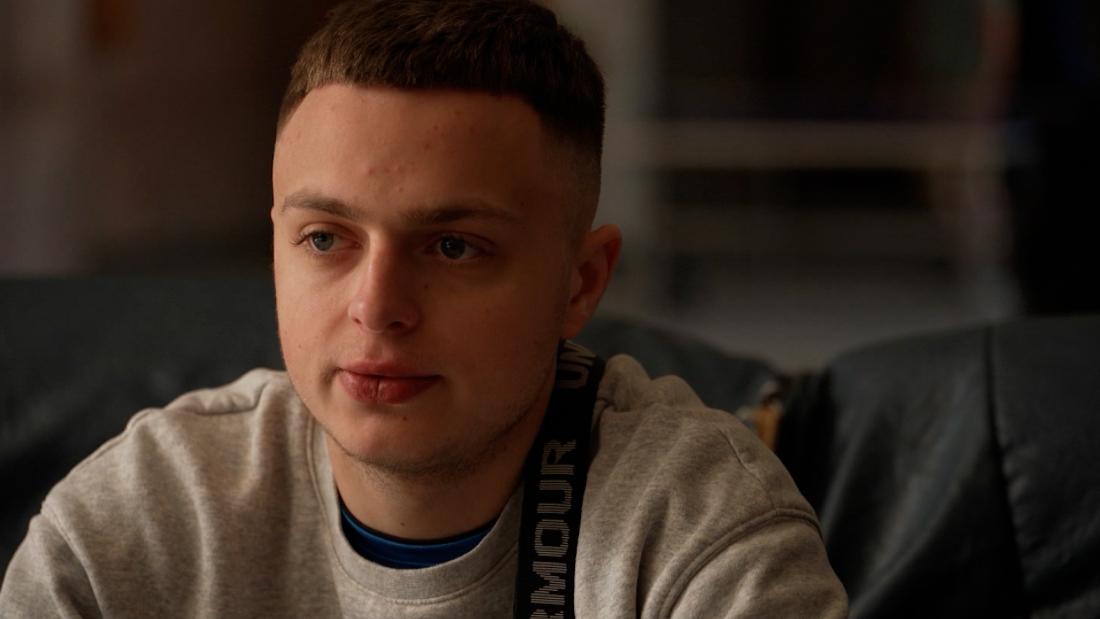
War is not merely a conflict of maps and strategies; it is a devastating human experience that leaves deep scars on those who live it directly. Akula, a young volunteer soldier who enlisted at the start of the Russian invasion of Ukraine, has become a living testimony to this cost. In an exclusive interview with CNN's David McKenzie, Akula described his frontline experience with a rawness that is chilling: "Scary, cold, hungry and lonely." These four words encapsulate the daily reality of thousands of combatants facing not only the enemy but also extreme conditions and relentless psychological attrition.
The context of Akula's story dates back to February 2022, when, driven by a sense of patriotic duty and the need to defend his home, he volunteered. Without extensive prior military training, he was catapulted into one of the most intense and technologically advanced conflicts in modern Europe. The first months, he recounts, were marked by a mix of adrenaline and confusion, but the brutality of war quickly took over. The 'frontline' is not a defined line but a landscape of destruction, muddy trenches, and ghost towns, where the threat of artillery, drones, and surprise attacks is constant. The winter cold, with temperatures that can plunge well below freezing, becomes an additional enemy, hindering sleep and wearing down the body.
Data on mental health in conflicts is telling. Organizations like the WHO estimate that a significant proportion of veterans and active combatants develop post-traumatic stress disorder (PTSD), depression, or anxiety. In Ukraine's case, with a prolonged war of attrition and limited troop rotation, experts anticipate a mental health crisis of enormous proportions. Akula describes classic symptoms: recurrent nightmares, constant hypervigilance ("I hear every creak"), difficulty connecting with civilian life during brief leaves, and a sense of emptiness. "At first, the body endures through sheer determination," he told CNN. "But the mind... the mind records everything. The sound of an engine that isn't ours, the whistle of a shell, the face of a fallen comrade. That doesn't turn off when you leave there."
The impact of these testimonies is multifaceted. On a human level, they put a face to the statistics and remind us that behind every casualty there is a broken personal story. For Ukrainian society, they pose the enormous challenge of veteran reintegration, which will require robust mental health systems and long-term community support. On a military level, the psychological health of troops is a crucial operational factor; a traumatized soldier is less effective and more prone to errors. Akula's interview also sheds light on logistical conditions, mentioning episodes of food shortages and adequate equipment, a reminder that resistance depends on constant support.
In conclusion, Akula's account transcends the individual case to become a mirror of the collective experience of a generation of Ukrainians forced to take up arms. His words, "scary, cold, hungry and lonely," echo those of countless soldiers throughout history but take on a particular urgency in the context of this modern, media-saturated war. Courage resides not only in fighting but also in speaking out, in breaking the stigma surrounding mental health in military environments. As the conflict continues, Ukraine's resilience will be measured not only in kilometers gained or lost but in its capacity to care for the hearts and minds of those defending it on the front lines. Akula's story is a wake-up call about a wound that, though invisible, can be as debilitating as a physical one, and that will demand attention long after the fighting ceases.