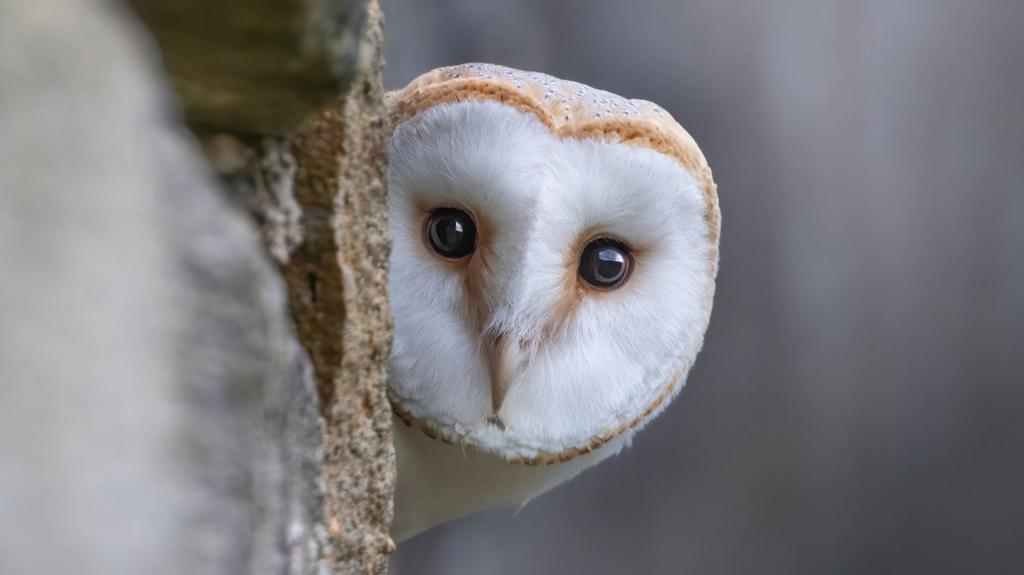
In a decision marking a historic shift in numismatics and national identity, the Central Bank has announced an ambitious plan to redesign the entire series of legal tender banknotes, replacing the traditional portraits of presidents, founding fathers, and historical figures with representations of the country's rich and diverse wildlife. The project, dubbed "Our Wildlife, Our Identity," aims not only to modernize the image of paper currency but also to foster environmental awareness and celebrate natural heritage as a fundamental pillar of the nation. Most revolutionary is that, for the first time, the selection process for the species to feature on the banknotes will be subjected to a massive public consultation, allowing citizens to vote for their favorite emblematic animals through a secure digital platform.
The context for this measure fits within a growing global trend towards revaluing national symbols beyond the political-military sphere. Countries like Norway, with its banknotes dedicated to the sea and navigation, or Canada, which has highlighted its cultural and scientific diversity, have set precedents. However, the decision to completely relegate human historical figures in favor of biodiversity is an unprecedented step for an economy of considerable size. The Central Bank Governor, Dr. Ernesto Vidal, stated at a press conference: "Our banknotes are mirrors of who we are and what we value. For decades, we honored exceptional individuals. Today, we want to honor the exceptional system that sustains us all: our ecosystem. It is a powerful message about sustainability, national pride, and legacy for future generations."
Preliminary data from the plan indicate that each denomination will be associated with a specific ecosystem and a flagship species. For instance, the highest-value note could feature the jaguar, a symbol of tropical rainforests, while lower denominations might highlight endemic birds, endangered amphibians, or crucial pollinating insects. A committee of biologists, designers, and cultural heritage experts has pre-selected a list of 50 candidates, considering criteria of ecological representativeness, conservation status, and cultural value for local communities. The public consultation, which will last three months, will allow citizens to narrow this list down to the final 8 species. Mass participation is expected, with educational campaigns in schools and media to inform about the importance of each candidate.
The impact of this initiative is projected across multiple fronts. In the realm of education and environmental awareness, having endangered species in the pockets of millions of people could become a daily and powerful pedagogical tool. Economists also point to a potential "pride effect" that could strengthen ecological tourism and national brands associated with nature. However, the measure is not without criticism. Some historians and conservative sectors have labeled the decision as "erasing history" and undervaluing the legacy of the nation's founders. "The risk is that we lose the tangible connection with our political and social past. Banknotes are a daily reminder of our trajectory as a country," argued historian Clara Montes. The Central Bank has responded that historical figures will continue to be celebrated on coins, in museums, the educational curriculum, and public spaces, but that paper currency, as a universal-use instrument, must evolve to reflect urgent contemporary priorities.
In conclusion, the transition from historical figures to wildlife on national banknotes represents much more than a simple design change. It is a statement of principle at a time of global environmental crisis, an experiment in participatory democracy applied to state symbols, and a bet on redefining national identity around natural wealth. The project's success will depend not only on flawless technical implementation and an orderly monetary transition but also on society's capacity to embrace this new visual narrative. If the public consultation achieves high participation and enriches the debate, this chapter could be remembered as the moment a country decided its true national treasure was not in its banks, but in its forests, rivers, and the incredible life they harbor. The new banknotes, more than mere payment instruments, will become small environmental manifestos in circulation.