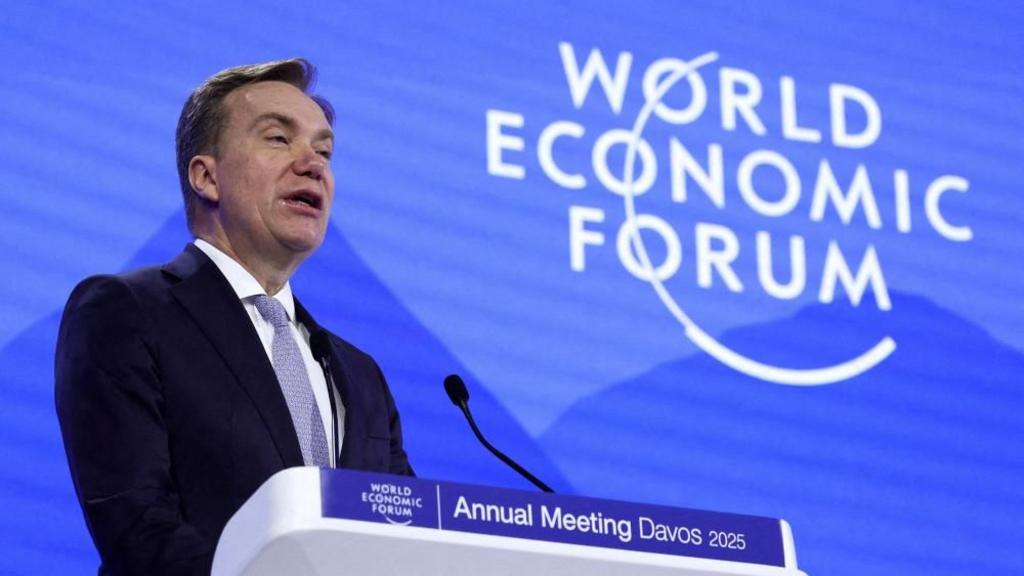
In a move that rattles global governance circles, the World Economic Forum's (WEF) Managing Director, Børge Brende, has resigned following an internal review into potential links with the late financier and convicted sex offender, Jeffrey Epstein. The decision, announced on Tuesday, comes after the WEF's executive committee concluded an investigation into Brende's interactions with Epstein, who died in a New York jail in 2019 while awaiting trial for sex trafficking of minors. Although specific details of the findings have not been made public, sources close to the organization indicate the review identified 'inappropriate communications' that occurred over a decade ago, prior to Brende joining the WEF.
Brende, a former Norwegian Foreign and Trade Minister, had led the Geneva-based organization since 2017, overseeing flagship events like the annual meeting in Davos. In a statement, the WEF stated that 'following a thorough review of historical circumstances, Mr. Brende and the WEF have mutually agreed that his resignation is most appropriate to preserve the integrity and mission of the organization.' The statement emphasized that no evidence of illegal conduct by Brende was found, but that any association, however dated, with individuals like Epstein is incompatible with the Forum's values.
The context of this resignation is particularly sensitive for global institutions, which have faced growing scrutiny over their ties to controversial figures. Epstein, once an elite financier with an extensive network among politicians, academics, and business leaders, has been a focal point for examining how elites interact and what level of accountability organizations have in vetting their members' associations. The WEF, which positions itself as a force for global good and public-private cooperation, operates under an especially high standard of scrutiny.
Brende's resignation raises urgent questions about due diligence processes within major international institutions. In recent years, several prestigious universities, banks, and foundations have had to confront their own past connections to Epstein, often resulting in policy reviews and, in some cases, the return of donations. For the WEF, a body that heavily relies on its reputation to convene world leaders, managing this situation is critical. A spokesperson stated the organization 'reaffirms its commitment to the highest ethical standards' and is implementing stricter vetting protocols for all senior employees and partners.
The immediate impact centers on planning for the upcoming annual meeting in Davos, scheduled for January. The sudden departure of Brende, a key figure in the event's logistics and diplomacy, could complicate preparations. Internally, Klaus Schwab, the WEF's founder and executive chairman, is expected to temporarily assume some of Brende's responsibilities while a permanent replacement is sought. Analysts suggest this episode could lead to a broader reevaluation of how global organizations handle the problematic legacies of their members and partners, a process that may extend beyond the WEF.
In conclusion, Børge Brende's resignation marks a significant moment of accountability in the global governance ecosystem. It underscores the ongoing pressure on institutions to audit not only their present operations but also their past associations, especially in light of high-profile public scandals. While the WEF seeks to contain damage to its reputation, the incident serves as a stark reminder that, in the age of transparency, historical links to discredited figures can resurface with severe professional consequences. The path forward for the organization will likely involve enhanced diligence and, possibly, a rethinking of how it balances access to influential networks with the ethical imperative of maintaining clear boundaries.