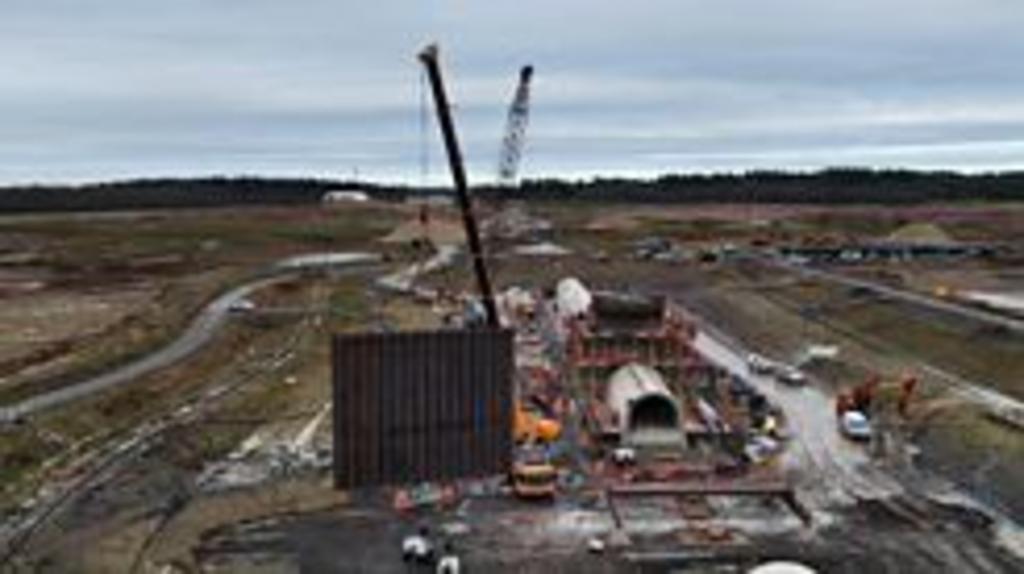
In a stunning display of precision engineering and logistics, a 20-tonne steel containment wall was successfully installed at a new water reservoir during a continuous 72-hour operation that kept dozens of workers and specialized equipment operating around the clock. The project, considered critical for the region's water infrastructure, required meticulous planning spanning several months, culminating in a three-day execution window where any error could have meant costly delays and compromised the structural safety of the facility.
The context of this work is framed within global efforts to modernize and expand water storage and treatment infrastructure, facing increasing pressure from climate change and population growth. Reservoirs of this type are essential to ensure a stable supply of potable water to urban populations and industries, acting as buffers against drought periods or fluctuations in demand. The installation of this specific wall, a modular steel structure designed to withstand enormous hydrostatic pressures and last for decades, represents a crucial phase in the reservoir's construction, which once completed will have a storage capacity of several million liters.
Relevant data from the operation is eloquent. In addition to the structure's 20-tonne weight, an extreme-capacity mobile crane was used, capable of maneuvering loads with centimeter precision. The operation was monitored in real-time using laser telemetry and GPS systems, ensuring perfect alignment. "It was an absolute precision choreography between the crane, the ground teams, and the control engineers," declared the project's lead engineer, Maria Lopez. "We planned every movement to the second, considering factors like wind, temperature, and material fatigue. There is no room for improvisation in an operation of this scale and continuity."
The impact of completing this phase in just 72 hours is multifaceted. Firstly, it significantly reduces the total construction time of the reservoir, allowing the critical infrastructure to enter service months ahead of schedule, a vital factor for communities relying on its completion. Secondly, it minimizes disruption in the surrounding area, as a continuous, though intense, operation is shorter than prolonged intermittent work. Economically, execution efficiency translates into considerable savings in labor costs, rental of specialized equipment, and overall project management.
In conclusion, this milestone is not just news about a giant piece of steel, but a testament to advances in heavy infrastructure construction methods. It demonstrates how the combination of modular design, state-of-the-art machinery, and advanced logistical planning can compress timelines previously measured in weeks down to just a few days. This success sets a precedent for future water and energy infrastructure projects globally, showing a path towards faster, safer, and more efficient execution of works essential for sustainable development.