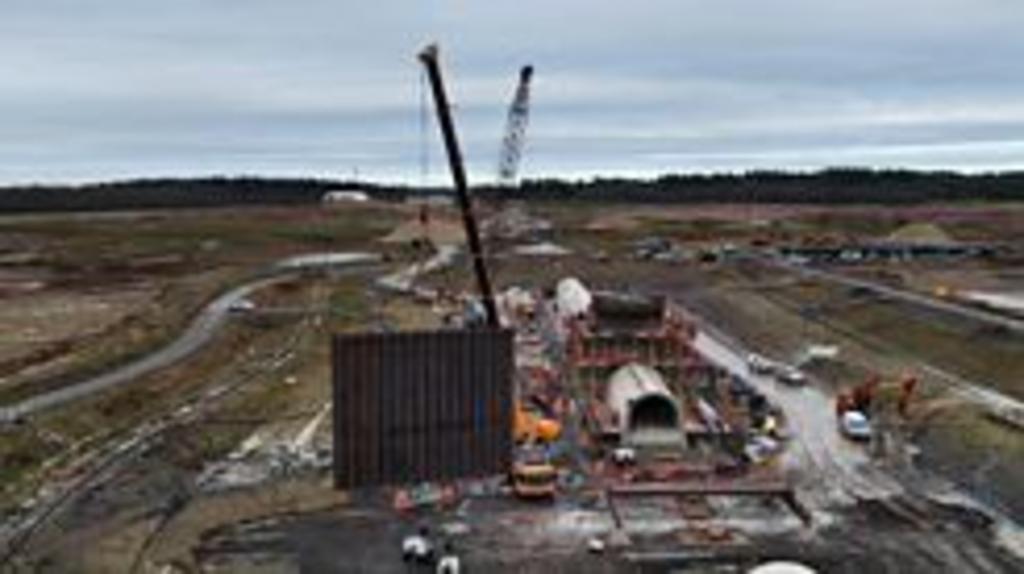
In a stunning display of precision engineering and logistics, a construction crew has successfully installed a massive 20-tonne steel wall into a new water reservoir during a continuous 72-hour operation. The maneuver, described as one of the most complex in the recent history of the region's hydraulic infrastructure, required meticulous planning and the coordination of dozens of specialists who worked around the clock to ensure the project's success.
The new reservoir, part of a master plan to enhance water storage capacity and resilience for a growing population, is located in a strategically important area. The installation of this steel divider wall is a critical component of its structure, designed to separate reservoir sections and allow for maintenance operations without the need for a complete drain—an innovation that significantly improves operational efficiency and water conservation. The overall project represents a multi-million dollar investment aimed at securing water supply for the coming decades.
The installation operation itself was a choreographed ballet of heavy machinery. Using an extreme-capacity tower crane, the steel panel, prefabricated at a specialized workshop miles away, was transported to the site and carefully maneuvered over the prepared foundation. Civil engineers and surveyors monitored every millimeter of the descent using high-precision laser positioning systems, ensuring perfect alignment. 'The allowed tolerance was less than 5 millimeters in any direction,' explained the project's lead engineer, Maria Lopez. 'Any error could compromise the long-term structural integrity and watertightness of the reservoir. The pressure was immense, but the team was prepared.'
The 72-hour continuous timeline was not an arbitrary choice but a necessity imposed by construction deadlines and the logistics of traffic in the surrounding urban area. Working uninterrupted allowed the team to minimize community impact and reduce risks associated with the repeated assembly and disassembly of heavy equipment in a confined space. A temporary command center was established on-site, with rotating shifts for operators, engineers, safety personnel, and logistical support, all working under strict safety protocols.
The impact of this construction milestone is multifaceted. Firstly, it significantly accelerates the overall reservoir project schedule, which can now proceed to subsequent construction phases like cover installation and treatment systems. Secondly, it serves as a case study for future critical infrastructure projects, demonstrating that complex, large-scale operations can be executed successfully under tight time and space constraints through advanced planning and technology. Finally, for the citizenry, it represents a tangible step toward a more robust and reliable water system, less susceptible to maintenance disruptions or droughts.
In conclusion, the successful installation of the 20-tonne wall is more than just a construction feat; it is a testament to human capability in solving complex engineering challenges. It marks a crucial turning point in a vital infrastructure project, combining the brute force of machinery with the delicacy of technological precision. As the world faces increasing pressures on water resources, projects like this underscore the importance of investing in smart, resilient infrastructure built with the foresight to serve future generations.