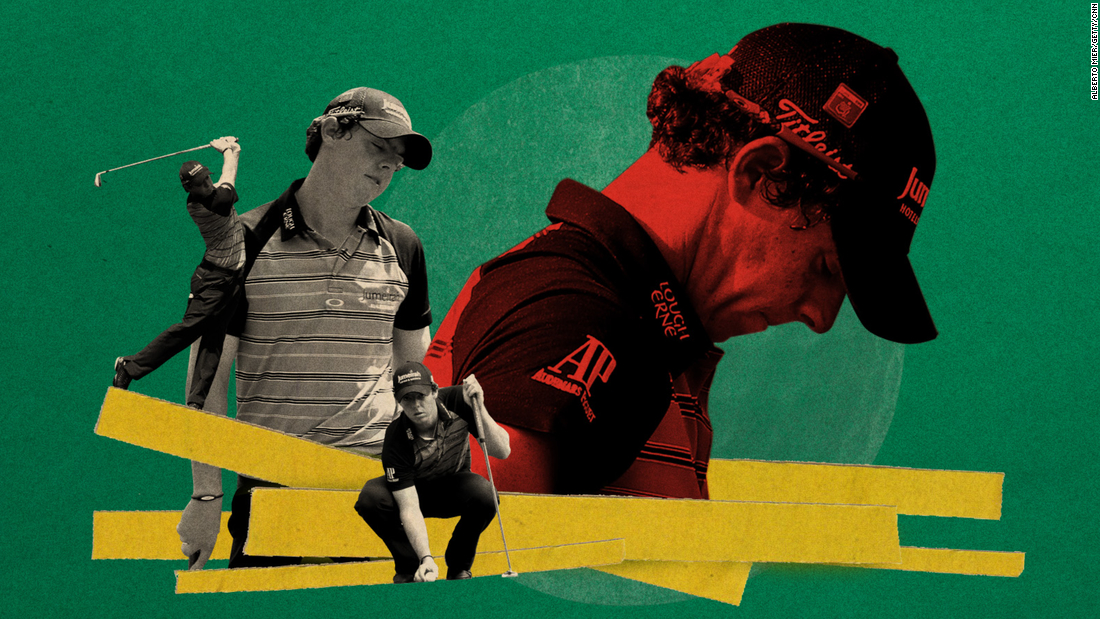
The image was seared into the memory of the golfing world: a young Rory McIlroy, just 21 years old, slumped on his club, head buried in his arm, looking on the verge of tears. It was Sunday, April 10, 2011, at Augusta National Golf Club, and what had begun as a triumphant march toward his first major championship had disintegrated into one of the most monumental collapses in the tournament's storied history. McIlroy, leading by four strokes at the start of the final round, unraveled at the 10th hole, triggering a catastrophic chain of errors that relegated him to a disappointing 15th-place finish. This meltdown, far from being the end, would become the fundamental turning point in his career, forging the champion of character who would later emerge.
The context of that Masters was one of immense anticipation. McIlroy, the Northern Irish prodigy, had already shown flashes of his brilliance but was yet to cement his place among the elite with a major championship. He led the tournament after 54 holes with a comfortable margin, playing dominant and seemingly unflappable golf. The press was already preparing headlines for the coronation of a new star. However, the pressure of the majors, combined with the treacherous challenges of the Augusta course, created a perfect storm. The 10th hole, "Camarón," was the catalyst. His drive veered dramatically left, between the members' cabins, leading to a triple bogey that shattered his confidence. What followed was a descent into hell: a bogey on the 11th, a disastrous triple bogey on the 13th after finding Rae's Creek, and another bogey on the 15th. His game, so fluid days before, became stiff and erratic.
The data from the collapse is telling. McIlroy went from a score of -12 at the start of the round to finishing at -4. He shot an 80 (+8) on the final day, the worst final round by a 54-hole leader in Masters history at that time. He lost seven strokes in just three holes (10 through 12). In contrast, South Africa's Charl Schwartzel, who started the day four strokes back, closed with a stunning run of four consecutive birdies on the final four holes to claim the green jacket. The mental difference between the two was vast. In post-round comments, a visibly shaken McIlroy admitted, "It was a very difficult day. But it's the Masters, and it's a tournament I've dreamed of winning since I was a little boy. I learned a lot about myself today."
The psychological impact was profound, but his response defined him. Instead of crumbling, McIlroy used the failure as fuel. He worked intensively with his team, especially on the mental side, to build resilience. Just two months later, at the U.S. Open at Congressional, he delivered one of the most dominant performances ever seen in a major, winning by eight strokes and breaking the tournament's scoring record. Redemption was served. That victory not only silenced critics but demonstrated a rare capacity for overcoming adversity. The Augusta collapse taught him invaluable lessons about handling pressure, patience, and the fragility of a lead in elite golf.
Throughout his career, McIlroy has gone on to accumulate majors (four to date), but the Masters green jacket remains the sole missing piece for the Career Grand Slam. The shadow of 2011, though softened by his successes, reappears every April at Augusta. However, it is fair to argue that without that painful Sunday, the McIlroy who is a champion and a leader of the sport might not exist. The conclusion is clear: the 2011 meltdown was not a disaster, but a necessary rite of passage. It forged his character, taught him humility, and provided him with the most powerful motivation. The image of the defeated young man on the 10th fairway is, in retrospect, the first chapter in the story of a fighter, an eternal reminder that in sports, as in life, how you respond to failure defines your legacy far more than easy victories.