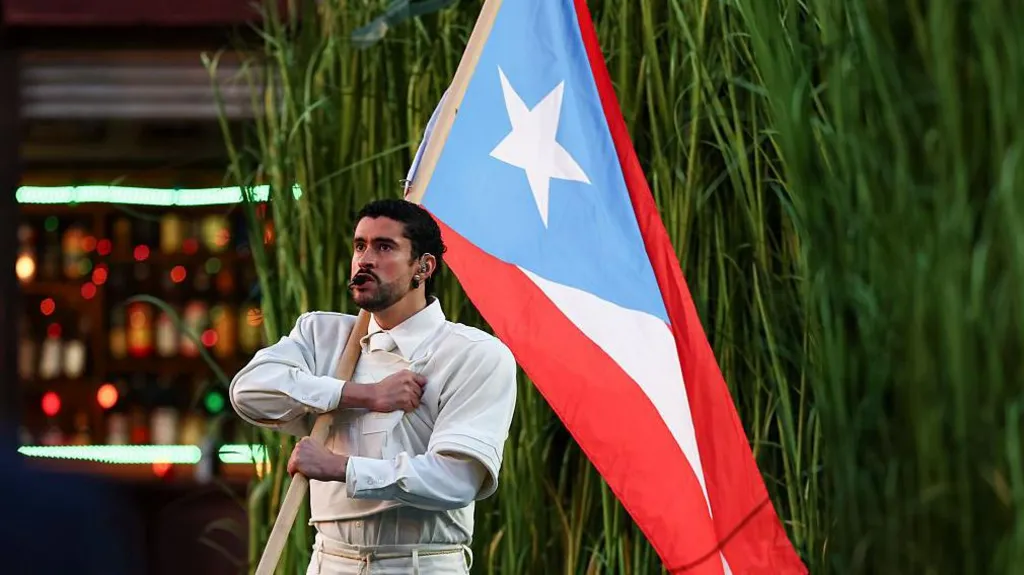
Bad Bunny's historic halftime show at Super Bowl LVII transcended mere entertainment to become a powerful act of cultural affirmation and Puerto Rican pride. For millions of viewers, it was a vibrant spectacle. For the Boricua diaspora, especially those who, like the artist himself, grew up on the island, it was a moment loaded with deep personal and collective meaning. The choice of Bad Bunny, born Benito Antonio Martínez Ocasio in San Juan, as the headliner for the world's most-watched intermission was not only a recognition of his status as the most streamed artist globally but also an unprecedented validation of Latino culture, and specifically Puerto Rican culture, on the most mainstream American stage.
The context of this achievement is crucial. Puerto Rico, an unincorporated territory of the U.S., has a complex and often painful relationship with the mainland. Its political status limits its representation and sovereignty, and its culture, although hugely influential, has struggled for equitable recognition in major Anglo circuits. Seeing a young man from Vega Baja, who sings primarily in Spanish and whose music is rooted in reggaeton and other Caribbean rhythms, commanding that stage was an act of massive visibility and vindication. Bad Bunny did not adapt to the mold; he brought his world to the center of State Farm Stadium. His performance, which included a powerful rendition of "El Apagón" with a choir of women dancing bomba, an ancestral Afro-Puerto Rican rhythm, was a lesson in history and resistance. It was not a superficial nod but a deliberate immersion into his roots.
The artist's statements, both in his music and in prior interviews, have always emphasized his pride in his heritage. "Soy de Puerto Rico, pa' que tú lo sepas" (I'm from Puerto Rico, so you know), is a refrain that resonates as an anthem. At the Super Bowl, that phrase took on a monumental dimension. Cultural analysts have noted that his performance functioned as a "gentle act of cultural disobedience," normalizing Spanish and Latino aesthetics for an audience of over 100 million people. Post-event streaming data showed a massive spike in plays of his catalog, indicating that the message was not only seen but heard. For Latino communities in the U.S., and particularly for Puerto Ricans, it was a moment of immense pride and belonging, a signal that their narratives and their sound have an undeniable place in contemporary global culture.
The impact of this moment is multifaceted. In the musical realm, it consolidates the hegemony of reggaeton and Latin music in the global industry. Socially, it serves as a beacon of inspiration for young Latinos, demonstrating that there is no need to dilute their identity to reach the top. Politically, although Bad Bunny avoided explicit statements during the show, the mere presence of his cultural symbols in that forum carries an inherent political charge, reminding viewers of Puerto Rico's vitality and struggle. In conclusion, Bad Bunny's Super Bowl show was much more than a successful halftime concert. It was a historic cultural milestone where the personal—the experience of being Puerto Rican—became universal. It affirmed that Latinidad, with all its complexity and richness, is not a niche but a central force in the 21st-century cultural landscape, and that the voice of the island, through one of its most famous sons, can resonate with unmatched clarity and power on any stage in the world.