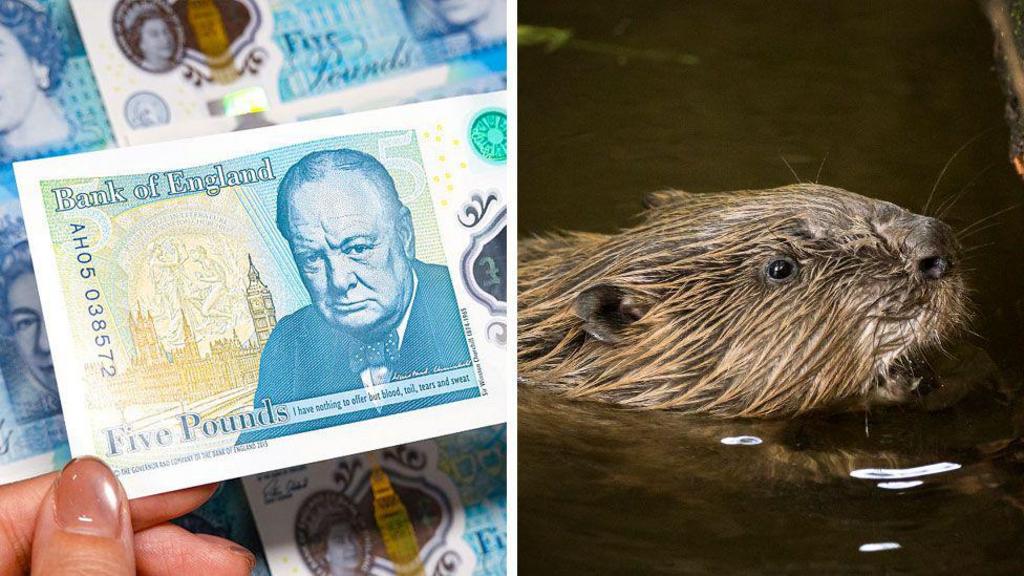
The Bank of England has unleashed a storm of criticism and public debate following the announcement of the finalist designs for its new banknote series, which controversially include the figure of a beaver. The proposal, which aims to modernize British monetary iconography, has met with fiercely traditionalist resistance from broad sectors of society, triggering what the media have dubbed a "very British backlash." This phenomenon transcends mere aesthetic discussion to delve into issues of national identity, heritage conservation, and the eternal tug-of-war between modernity and tradition in the United Kingdom.
The renewal process, which takes place approximately every two decades, had as its main objective the incorporation of elements of British fauna and flora, as well as celebrating contemporary figures from science and culture. However, the inclusion of the beaver (Castor fiber) as one of the emblematic animals has been the trigger for the controversy. Critics argue that, while the beaver is being reintroduced in some rivers in Scotland and England, it is not an "intrinsically British" symbol compared to the robin, the red fox, or the hedgehog, all of them present in the country's popular culture for centuries. "It is an admirable creature, but it does not represent our national spirit," historian Sir Alistair McFarlane, a prominent voice in the opposition movement, told The Telegraph.
For its part, the Bank of England and the design committee have defended the choice with scientific data and conservation arguments. They point out that the beaver, extinct in Britain since the 16th century, has returned thanks to rewilding projects and symbolizes modern efforts in ecological restoration and sustainability. "The beaver is an ecosystem engineer. Its selection reflects a vision of the future, of reconciliation with nature, and of the environmental values that are crucial in the 21st century," explained Dr. Eleanor Vance, a member of the selection panel, at a press conference. The designs also reportedly include, according to leaked sources, a tribute to mathematician Ada Lovelace and motifs of the national flower, the thistle, in an attempt to balance innovation and tradition.
The impact of this controversy is multifaceted. On one hand, it has generated an unusual public debate about symbolism and identity, with polls showing an almost even split: 48% support the inclusion of reintroduced species as a symbol of progress, versus 46% who prefer consolidated historical icons. On the other hand, it has highlighted tensions within the monetary institution itself, divided between more progressive and conservative factions. Economically, although the direct impact is limited, analysts note that a prolonged controversy could affect the perception of stability and consensus that traditionally emanates from the Bank, a pillar of global financial confidence.
The reaction on social media and in the press has been intense, with memes, cartoons, and opinion pieces ranging from enthusiastic support to visceral rejection. Some columnists see in this "beaver case" a symptom of a deeper malaise: the fear of change in a nation still navigating the consequences of Brexit and seeking to redefine its place in the world. The discussion has transcended the monetary to become a barometer of the national mood.
In conclusion, the controversy over the new British banknotes is much more than a dispute over artistic tastes. It is a vivid reflection of the cultural battles that define the current era: the struggle between preserving an idealized past and adopting a narrative of the future, between pride in the native and openness to symbols of regeneration. The Bank of England's final decision, scheduled for next quarter, will be read not only as a design choice but as a statement of principle about what kind of nation the United Kingdom aspires to be in the coming decades. The humble beaver, unknowingly, has become the involuntary protagonist of a national debate about identity, memory, and progress.