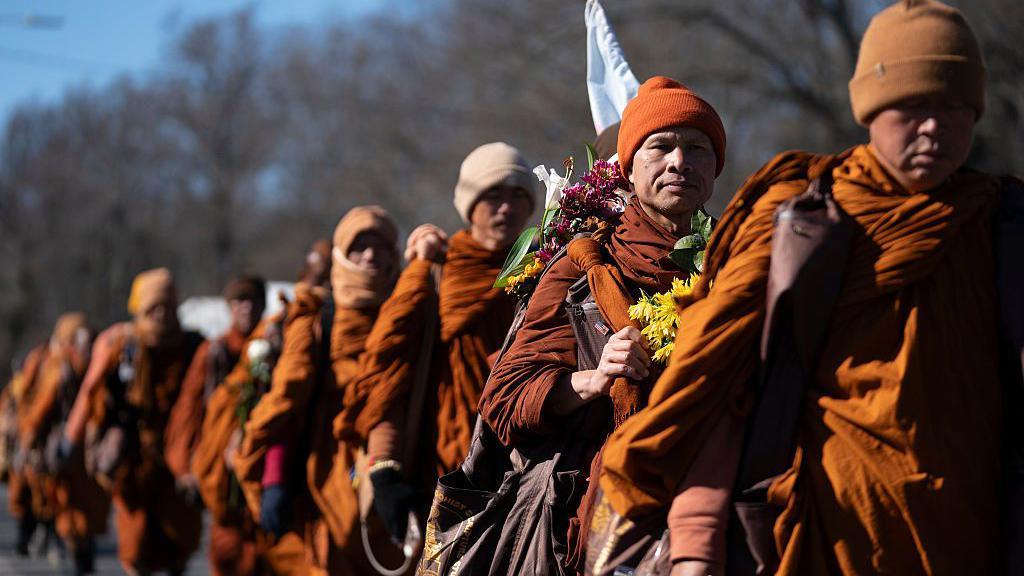
A group of nineteen Buddhist monks is poised to conclude an extraordinary 108-day pilgrimage, having walked single-file from Texas to the United States capital, Washington D.C. This act of silent resilience, known as the 'Walk for Peace', is a powerful non-violent protest and spiritual practice aimed at sowing seeds of peace, compassion, and understanding in a country marked by deep political divisions, social tensions, and often conflict-ridden public discourse. The walk, which began on June 1st in the border city of Edinburg, Texas, has covered over 1,600 miles on foot, methodically progressing through the scorching southern plains, the mountainous regions of Appalachia, and finally toward the nation's political heart. The monks, from the Nipponzan Myohoji Buddhist tradition, are recognizable by their distinctive white robes and their practice of beating drums and chanting 'Namu Myoho Renge Kyo' while walking, though silence has been a key component in this instance. Their serene and disciplined presence has served as a tangible, mobile reminder of the possibility of an existence based on non-violent principles. The number 108 is profoundly significant in Buddhism and many other spiritual traditions. It represents the 108 earthly defilements or desires that, according to the teachings, bind humans to the cycle of suffering. By undertaking a 108-day walk, the monks symbolize an effort to transcend these afflictions and purify intention, offering each step as a prayer for world peace and the healing of divisions within American society. Throughout the journey, the monks have relied on the generosity of local communities for food and shelter, creating impromptu yet meaningful encounters with Americans from all walks of life. These interactions, though often wordless, have allowed the walk's message to be transmitted through pure action and compassionate presence. 'We are not here to protest against anyone in particular,' explained head monk Gyoshu Utsumi in a rare statement offered to local media midway through the trek. 'We walk to awaken the seed of peace that exists within every heart. In a time of so much noise and confrontation, we offer the silence and the steady rhythm of our steps as a form of prayer for the nation.' The culmination of the walk is scheduled for the steps of the Lincoln Memorial in Washington D.C., a site laden with symbolism for its association with the Civil Rights Movement and Dr. Martin Luther King Jr.'s 'I Have a Dream' speech. A final ceremony with chanting, meditation, and the participation of supporters and interfaith leaders is expected. The impact of this walk transcends the physical act. It serves as a critical counterpoint to the contemporary narrative of polarization, demonstrating that activism can take deeply contemplative and personal forms. By choosing silence over slogan, and peaceful physical endurance over heated rhetoric, the monks challenge conventional notions of advocacy. Their journey is a testament to the belief that social change begins with inner transformation and that peace is not merely the absence of conflict, but an active quality that must be cultivated with intention and effort. As the monks arrive in Washington, their message arrives at a crucial time, inviting reflection on the role of spirituality in the public square and the power of symbolic action to inspire a kinder, more considered national dialogue.
World3 min read
Buddhist Monks' 108-Day 'Walk for Peace' Culminates in Washington DC
Written by ReDataFebruary 10, 2026