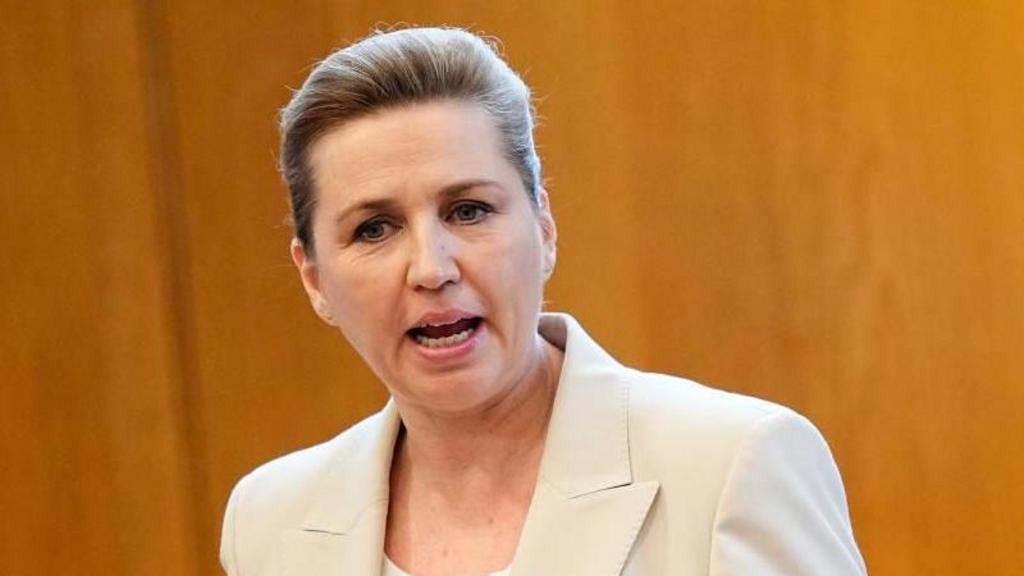
In a political move that has surprised the international scene, Denmark's Prime Minister, Mette Frederiksen, has announced the calling of an early general election for next month. The decision, taken in a context of growing internal political tension, unexpectedly places the issue of Greenland's future, a Danish autonomous territory, at the heart of the electoral campaign. This focus reflects the increasing geopolitical and strategic importance of the world's largest island, rich in natural resources and located in a key position in the Arctic.
The announcement comes amid a national debate about the relationship between Denmark and Greenland, which enjoys extensive self-rule since 2009 but whose defense and foreign policy remain the responsibility of Copenhagen. In recent years, international interest in Greenland has grown exponentially, driven by the melting of the Arctic, which opens new shipping routes and facilitates access to vast deposits of rare minerals, oil, and gas. This potential wealth has attracted the attention of global powers, including the United States and China, generating concerns in Denmark about sovereignty and influence in the region.
Mette Frederiksen, leader of the Social Democrats, justified the election call by citing the need for a clear and fresh mandate to address what she called "the most complex challenges of our era," among which she explicitly highlighted defining a long-term strategy for Greenland and the Arctic. "The Greenland issue is not just a question of resources or foreign policy; it is a question about the future of our kingdom, our security, and our values in a rapidly changing world," Frederiksen declared at a press conference from Christiansborg Palace. "The Danish people must have the opportunity to decide which course we take."
The opposition parties have reacted with a mix of skepticism and opportunism. Some accuse the prime minister of using a high-politics issue to divert attention from domestic problems, such as inflation and the housing crisis. Others, however, have embraced the debate, presenting alternative visions ranging from greater investment in Greenland to strengthen ties, to bolder proposals about eventual supervised independence. "This is not the time to play geopolitics with Greenland's future," stated the leader of the Liberal Party, Jakob Ellemann-Jensen. "We need a serious and respectful dialogue with the Greenlanders, not a campaign of fear."
In Nuuk, Greenland's capital, the reaction has been cautious. Greenland's Prime Minister, Múte Bourup Egede, issued a statement reminding that any decision about the island's future must have the consent of its people. "Greenland has the right to self-determination. We will continue to cooperate with Denmark as a partner, but our aspirations and our vision for development are what must guide this process," Egede noted. This position underscores the delicate nature of the relationship, where the independence aspirations of a significant part of the Greenlandic population clash with Danish strategic interests and the complex web of international alliances.
The impact of this election call transcends Denmark's borders. NATO allies, particularly the United States, are watching events closely. The United States maintains a strategic air base at Thule, in northwestern Greenland, a crucial asset for aerospace defense and Arctic monitoring. Any significant change in Greenland's status could affect existing defense agreements. Political analysts suggest the election could become a tacit referendum on the degree of autonomy Denmark is willing to grant and on how to handle the growing rivalry between major powers in the Arctic.
In conclusion, Mette Frederiksen's decision to bring the Greenland issue to the center of an early election campaign marks a turning point in Danish politics. It reflects how global challenges, from the competition for resources to security in the High North, are reshaping national political agendas. The outcome of this election will not only determine Denmark's next government but could also redefine Greenland's trajectory and, by extension, the balance of power in an increasingly contested Arctic region. Danish voters now face a choice with implications that will resonate for decades.