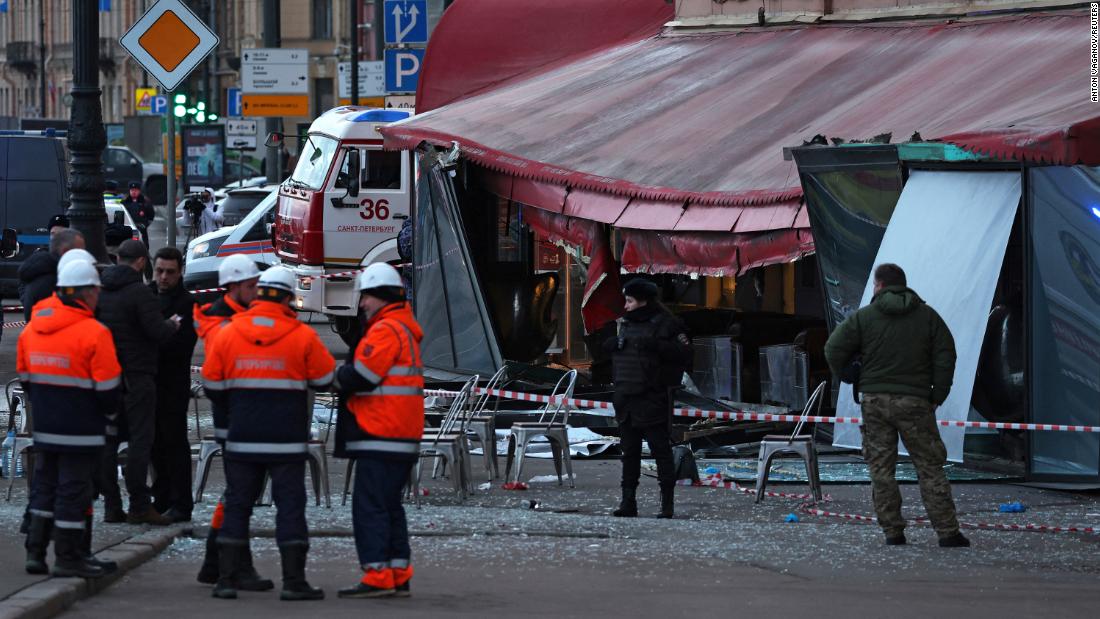
A devastating explosion rocked a cafe in central St. Petersburg on Sunday, in an attack that Russian authorities have labeled a terrorist act. The incident, captured on video by witnesses and security cameras, killed Vladlen Tatarsky, an influential Russian military blogger and nationalist with hundreds of thousands of followers. The blast occurred during an event organized by a patriotic group at the Street Food Bar No. 1 cafe, located on Universitetskaya Naberezhnaya street, on the banks of the Neva River and just meters from the iconic Kazan Cathedral. According to Russia's Investigative Committee, the explosive device was hidden inside a statuette that was presented to Tatarsky as a gift during the gathering.
The context of this attack is deeply complex and is framed by the conflict in Ukraine and the growing polarization within Russian society. Vladlen Tatarsky, whose real name was Maxim Fomin, was a prominent figure in the nationalist and military media ecosystem that has flourished on Telegram. With over 560,000 followers, his analysis, often critical of the Russian Defense Ministry's conduct but firmly pro-war, had a wide audience. He had participated in Russia's annexation of Ukrainian territories at a Kremlin ceremony in September 2022. His killing represents the most significant attack on Russian soil against a public figure linked to the conflict since the assassination of journalist Daria Dugina last year.
Preliminary investigation data points to a sophisticated operation. Authorities detained a suspect, identified as Darya Tryopova, a 26-year-old resident of St. Petersburg, who allegedly delivered the statuette containing the explosive. Tryopova is reported to have previously attended events organized by Tatarsky's group. The Federal Security Service (FSB) claims the attack was planned with the assistance of Ukrainian agents. So far, the attack has resulted in at least one death and more than 30 injuries, several in serious condition. The explosion shattered the facade of the venue and scattered glass and debris across the street.
Official statements have been forceful. Kremlin spokesperson Maria Zakharova stated that the attack received "support" from the West, accusing the governments of Ukraine, the United States, and the European Union of fostering terrorism. For his part, Ukrainian President Volodymyr Zelensky distanced himself from the incident, stating that Ukraine does not attack civilian targets. "We have nothing to do with what is happening in St. Petersburg. We are waging a war on our own territory," declared a presidential advisor. Meanwhile, on social media and Telegram channels aligned with the Kremlin, the reaction has been one of outrage and calls for a harsh response.
The impact of this event transcends individual tragedy. The explosion in St. Petersburg, a city that had remained relatively untouched by the direct violence of the conflict, introduces a new layer of insecurity for pro-war public figures in Russia. It exposes deep divisions and the possibility of the war returning to Russian territory in unforeseen ways. For the Russian military and security establishment, it represents a direct challenge and a humiliation, occurring in the heart of one of its major cities. The incident is likely to be used to justify greater internal repression and an escalation of rhetoric and actions against Ukraine.
In conclusion, the death of Vladlen Tatarsky is not just the assassination of a blogger; it is a symbolic turning point in the narrative of the war. The attack, executed with precision in a civilian space, demonstrates the vulnerability of even the most visible figures on the Russian nationalist side. As investigations proceed and accusations fly between Moscow and Kyiv, this event will likely harden the positions of both sides, further reducing any prospect for dialogue in the near future. The blast at the St. Petersburg cafe is a stark reminder that in modern conflicts, information fronts and psychological warfare can have consequences as lethal and tangible as battles on the field.