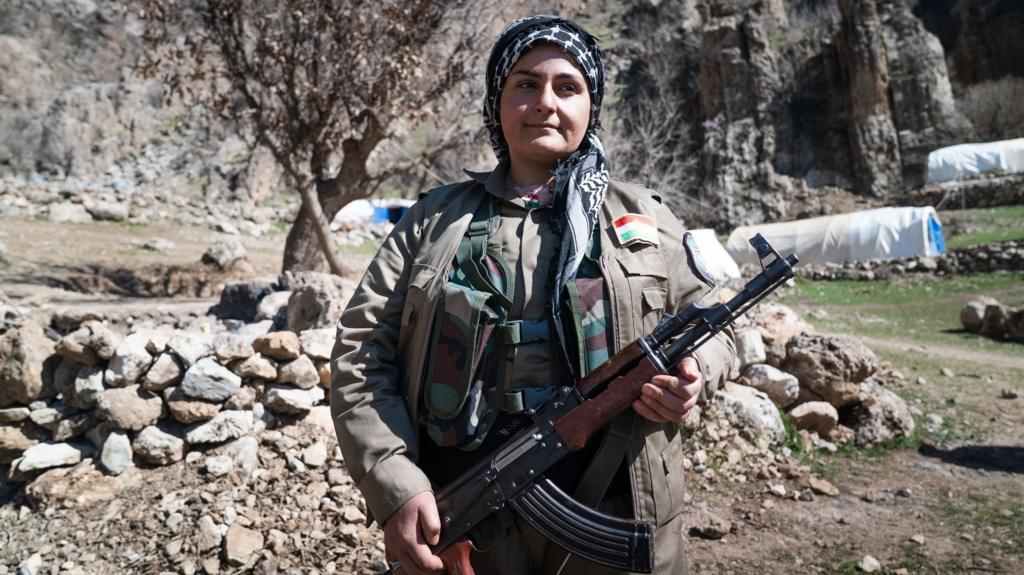
In camps scattered across the mountainous borderlands of Iraq, exiled Kurdish communities live in a state of perpetual alert. The buzz of drones has become the ominous soundtrack of their daily reality, a constant reminder that the long arm of the Islamic Republic of Iran reaches them even in exile. These groups, comprised of political activists, former combatants, and families fleeing persecution, represent one of the most significant opposition threats to the theocratic regime in Tehran, which responds with a campaign of unmanned aerial strikes designed to silence dissenting voices beyond its borders.
The context of this asymmetric confrontation stretches back decades of tensions between the Iranian central government and its significant Kurdish population, estimated at around 10 million people, primarily concentrated in the western provinces. Iranian Kurds, who seek greater cultural, linguistic, and political rights within the state's framework, have faced systematic repression. The regime's response to any hint of autonomy or protest has been historically severe, pushing many to seek refuge in neighboring Iraqi Kurdistan, a semi-autonomous region. However, the relative safety of these camps has been eroded by technological advances in drone warfare, which Tehran has perfected and widely exported.
Data from human rights monitoring organizations, such as Iran Human Rights and the Kurdish Rights Defense Group, indicate a dramatic increase in drone attacks against Kurdish positions in Iraq over the past three years. In 2023 alone, more than 40 incursions by Iranian-made unmanned aerial vehicles (UAVs) were recorded, resulting in dozens of civilian and military casualties among the ranks of exiled groups like the Democratic Party of Iranian Kurdistan (PDKI) and Komala. These attacks, often carried out with 'Shahed-136' kamikaze drones or armed 'Mohajer-6' reconnaissance drones, demonstrate a low-cost, high-impact power projection strategy, allowing Tehran to strike specific targets without needing a ground invasion that would trigger massive international condemnation.
Statements from those affected paint a harrowing picture. 'We live with our eyes on the sky,' recounts Ava Hosseini, a women's rights activist who fled Sanandaj five years ago. 'The sound of a small engine paralyzes us. Our children have nightmares about metal bees.' For his part, a PDKI commander, who asked to be identified only as 'Rojhat' for security reasons, stated in written communication: 'We are besieged by technology. Our mountain shelters are no longer sanctuaries. The regime wants to send a message: there is no escape. But every attack strengthens our resolve.' From Tehran, authorities justify these operations as 'legitimate anti-terrorist actions' against 'armed separatist groups' that, they claim, receive support from foreign powers.
The impact of this drone campaign transcends immediate violence. It has profoundly altered life in the camps, forcing communities to adopt nocturnal living patterns, limit public gatherings, and build an underground network of shelters. Psychologically, it has instilled a state of collective trauma and constant anxiety. Regionally, these attacks blatantly violate Iraqi sovereignty, generating recurrent diplomatic tensions between Baghdad and Tehran, although the Iraqi central government often lacks the power to prevent incursions into its Kurdish territory. Internationally, organizations like the UN have expressed 'grave concern,' but concrete actions have been limited, partly due to the stalemate in negotiations over Iran's nuclear program and other geopolitical matters.
In conclusion, the situation on the Iraqi-Iranian border represents a grim chapter in the protracted conflict between the Iranian state and its Kurdish minority. The regime's weaponization of drone technology has created a new paradigm of transnational repression, enabling the persecution of dissidents in formerly safe havens. For the exiled Kurds, the hope of a safe return or meaningful dialogue seems more distant than ever, as the sky above their heads becomes a battlefield. Their resistance, however, persists, a testament to a struggle for identity and self-determination that continues to challenge one of the region's most oppressive regimes, even under the constant threat of the silent shadows crossing the horizon.