The Iranian government has officially announced preparations to repatriate the remains of 84 navy sailors who perished over three decades ago in one of the most severe naval confrontations with the United States. The incident, which occurred on July 3, 1988, during the Iran-Iraq War, involved the American cruiser USS Vincennes, which fired two missiles that struck Iran Air Flight 655, and subsequently, in a confused combat episode, sank the Iranian frigate Sahand with torpedoes. While global attention focused on the civilian air tragedy with 290 victims, the loss of the warship and its crew remained in the background, with the bodies trapped in the wreck at the bottom of the Persian Gulf for 36 years.
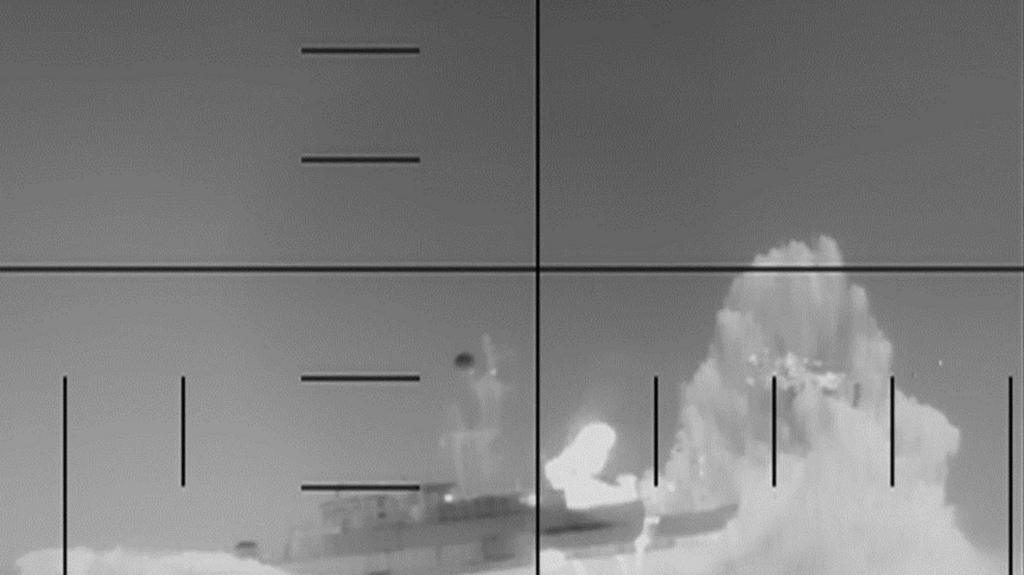
The context of the confrontation is crucial to understanding its magnitude. In 1988, the so-called "Tanker War" was at its peak, with both nations attacking merchant vessels in the Gulf. The United States, which supported Iraq in the conflict, deployed a significant naval force to protect navigation. The USS Vincennes, a cruiser equipped with the advanced Aegis combat system, was in Iranian waters following a skirmish with patrol boats. Amid the tension, its captain mistakenly identified the Iran Air Airbus A300 as an Iranian F-14 fighter jet and ordered it shot down. Hours later, in what the U.S. Navy described as a response to an imminent attack, the Vincennes also attacked the frigate Sahand, sinking it. Iran has always maintained that its vessel did not take any hostile action.
Data on the recovery is scarce, but it is known that an international salvage company, contracted by Tehran, located and accessed the wreck of the Sahand in deep waters in late 2023. The recovery operation, technically complex and emotionally charged, has allowed for the identification of the remains through DNA analysis with relatives. Of the approximately 100 sailors on board, 84 bodies have been recovered. "This is a wound that has remained open for our nation for 36 years," stated Iranian Foreign Ministry spokesman Nasser Kanaani. "The repatriation of our heroes is a sacred duty and a step towards closing a painful chapter of history, although we will never forget the aggression," he added.
The impact of this announcement is multifaceted. Domestically, it resonates deeply within Iranian society, where the incident is a symbol of national resistance against Western pressure. The families of the victims, many of whom never received the remains of their loved ones, will finally be able to hold funerals. Internationally, the event reopens the debate on responsibility and compensation. The United States, which in 1996 agreed to pay $61.8 million in compensation to the families of Flight 655 victims (without admitting legal liability), has never offered a formal apology or compensation for the sinking of the Sahand. Analysts suggest the repatriation could be used by Iran to apply future pressure on this issue, albeit in a current geopolitical context marked by nuclear tensions and the war in Gaza.
In conclusion, the repatriation of the 84 sailors is more than a logistical operation; it is an act of profound political and emotional significance. It tangibly closes a war wound for hundreds of Iranian families, but also serves as a stark reminder of an episode where military escalation and errors in judgment had a devastating human cost. As the bodies are received with state honors in Tehran, the 1988 incident will remain a somber benchmark in Iranian-American relations, a relationship that, decades later, remains fractured by distrust and unresolved historical traumas.