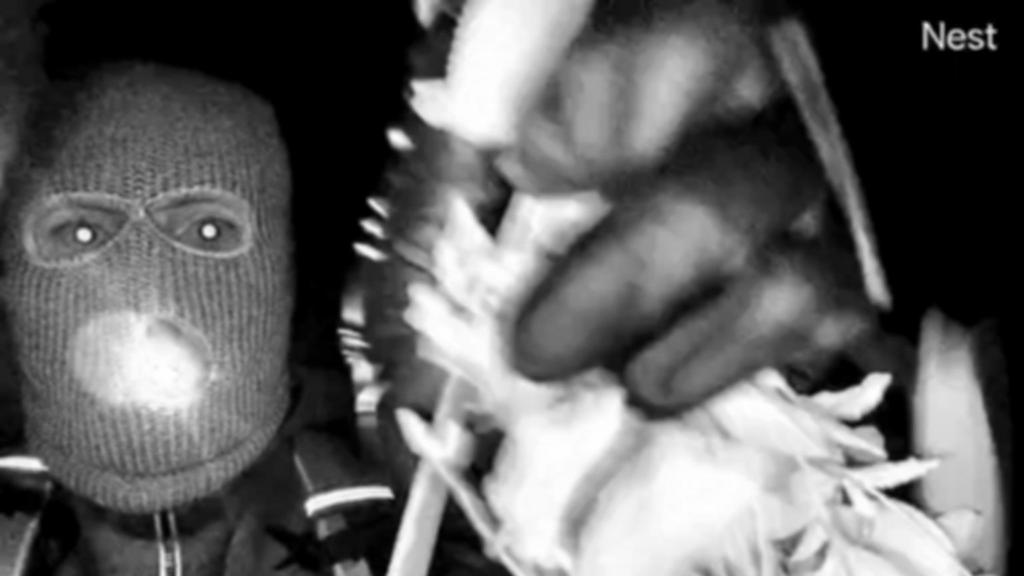
The Federal Bureau of Investigation (FBI) has launched an urgent public manhunt, releasing images of a masked person whose identity is crucial to locating the mother of renowned NBC Today show co-anchor Savannah Guthrie. The photographs, disseminated through official channels and social media, show an individual with a partially covered face, whom authorities believe holds vital information about the whereabouts of Nancy Guthrie, who disappeared under concerning circumstances several weeks ago. This case has shocked the community and drawn national attention, not only due to the public profile of the missing woman's daughter but also because of the mysterious details surrounding the investigation.
The context of the disappearance dates back to early this month, when Nancy Guthrie, a 78-year-old woman residing in a quiet suburban area, was reported missing after failing to attend a routine medical appointment. Initial inquiries by local police yielded no solid leads, prompting the FBI to step in due to the potential of a kidnapping or an incident with broader ramifications. The federal agency has been analyzing security camera footage from the area, and it was in a recording from a nearby commercial establishment that the masked person was identified, with their presence in the vicinity of Guthrie's home in the hours before her disappearance labeled as "of high interest."
Relevant data provided by the FBI indicates that the person of interest is of medium build, wears dark clothing, and uses a facial mask that conceals distinguishing features. The images, though of limited quality, have undergone digital forensic analysis to enhance details such as gait and possible markings on attire. The FBI has established a tip line and is offering a reward for information leading to the identification of this individual. "Any detail, no matter how small it may seem, could be the key piece to solving this case," stated a special agent during a press conference. So far, no ransom demands have been made public, and no clear motive has been established, adding a layer of uncertainty to the investigation.
Official statements have been scarce but emphatic. An FBI spokesperson stated: "We are committed to using all resources at our disposal to find Nancy Guthrie and ensure her safe return. Public collaboration is essential in this effort." Meanwhile, Savannah Guthrie, through a statement issued by her representative, expressed: "Our family is deeply grateful for the tireless work of the authorities, and we ask for privacy during this difficult time. We trust that someone, somewhere, will recognize this person and help us bring my mother home." The emotional impact on the family is palpable, and Guthrie's colleagues at NBC have shown public support, highlighting her strength during this ordeal.
The impact of this case transcends the personal, shedding light on vulnerabilities in the security of elderly adults and the effectiveness of federal investigations in high-profile disappearances. Criminology experts have noted that the FBI's rapid intervention suggests there are elements pointing to interstate crime or the involvement of organized actors, though this remains speculative. The community where Nancy Guthrie resided has increased surveillance measures, and neighbors have organized volunteer patrols, reflecting a mix of fear and solidarity. Furthermore, the case has sparked debates about media coverage of disappearances, with some arguing that the daughter's fame has accelerated the authorities' response, while others emphasize the need for equitable attention for all victims.
In conclusion, the search for the masked person has become the central axis of an investigation combining forensic technology, public pressure, and familial hope. As the FBI continues its hunt, the call for citizen collaboration resonates as a reminder that, in the digital age, images can be both an enigma and a tool for justice. The fate of Nancy Guthrie remains unknown, but the determination of the authorities and collective empathy offer a glimmer of light amid the distress. This case not only tests crisis response mechanisms but also unites a nation in the common desire for a safe and happy resolution.