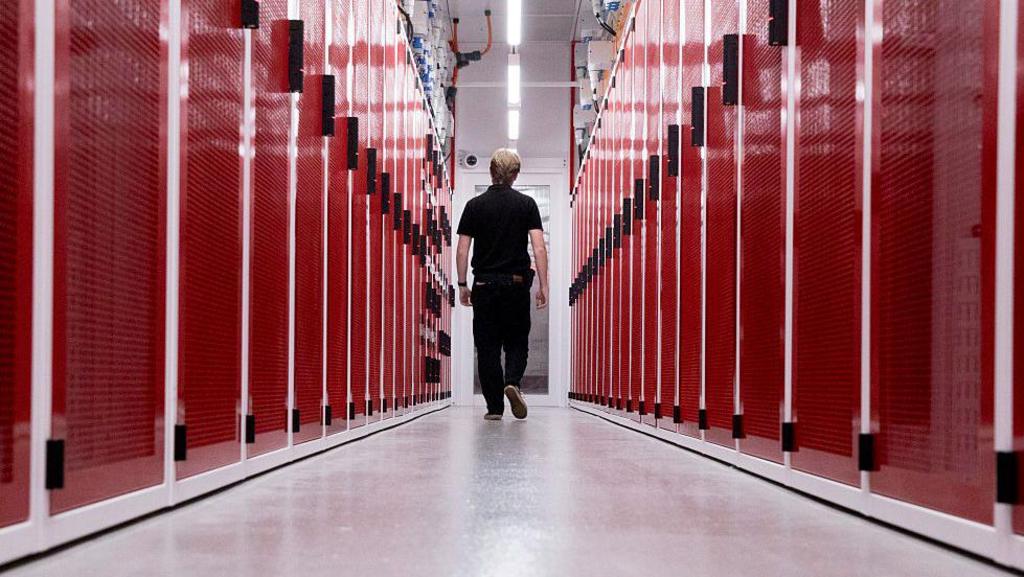
The race to build the world's largest data centers to power artificial intelligence is in full swing. Colossal projects consuming as much power as small cities are springing up in deserts and rural areas, driven by the insatiable demand for computing power from models like GPT-4, Gemini, and other generative AI systems. However, a growing chorus of industry experts is raising a provocative question: do we really need these behemoths? A movement advocating for decentralization, extreme efficiency, and modular, smaller data centers is gaining ground, challenging the prevailing narrative that 'bigger is always better.'
The current paradigm is dominated by 'hyperscalers': massive facilities, often exceeding 100 megawatts in capacity, operated by tech giants like Google, Microsoft, and Amazon Web Services. These colossi are essential for training state-of-the-art AI models, a process that requires thousands of specialized chips (GPUs) running for weeks or months. The cost is astronomical, not only economically—with investments reaching tens of billions—but also environmentally. It is estimated that data centers globally already consume between 1% and 1.5% of the world's electricity, a figure that could skyrocket with AI. Furthermore, they raise concerns about stress on local power grids and massive water usage for cooling systems.
In contrast to this model, a counter-proposal is emerging. Systems architecture experts, such as Dr. Andrew Feldman, former AMD executive and founder of Cerebras Systems, argue that inefficiency is the enemy. 'We are in the era of compute by density, not by volume,' he stated recently at a conference. 'A single wafer-scale chip can do the work of an entire rack of traditional GPUs, with a fraction of the energy and space.' This philosophy aligns with the concept of 'micro data centers' or prefabricated modular data centers. These units, the size of a shipping container, can be deployed near renewable energy sources (like wind or solar farms) or sources of waste heat for district heating, reducing transmission losses and leveraging local resources.
Data supports this approach. A report from research firm Omdia indicates that while the hyperscale data center market is growing at an annual rate of 11%, the segment for modular and edge data centers is expanding at over 20%. Edge computing, which processes data as close as possible to where it is generated (e.g., in a smart factory or city), is inherently distributed and favors smaller, more numerous installations. For many AI applications, particularly inference (using a trained model), there is no need to send data to a remote giant center; it can be done locally with lower latency and greater privacy.
The potential impact of this shift is multifaceted. Environmentally, it could mitigate the tech sector's carbon footprint by enabling more agile integration with intermittent renewable energy and reducing transmission losses. Economically, it would democratize access to high-end computing power, allowing smaller companies, universities, or even municipal governments to deploy their own infrastructure without multi-billion-dollar barriers to entry. Geopolitically, it would reduce dependence on a few data 'hotspots,' increasing network resilience and the digital sovereignty of more regions.
Nevertheless, the challenges are significant. Training massive foundation models will likely continue to require concentrated clusters of resources for some time. Managing a distributed fleet of thousands of small centers is logistically more complex than administering a few mega-facilities. Moreover, the industry is deeply invested in the current model, with long-term energy contracts and complex supply chains.
In conclusion, the 'big vs. small' debate in AI data centers reflects a crucial technological crossroads. While giants will continue to exist for planet-scale computing tasks, the future is likely to be more hybrid and nuanced. Algorithmic optimization, more efficient specialized chips, and pressure for sustainability are driving a reevaluation of infrastructure design. The next AI revolution may not come solely from a larger data center in the desert but from an intelligent, agile, and efficient network of many smaller centers, bringing computing power closer to where it is truly needed. The mantra 'small is beautiful' may find its ultimate expression in the data age.