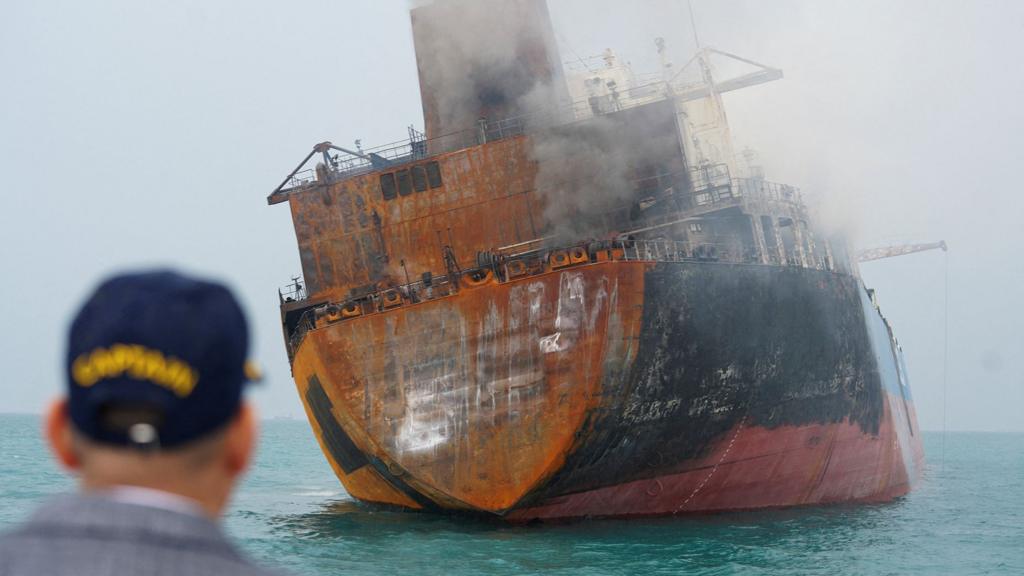
In the seemingly calm waters of the Persian Gulf, a silent humanitarian crisis is unfolding aboard merchant vessels. Hundreds of seafarers, known as 'abandoned seafarers,' are trapped in a legal and logistical limbo, often for months or even years, without pay, with dwindling supplies, and mounting despair. Their stories paint a harrowing picture of a global maritime system failing those who keep it running. The adage 'there's no hiding place on a ship' encapsulates their claustrophobic reality, where stress and isolation are constant companions.
Seafarer abandonment occurs when shipowners, often due to financial distress, bankruptcy, or legal disputes, stop paying wages, cut off provisions and fuel supply, and essentially desert the vessel and its crew. The Gulf, a crucial hub for global energy trade, has become a hotspot for such cases. Ports in the United Arab Emirates, Bahrain, and Oman have seen vessels anchored indefinitely off their coasts, becoming floating prisons for their crews. The COVID-19 pandemic massively exacerbated the problem, making crew changes difficult and leaving seafarers even more vulnerable.
The numbers are alarming. According to the International Transport Workers' Federation (ITF), by late 2023, over 100 ships were reported abandoned globally, with hundreds of seafarers affected. A single case can involve a crew of 20 or more. Conditions onboard deteriorate rapidly: air conditioning fails under the relentless desert sun, food and water are severely rationed, and access to medical care is nearly non-existent. Psychologically, the impact is profound, with reports of depression, anxiety, and suicidal thoughts among stranded sailors.
'It is a slow torture,' stated a Filipino seafarer, whose name is withheld for safety, in a phone interview from a tanker anchored near Sharjah. 'We have been here for eleven months. The company stopped responding. We have some food, but it is running out. The worst is the uncertainty. The ship rocks, but our lives are completely stalled.' Maritime charities like The Mission to Seafarers attempt to provide aid, delivering food parcels and assisting with communications, but their resources are stretched.
The impact of this abandonment extends far beyond the ship's deck. It represents a systemic failure in maritime governance. While international conventions exist, such as the Maritime Labour Convention (MLC, 2006), which require shipowners to cover repatriation costs and wages in case of abandonment, their enforcement is patchy and slow. Flag state governments, often of convenience registries, can be slow to act. Port states, meanwhile, are reluctant to allow crew disembarkation for fear of assuming responsibility and costs.
The conclusion is clear: the global maritime industry, which carries over 80% of world trade, owes a debt to its workers. Stronger enforcement mechanisms are urgently needed, perhaps through stricter financial penalties for delinquent owners and greater cooperation between port and flag states. Technology, such as digital monitoring of seafarer contracts and payments, could also offer solutions. In the meantime, for the sailors stranded in the Gulf, each day is a battle for dignity and basic survival, a grim reminder that on the vast ocean, sometimes the most dangerous place can be the deck of your own ship.