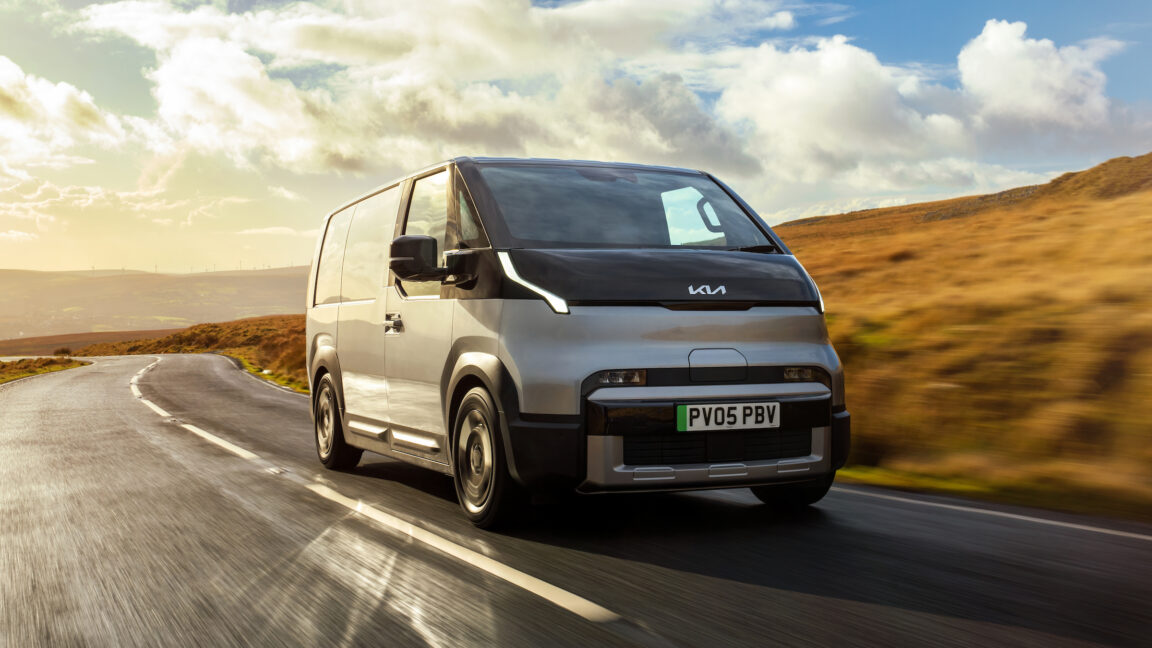
The world of commercial electric transportation has just welcomed a new and revolutionary contender. Kia has officially unveiled its PV5 prototype, an electric van that promises to redefine segment standards with a bold combination of futuristic aesthetics and exceptionally thoughtful interior design. This vehicle is not just an evolution of existing models; it represents a statement of intent from the Korean brand to dominate the growing professional electric mobility market, a sector expected to experience exponential growth in the coming decade.
The context of this launch is crucial. The electrification of commercial fleets has become a priority for businesses of all sizes, driven by stricter environmental regulations, government incentives, and the need to reduce long-term operating costs. Kia, under the Hyundai Group umbrella, has been investing billions in its dedicated E-GMP platform for electric vehicles, and the PV5 is the logical next step to transfer that technology to the commercial sphere. It competes directly in an increasingly crowded space, where rivals like the Ford E-Transit, Mercedes-Benz eSprinter, and the upcoming RAM ProMaster EV are already establishing their positions.
Relevant data, although still preliminary given it's a prototype, is promising. The PV5 is based on a new modular architecture called 'Platform Beyond Vehicle' (PBV), designed specifically for flexibility. Kia has announced the vehicle will offer an estimated range exceeding 300 kilometers on a single charge, a figure more than sufficient for most urban and suburban delivery routes. Furthermore, its fast-charging system will allow recovery of a significant portion of the battery in under 30 minutes. However, the most innovative data point is its modular design: the cabin and cargo area are essentially independent, allowing customers to customize the vehicle for specific uses, from delivery van to service vehicle or even a mobile retail unit.
Statements from Kia executives reflect this ambition. "The PV5 is not just a vehicle; it is a platform for the businesses of the future," stated Kia President Ho Sung Song during the presentation. "We designed every centimeter with driver efficiency and company productivity in mind. Electrification has freed us from the limitations of traditional internal combustion engine designs, allowing us to completely rethink ergonomics, space, and connectivity." This user-experience focus is evident in details like a giant sliding door for obstacle-free access, a fully digital and configurable dashboard, and state-of-the-art driver assistance systems designed to reduce fatigue on long journeys.
The potential impact of the Kia PV5 on the market is multifaceted. For businesses, it represents an opportunity to modernize their fleets with a vehicle that drastically reduces fuel and maintenance costs while improving their sustainable corporate image. For drivers, it promises a more comfortable, safe, and technologically advanced work environment. At an industrial level, Kia's PBV strategy could set a new paradigm, where commercial vehicles become customizable platforms rather than standard products. This could accelerate the adoption of specialized mobility solutions for sectors like last-mile logistics, emergency services, or nomadic commerce.
In conclusion, the Kia PV5 presents itself as much more than a simple electric van. It is a visionary concept that materializes the convergence between clean mobility, design innovation, and the practical needs of the business world. Its ultimate success will depend on factors such as final pricing, reliability under real working conditions, and available charging infrastructure. Nevertheless, with its modular approach and user-centric design, the PV5 has all the makings of becoming a benchmark and catalyst in the inevitable electric transition of global commercial transport, demonstrating that sustainability and productivity can, and must, go hand in hand.