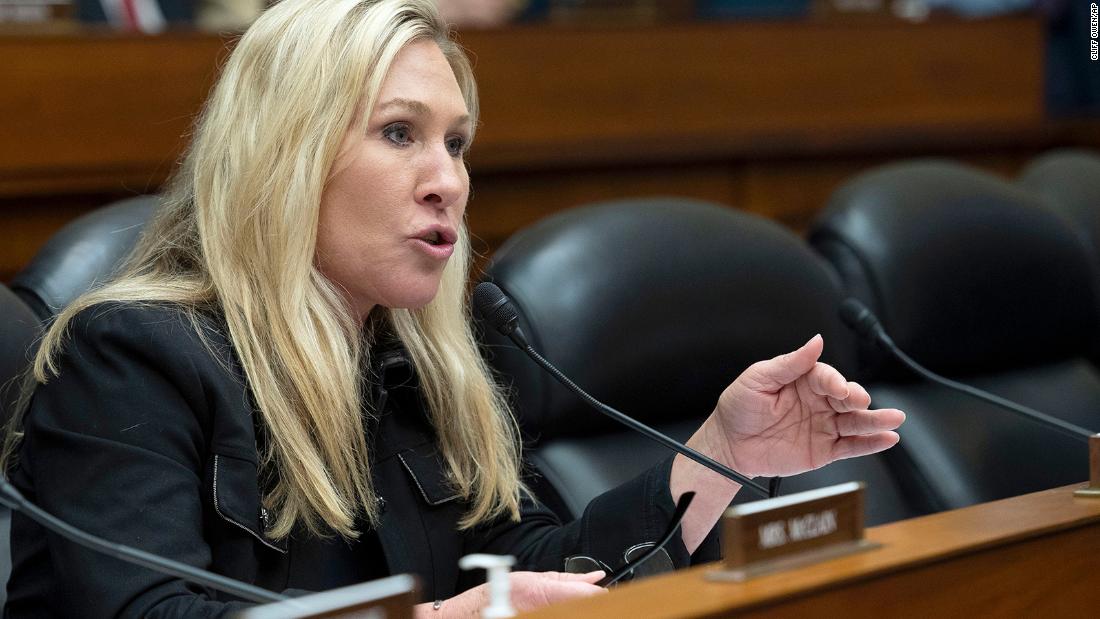
The decision to grant a national platform of influence to Republican Representative Marjorie Taylor Greene has ignited a fierce debate about the boundaries of political speech and the responsibility of parties to contain extremist rhetoric. The most recent and revealing episode occurred last year when Greene delivered a speech at the 'America First Political Action Conference' (AFPAC), an event organized by Nick Fuentes, a known Holocaust denier and prominent figure in the white nationalist movement. Her participation, far from being an isolated incident, represents a worrying pattern that forces an examination of the consequences of normalizing figures who flirt with ideologies dangerous to social cohesion and the health of American democracy.
The context of Greene's participation at AFPAC is crucial to understanding the magnitude of the problem. Nick Fuentes, the host of the event, is a marginal yet vocal figure who has built an online platform preaching white nationalism, antisemitism, and the 'great replacement' theory, a racist and xenophobic conspiracy. The AFPAC conference has explicitly established itself as a far-right alternative to the Conservative Political Action Conference (CPAC), seeking to attract a more radicalized sector of the electorate. That a sitting congresswoman, a member of one of the country's two major parties, would accept being a keynote speaker at such a forum, granting it legitimacy and reach, was an unprecedented act in modern American politics.
The reaction within the Republican Party was immediate, though uneven. Republican leaders like Senator Mitt Romney and Representative Liz Cheney vehemently condemned Greene's appearance, calling it 'appalling' and 'disgusting.' Even House Minority Leader Kevin McCarthy issued a statement criticizing Fuentes and his views, although his condemnation of the congresswoman was more nuanced. However, these condemnations did not translate into significant disciplinary action within the House. Greene, who had previously been stripped of her committee assignments in 2021 for her incendiary comments and endorsement of violent conspiracy theories, has seen her influence within certain party sectors grow, not diminish. This phenomenon underscores a deep internal struggle within the GOP between the traditional establishment and a populist, extremist faction that sees figures like Greene as an authentic voice.
Relevant data paints an alarming picture. According to a report from the Center for the Study of Hate and Extremism, hate speech and conspiratorial rhetoric online, often amplified by political figures, directly correlates with an increase in hate incidents and social polarization. Greene, with millions of social media followers, has an enormous amplification capacity. Her participation at AFPAC was not a slip-up but part of a calculated strategy to mobilize a specific electoral base, even at the cost of normalizing ideologies historically repudiated by the American mainstream. The danger lies not only in her words but in the tacit message it sends: that spaces where white nationalism is promoted and historical atrocities like the Holocaust are denied are legitimate venues for political discourse.
The impact of granting this platform is multifaceted and deeply damaging. First, it erodes basic democratic norms by blurring the line between legitimate political dissent and anti-democratic extremism. Second, it sends a profoundly painful and unsafe message to minority, Jewish, immigrant, and other communities, who are targeted by the rhetoric associated with these events. Third, it weakens the moral standing of the United States on the global stage, where it often promotes democracy and human rights. Finally, it poisons domestic political debate, causing discussion about policy to focus on scandals and provocations instead of solutions to real problems like the economy, healthcare, or infrastructure.
In conclusion, the platform granted to Marjorie Taylor Greene, exemplified by her speech at Nick Fuentes' event, represents a critical test for American institutions. This is not about censoring conservative political opinions but about drawing a firm line against extremist ideology and hate. The health of a democracy is measured, in part, by its ability to isolate and marginalize forces that seek to destroy it from within. Allowing figures who openly flirt with white nationalism and historical denialism to occupy positions of influence and be treated as just another political actor is not only a tactical error for the Republican Party; it is, in a very real sense, detrimental to the American project of a multi-ethnic, democratic union. The responsibility now falls on voters, the media, and, above all, Greene's colleagues in both parties to clearly reject this normalization and reaffirm the fundamental principles of equality and historical truth.