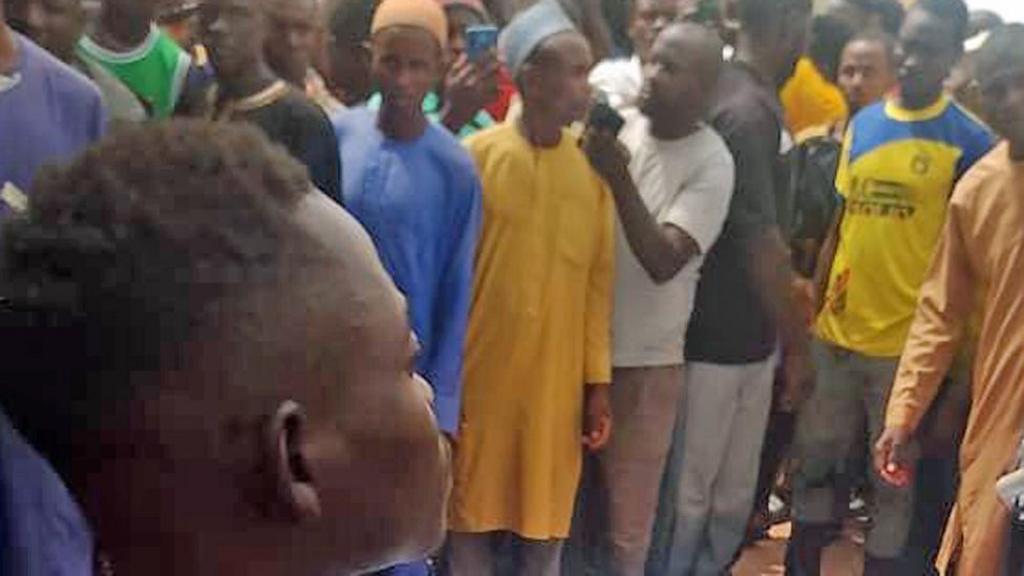
A tragedy deep within the earth has shocked Nigeria after a suspected carbon monoxide leak claimed the lives of at least 30 miners at a gold mining site in Niger state, in the country's central region. The incident, which occurred in the Shiroro area, was reported by witnesses who saw the aftermath of the disaster, one of the deadliest in Nigeria's mining industry in recent years. Rescue operations were hampered by the insecurity plaguing the region, known for the presence of armed groups, adding a layer of complexity to this already devastating situation.
The context of mining in Nigeria is one of high risk and scant regulation. Although the country is better known for its oil industry, mining for gold and other minerals is a source of livelihood for thousands of people, many of whom work in precarious conditions without adequate safety measures. Artisanal and small-scale mining, which often operates informally, is particularly vulnerable to this type of accident. Carbon monoxide, a colorless and odorless gas, is a common byproduct of combustion in enclosed spaces and can accumulate rapidly in poorly ventilated tunnels, causing asphyxiation and death within minutes.
According to witness accounts gathered by news agencies, the accident occurred when the miners were working in a deep shaft. The lack of adequate ventilation systems and gas detection equipment is believed to have been a determining factor. "We heard shouts for help, but it was too dangerous to go down immediately," a local resident told Reuters. Local authorities confirmed the incident, but official details on the exact number of casualties and precise causes remain scarce, partly due to the difficulty in accessing the site. The Shiroro area has been the scene of frequent clashes between criminal gangs, locally known as "bandits," which complicates any emergency operation.
The impact of this tragedy extends beyond the immediate loss of life. Each deceased miner was likely the economic provider for a family, leaving dozens of people in a situation of extreme vulnerability in an already impoverished region. Furthermore, the disaster highlights the systemic failures in overseeing mining in Nigeria. Although laws exist that mandate safety standards, enforcement is weak, especially in informal operations. Labor rights organizations have repeatedly called for greater government intervention to protect workers, arguing that the pursuit of mineral resources should not cost human lives.
In conclusion, the death of at least 30 miners in Nigeria is a grim reminder of the dangers faced by workers in unregulated extractive industries. As the country seeks to diversify its economy beyond oil, it is imperative that the development of the mining sector is accompanied by robust occupational safety frameworks. This tragedy demands a transparent investigation, a humanitarian response for the affected families, and, above all, concrete actions to prevent similar disasters from happening again. Mine safety is not a luxury, but a fundamental right that must be guaranteed for all workers.