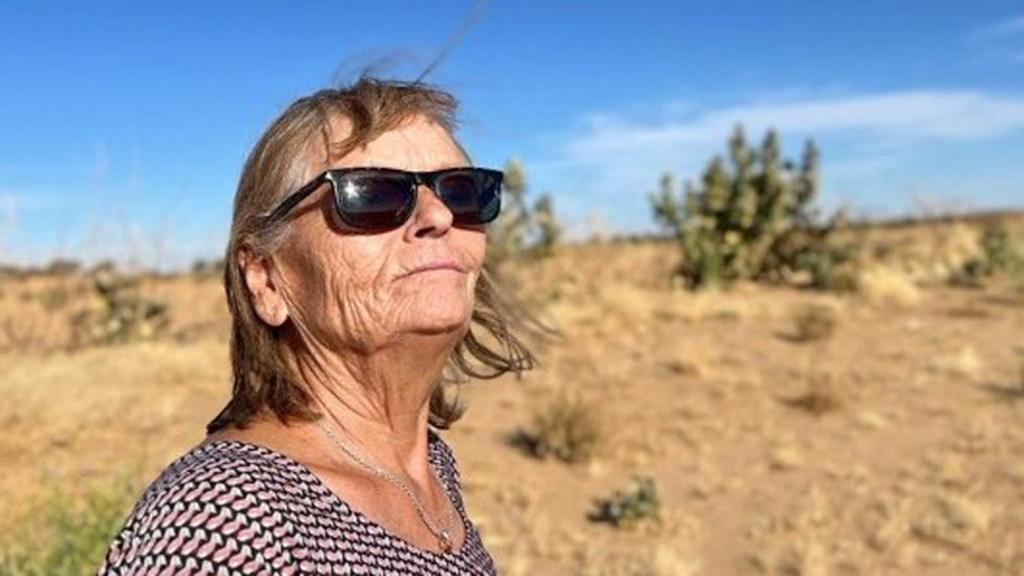
The disappearance of Nancy Guthrie, a 24-year-old woman who has been missing for over six months, has taken an international turn. U.S. authorities, in collaboration with Mexico's Criminal Investigation Agency, have expanded the search into Mexican territory following unspecified information suggesting possible links to human trafficking networks operating across the border. This move marks a critical juncture in an investigation that had, until now, been focused on the southwestern United States, where Nancy was last seen at a gas station near the Arizona border.
The context of this case fits into a worrying trend of cross-border disappearances, particularly in regions where irregular migration routes and organized crime overlap. Nancy, described by her family as a responsible college student traveling to visit a friend, showed no signs of distress in her last communications. However, her cell phone stopped transmitting a signal just hours after her last known stop, fueling theories of a possible forced disruption. Law enforcement has dedicated significant resources, including cell tower data analysis and security camera reviews, but public breakthroughs have been scarce.
Relevant data provided by non-governmental organizations indicates that thousands of people go missing annually in border corridors, with an alarming percentage never resolved. Binational collaboration in such cases often faces bureaucratic and jurisdictional hurdles, making the announcement of a coordinated search in Mexico significant. Although authorities have not revealed the exact nature of the new lead, sources close to the investigation suggest it may involve the possible sighting of a vehicle linked to Nancy in the northern state of Sonora, or intercepted communications mentioning her description.
The Guthrie family has issued public statements calling for international cooperation. At a recent press conference, Nancy's father, Robert Guthrie, stated: 'Our only hope is that someone, somewhere, has information. We ask communities on both sides of the border to be vigilant. Every second counts.' These statements have been translated and disseminated in Mexican media, supported by missing person posters distributed at bus stations and community centers in key border towns.
The impact of this investigation expansion is multifaceted. For the family, it represents a glimmer of hope after months of anguish but also underscores the terrible scenarios they must now consider. For law enforcement agencies, it is a test of the cooperation mechanisms established under bilateral agreements. For the public, it serves as a stark reminder of the dangers that persist in border regions and the complexity of solving crimes that cross national boundaries. Victim advocacy organizations have leveraged the case to call for more standardized protocols and dedicated resources for cross-border disappearances.
In conclusion, as the search for Nancy Guthrie enters a new phase with a focus on Mexico, the case exemplifies the modern challenges of criminal investigation in an interconnected world. Success will depend on the fluidity of inter-agency collaboration, the flow of information, and, perhaps most importantly, public vigilance. Regardless of the outcome, the case has already highlighted gaps in border security systems and the urgent need for more robust strategies to protect vulnerable individuals traveling near these high-risk zones. The international community will be watching closely, hoping for a breakthrough that can bring justice to the Guthrie family and potentially save others from a similar fate.