A wave of extremist violence has plunged Nigeria into a new humanitarian and political crisis of alarming proportions. A series of coordinated attacks, attributed to the jihadist group Lakurawa, affiliated with the Islamic State in West Africa Province (ISWAP), has left at least 162 people dead in rural communities in Borno state, northeastern Nigeria. The assaults, which spanned several days, included raids on villages, ambushes on fleeing civilians, and the systematic looting of property, leaving behind a landscape of devastation and terror. This episode represents one of the deadliest attacks in the region in recent months and highlights the resilience and offensive capability of insurgent groups, despite ongoing government military operations.
The context of this massacre is a long-standing security crisis that Nigeria has endured for over a decade, initially with the Boko Haram group and later with its offshoot, ISWAP, and factions like Lakurawa. The insurgency has caused tens of thousands of deaths, over two million internally displaced persons, and deep instability throughout the Lake Chad basin. The northeast region, in particular, suffers from a toxic combination of extremist violence, extreme poverty, and fragile state presence, creating an ideal breeding ground for the recruitment and operations of these groups. Nigerian security forces, often criticized for their lack of equipment, corruption, and questionable tactics, have struggled to contain the threat, allowing insurgents to maintain enclaves in rural areas and launch sporadic but brutal attacks.
The data from the crisis is overwhelming. According to the Council on Foreign Relations, conflicts in northern Nigeria have caused over 350,000 deaths since 2009, many from hunger and disease stemming from the conflict. The recent massacre raises the death toll in Borno state alone to several hundred so far this year. Furthermore, the UN Office for the Coordination of Humanitarian Affairs (OCHA) estimates that 8.4 million people in northeastern Nigeria need urgent humanitarian assistance in 2024. The inability to protect civilians continually erodes the legitimacy of the federal government and local authorities, generating a cycle of distrust and violence.
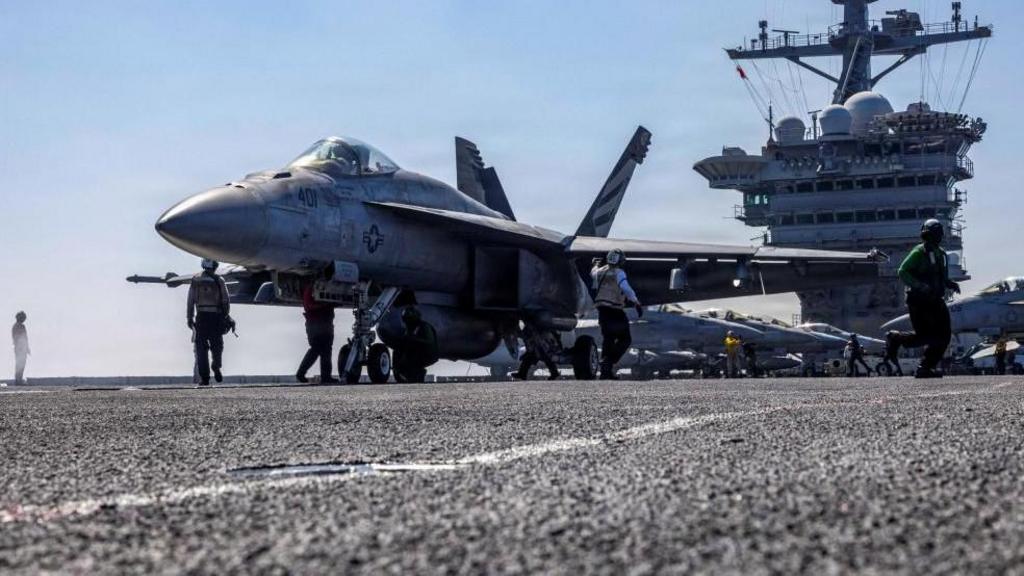
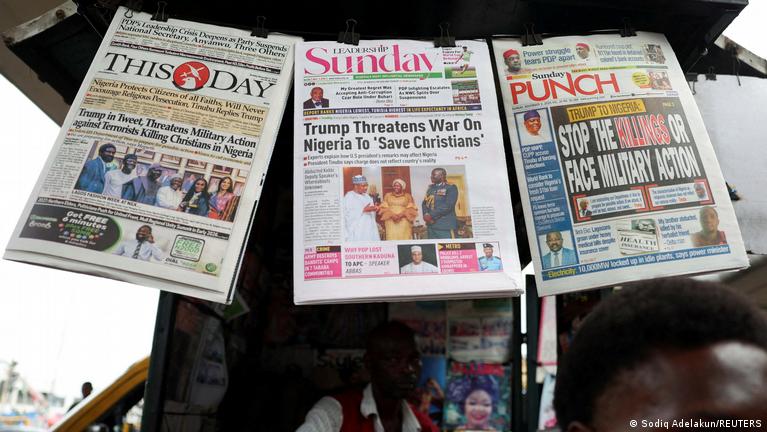
The massacre occurs at a time of growing diplomatic tension between Nigeria and the United States, particularly in light of statements from former President and candidate Donald Trump. In recent rallies and declarations, Trump has threatened more direct and unilateral intervention in countries he considers "failed" or incapable of controlling terrorism on their soil, generically mentioning nations in the Sahel. Although he did not explicitly name Nigeria, his comments have been interpreted in Abuja as a veiled warning. "We will not allow terrorists to turn countries into their operating bases. If governments cannot or will not act, the United States will have to do so," Trump declared at a campaign event, rhetoric that has resonated strongly in Nigerian security circles.
The impact of this dual pressure—internal violence and external threats—is profound. For the government of President Bola Tinubu, who took office promising to restore security, the attacks are a severe setback that exposes the limitations of his military strategy. For the civilian population, it means living in a state of perpetual fear, with limited access to food, healthcare, and education. The international community watches with concern the potential for further destabilization in an already fragile region, which could have repercussions for global security and migration flows. The possibility of U.S. intervention, however remote, introduces an element of geopolitical uncertainty that could alter power balances in West Africa.
In conclusion, the massacre of 162 people in Nigeria is a devastating human tragedy and a stark reminder that the fight against extremism in the Sahel is far from over. It underscores the urgent need for a more effective, comprehensive, and civilian-protection-centered security strategy from the Nigerian government, one that combines military operations with community development and reconciliation initiatives. Simultaneously, interventionist rhetoric from the United States adds a layer of diplomatic complexity that requires delicate handling and frank dialogue between both countries to avoid counterproductive escalations. The path forward for Nigeria and its international partners must prioritize long-term stability and the well-being of its people over any short-term political or electoral calculations.