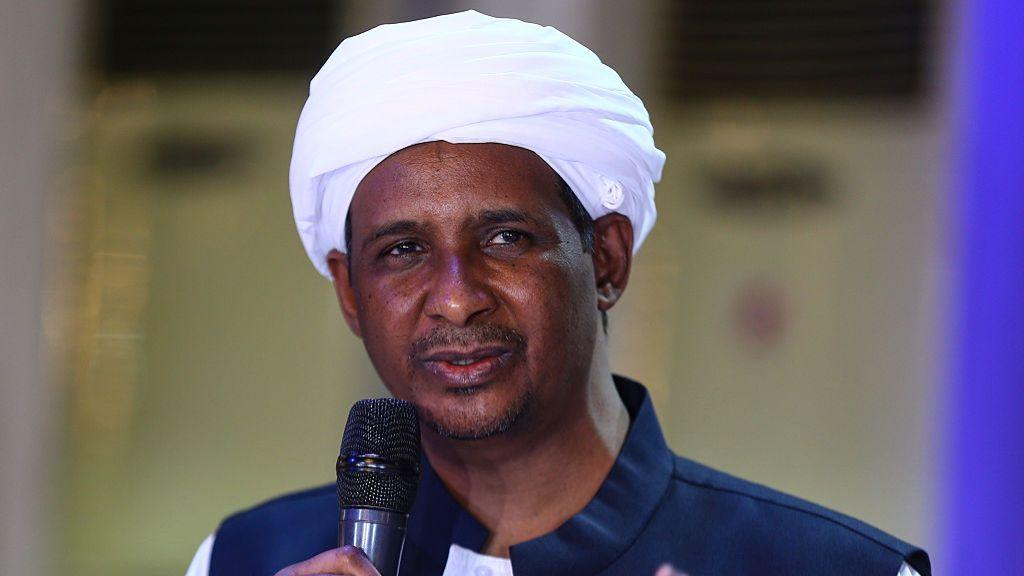
Sudan's transitional government has issued a severe diplomatic condemnation against Uganda, labeling the recent visit by paramilitary commander Mohamed Hamdan Dagalo, known as 'Hemedti,' as an 'affront to humanity' and a flagrant violation of international law. The visit, which reportedly included meetings with senior Ugandan officials, has heightened tensions in an already volatile region and raised serious questions about mediation efforts in the Sudanese conflict. This move represents a significant shift in the complex dynamics of the Horn of Africa, where alliances are fluid and often contradictory.
The context of this crisis dates back to April 2023, when violent clashes erupted in Khartoum between the Sudanese Armed Forces (SAF), loyal to the government, and the Rapid Support Forces (RSF), the powerful paramilitary militia commanded by Hemedti. The conflict has plunged the country into one of the world's worst humanitarian crises, with thousands of civilians killed, millions displaced, and critical infrastructure destroyed. The RSF has been repeatedly accused by the UN, human rights organizations, and Western governments of committing widespread atrocities, including war crimes and potential crimes against humanity, particularly in the Darfur region.
Hemedti's reception in Uganda is especially controversial because Kampala is part, along with other countries like Saudi Arabia and the United States, of diplomatic efforts to mediate a ceasefire in Sudan. 'Hosting an individual accused of heinous crimes against the Sudanese people by a state that purports to be a mediator is not only hypocritical but a betrayal of the principles of peace and justice,' stated a senior official at Sudan's Ministry of Foreign Affairs, who spoke on condition of anonymity. This action, Khartoum argues, legitimizes a belligerent actor and undermines the credibility of any future peace process.
To date, the conflict has had a devastating toll. According to consolidated data from UN agencies, over 13,000 people have lost their lives, although actual figures could be much higher. Nearly 8 million Sudanese have been forced to flee their homes, creating an internal and cross-border displacement crisis affecting neighboring countries like Chad, South Sudan, and Egypt. The Sudanese economy is on the brink of collapse, with runaway inflation and severe food insecurity threatening to plunge millions into famine.
The impact of Hemedti's visit to Uganda goes beyond mere diplomatic protest. Regional analysts warn it could reconfigure power balances. Uganda maintains a complex relationship with Sudan, historically marked by tensions but also by security cooperation. At the same time, Uganda has its own strategic interests, including stability on its northern border and the management of rebel groups. Hosting Hemedti could be interpreted as an attempt by Kampala to establish direct communication lines with a powerful military force, securing an influential position regardless of the conflict's outcome. However, this calculation carries a high risk of alienating the internationally recognized government in Khartoum and tarnishing its reputation in international forums.
In conclusion, Sudan's furious reaction to Hemedti's visit to Uganda underscores the depth of the wounds opened by the war and the fragility of regional peace efforts. As warring factions seek legitimacy and allies abroad, diplomatic initiatives are undermined by actions that appear to reward perpetrators of violence. The international community faces a critical dilemma: it must exert consistent pressure on all actors, including neighboring states, to prioritize the cessation of hostilities and accountability for crimes committed. Otherwise, the 'affront to humanity' denounced by Sudan will not be merely a rhetorical turn but a harbinger of a more prolonged and bloody conflict, with catastrophic consequences for the entire Sahel and Horn of Africa region.