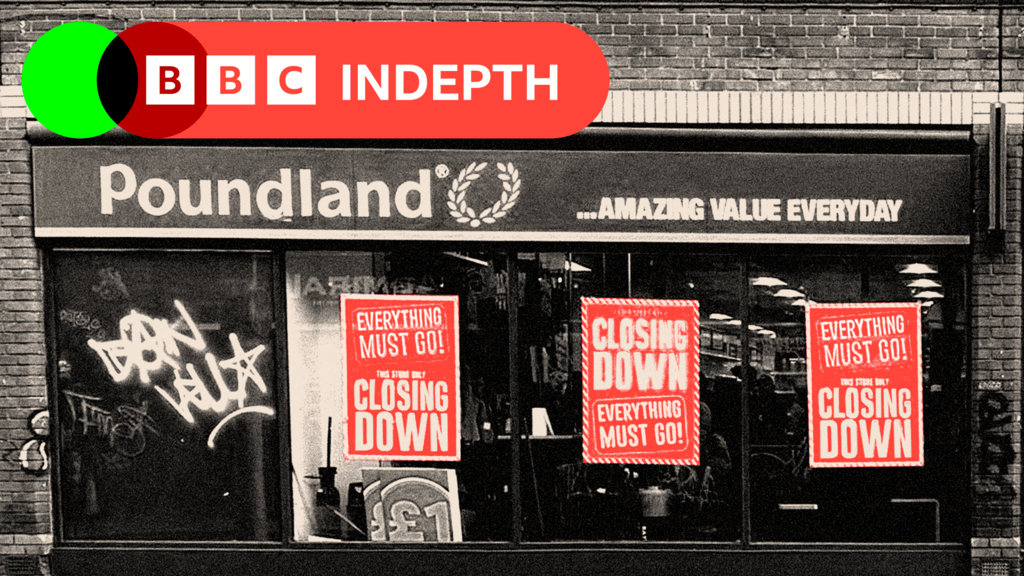
Amid a cost-of-living crisis squeezing the budgets of millions of Britons, a commercial paradox is emerging that baffles analysts and consumers alike: Poundland, the iconic low-price retailer, is facing serious financial headwinds. The chain, for decades a synonym for savings and value on UK high streets, is reporting falling sales and increased pressure on its margins, a situation that seems to defy basic economic logic. In theory, when real incomes shrink, consumers should migrate towards more economical options, strengthening businesses like Poundland. However, reality is proving far more complex, revealing deep shifts in shopper behavior, ferocious sector competition, and the unique structural challenges facing budget retailers in the modern era.
The context of this struggle plays out against the backdrop of the UK's most severe cost-of-living crisis in generations. Inflation, while having receded from its peaks, continues to erode purchasing power, with energy and food prices remaining stubbornly high. Wages, in many cases, have not kept pace. In this scenario, logic would dictate a boom for pound shops. Yet Poundland, owned by the Pepco group, has pointed to a 'challenging trading environment' and a drop in revenue at its established stores. Part of this phenomenon can be attributed to fierce and multi-faceted competition. Supermarket giants like Tesco, Asda, Sainsbury's, and Aldi have doubled down on their own low-price 'essentials' sections, often offering own-brand food and staples for a pound or less, directly within the same weekly shopping trip. This removes the need for an additional stop at Poundland for many consumers.
Furthermore, Poundland's business model has evolved. It is no longer solely about single-pound items; the chain has expanded its range to include higher-value products, clothing under the 'Pep&Co' brand, and a broader offering of food and confectionery. This diversification, while necessary to boost the average transaction value, brings it into the competitive territory of supermarkets and pure discounters like B&M and Home Bargains, which have strong footholds and efficient logistics. Sector data shows that while spending on value items remains strong, consumers are extremely selective and promiscuous with deals, hopping between retailers in search of the best bargain. Loyalty to a single discount brand has evaporated. A spokesperson from retail consultancy GlobalData recently commented: 'Today's budget-conscious consumer is a sophisticated deal hunter. They don't assume Poundland is the cheapest for everything. They compare prices on specific items, from baked beans to laundry detergent, often using apps, and choose accordingly.'
The impact of this dynamic is significant. Talk of potential store closures in less profitable locations is in the air, which would affect employees and the already fragile economy of British high streets. Brand perception is also suffering. Some customers note that the proliferation of products above the pound mark (at £1.25, £1.50, etc.) dilutes the simple, clear value proposition that once defined the chain. 'It's no longer a given that you'll find what you need for a pound,' remarked a regular shopper from Manchester in an informal interview. 'Sometimes, for a few pence more, you can get a known brand at the supermarket.' This erosion of a key differential advantage is a serious strategic problem. Moreover, inflation in supply and operating costs pressures all retailers' margins, but for a model built on extremely high volumes and very low profit margins per unit, that squeeze is particularly suffocating.
In conclusion, Poundland's struggle during a cost-of-living crisis is a powerful reminder that retail economics is never simple. It is not enough to be 'cheap' in a generic sense. The convergence of aggressive supermarket competition, a fundamental shift in shopping habits towards hyper-rationality and digital comparison, and internal challenges in managing an evolving value proposition have created a perfect storm. Poundland finds itself at a crossroads: it must clearly redefine its reason for being for the modern value-seeking consumer. This may involve a dual focus: aggressively reinforcing its core one-pound product base to regain price trust, while innovating its higher-value offering to compete more effectively. The outcome of this battle will not only define the future of a British retail institution but will also serve as a case study in discount retail survival in the age of smart austerity.