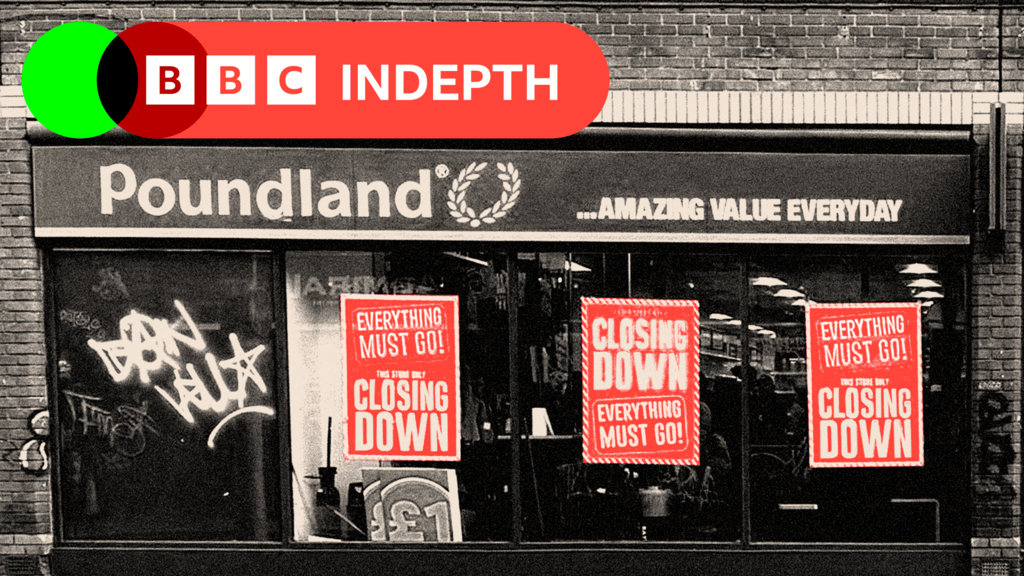
Amid a cost-of-living crisis squeezing the budgets of millions in the UK, a puzzling paradox is unfolding on the nation's high streets: Poundland, the iconic low-price retailer, is facing significant headwinds. The company, for decades a haven for bargain-hunting shoppers, has shuttered stores and reported mixed financial performance, raising a crucial question: why is a business built on the premise of value struggling precisely when its proposition should be most relevant? The answer is multifaceted, revealing the complex dynamics of modern retail, the evolution of consumer behavior, and the unique pressures of today's inflationary environment.
The context is a cost-of-living crisis driven by persistently high inflation in food and energy, which has eroded household disposable income. Historically, value retailers like Poundland thrived in tough economic times, attracting customers from all income brackets. However, the current landscape is different. While consumers are more price-conscious than ever, their shopping habits have radically shifted. Fierce competition from discount supermarkets Aldi and Lidl, which have aggressively expanded their UK footprint and offer high-quality own-brand groceries at ultra-low prices, has cannibalized a key part of Poundland's market. These German giants are no longer seen as niche 'discount stores' but as primary grocery destinations, attracting a broader, more loyal clientele.
Furthermore, Poundland faces unique operational challenges. Its traditional business model, centered on fixed-price items (originally one pound), has had to adapt. In recent years, the company introduced a wider price range, including products at £1, £2, £5, and above, to maintain margins against rising supplier and logistics costs. This strategy, while necessary, has somewhat diluted its clear, simple value proposition. A customer walking in expecting one-pound bargains may feel disappointed to find many items at higher price points. Simultaneously, operating costs have soared: high street rents, wages following increases to the National Living Wage, and energy bills have placed immense pressure on profitability. 'Our costs of doing business have risen across the board,' a company spokesperson stated recently. 'We are navigating an unprecedented cost environment while trying to keep our prices as low as possible for our customers.'
The impact of these pressures is visible on the high street. Poundland has closed several stores in less profitable locations, a process accelerated by the COVID-19 'break clause' that allowed many commercial tenants to renegotiate or terminate leases. The company has also faced criticism over perceived reductions in the quality and range of some products, as suppliers themselves grapple with inflated costs. The shift towards online shopping, cemented during the pandemic, has also played a role. While Poundland has an online presence, its model is fundamentally rooted in physical, impulse, and convenience shopping—a segment that has suffered from decreased footfall in town centers. The rise of e-commerce platforms like Amazon and Shein, offering a seemingly endless range of products at rock-bottom prices with home delivery, represents another layer of disruptive competition.
In conclusion, Poundland's struggle symbolizes a broader transformation in the UK retail sector. The cost-of-living crisis has not simply created a uniform surge in demand for cheap goods; it has accelerated a seismic shift in *where* and *how* consumers seek value. Shoppers, armed with smartphones for price comparison, are more sophisticated and demanding. They seek value in the combination of price, quality, convenience, and experience. To survive and thrive, Poundland and similar value retailers must reinvent themselves beyond their simple fixed-price proposition. This may involve greater investment in their own brand, deeper integration of larger store formats that include chilled and frozen food (a strategy they are already trialing), and a more polished customer experience. The paradox of their current struggle is a potent reminder that in modern capitalism, even the concept of 'low cost' is subject to rapid and ruthless evolution.