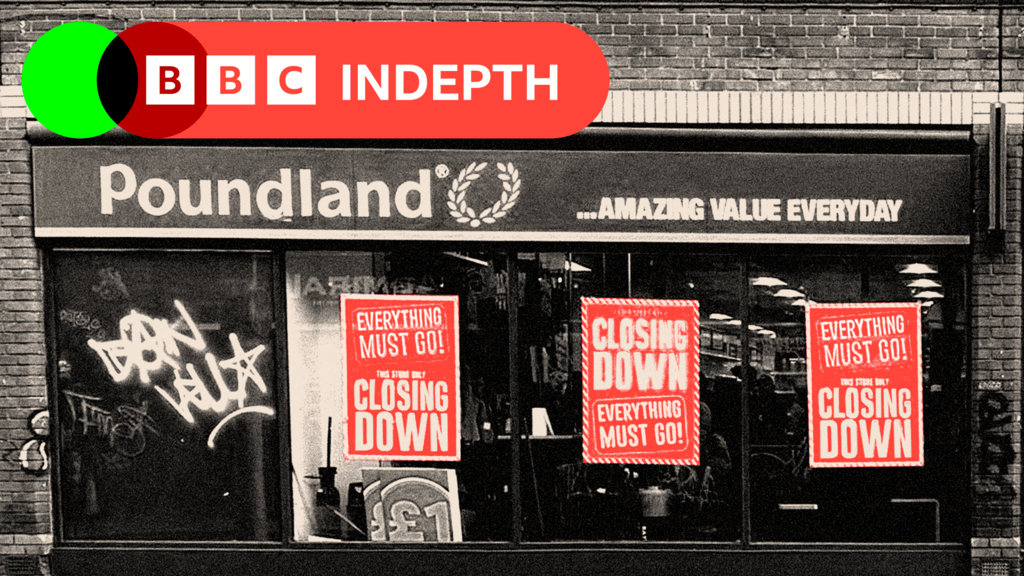
Amid a cost-of-living crisis that has driven consumers to seek savings like never before, a commercial paradox is puzzling analysts: Poundland, the iconic British discount retailer where everything cost one pound, is facing significant struggles. The company, which for decades has been synonymous with extreme value, has reported falling sales and increasing pressure on its margins, raising questions about its business model in a changing economic environment. This phenomenon goes beyond simple market fluctuation and points to structural shifts in consumer behavior and the competitive dynamics of the discount retail sector.
The context is crucial to understanding this apparent contradiction. The United Kingdom, like much of Europe, has been grappling with persistently high inflation, driven by energy costs, supply chain disruptions, and geopolitical fallout. Households have seen their purchasing power erode, which theoretically should be the perfect scenario for value retailers like Poundland to thrive. However, the data tells a different story. Recent reports indicate that while footfall in stores may hold up, the average basket size has shrunk. Consumers are more selective, buying only the absolute essentials, and in many cases, are migrating to even more price-aggressive competitors or to supermarket giants that have intensified their own price wars.
A key factor is the evolution of Poundland's model. For years, its proposition was simple and powerful: a wide range of products for just one pound sterling. However, inflation has made maintaining that single price point unsustainable for many items. In response, the company has gradually introduced an expanded range of products at higher price points (such as £1.50, £2, £5), under brands like 'Pep & Co' for clothing and 'Home & More' for homewares. This strategy, while necessary from a financial standpoint, has diluted its core identity of 'everything for a pound' and confused its loyal customer base. A regular customer recently told a local newspaper: 'I don't know what to expect anymore. I come for the one-pound bargains, but now there are so many more expensive things that sometimes it's easier to go somewhere else where the offer is clearer.'
Competition has become fierce. On one side, traditional supermarkets like Tesco, Asda, Sainsbury's, and Morrisons have launched extreme value lines and aggressively matched prices on staples. On the other side, the German discounters Aldi and Lidl, with their models of supreme efficiency and guaranteed low prices on a broader range of fresh and staple foods, have captured historic market share. These players offer a more complete shopping experience for the weekly grocery run, leaving Poundland in a narrower niche of general non-food merchandise and snacks. Furthermore, the rise of 'everything for 1 euro' stores or extreme online discounters has further fragmented the market.
The impact of these struggles is tangible. Store closures at less profitable locations have been reported, and the parent company, Pepco Group, has revised its growth outlook downwards. This has consequences for the supply chain, local employment, and the commercial landscape of many British towns where Poundland was a staple. Experts point out that the fundamental challenge is one of positioning. 'Poundland is caught in no-man's-land,' explains retail analyst Sarah Jenkins. 'It is no longer the definitive destination for the absolute lowest price due to its multi-price range, and it cannot compete on variety or freshness with supermarkets or grocery discounters. It urgently needs to redefine its value proposition for the modern consumer, who is incredibly price-conscious but also seeks convenience and clarity.'
In conclusion, Poundland's struggle during a cost-of-living crisis is a powerful reminder that in retail, context is everything, but execution and brand clarity are equally vital. Inflation has undermined its fundamental premise, while the competitive response has been faster and more forceful. To get back on track, Poundland must navigate a difficult transition: preserving its essence of value and surprise, which its customers love, while building a sustainable business model that can withstand economic volatility. Its future will depend on its ability to reinvent the concept of 'discount' for a new era, where low price is a table stake, but not the only reason to visit a store. The Poundland case will be studied as an example of how even the businesses seemingly best positioned for tough times can be challenged when the foundations of their model crack.