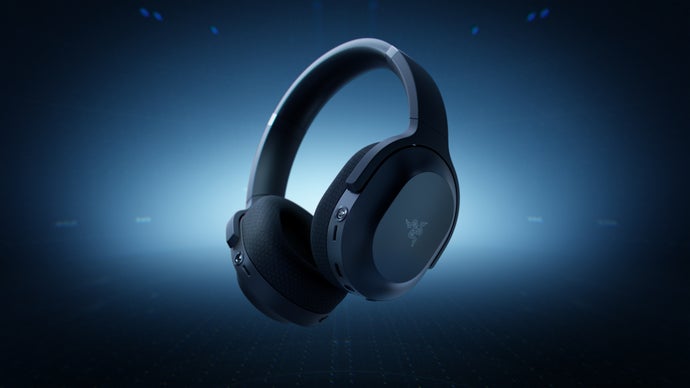
The peripheral industry for gaming and productivity took a conceptual leap at the Mobile World Congress (MWC) in Barcelona, where Razer unveiled a revolutionary prototype: headphones equipped with front-facing cameras and an integrated artificial intelligence system. This device, still in development, promises not only to deliver high-quality audio but also to "see" and understand the user's environment, processing visual information in real time to provide contextual assistance. The demonstration at Razer's booth captured the attention of thousands of attendees, marking an unprecedented convergence of audio hardware, computer vision, and generative AI.
The context of this launch fits within the growing competition to tangibly integrate artificial intelligence into consumer devices. While other companies focus on voice assistants or software enhancements, Razer is betting on a hardware-first approach, incorporating camera sensors directly into the headband of a pair of headphones. Although not all technical specifications were revealed, sources close to the project indicate that the system uses low-power processors optimized for local AI models, which would enable functionalities such as object recognition, visual translation of real-world text, or even generating auditory descriptions of the environment for visually impaired users.
Statements from a Razer representative at the event underscored the company's vision: "It's not just about hearing; it's about understanding. We're exploring how wearable devices can perceive the world with us and assist us in deeper ways." While the final product and its price have not been confirmed, the mere exhibition of the prototype suggests an aggressive roadmap toward commercialization, possibly within the next 12 to 18 months. The potential impact is significant, especially for streamers, content creators, and professionals who could use the cameras for gesture control or to capture contextual metadata during their sessions, all without the need for additional hardware.
However, the announcement has also sparked debates about privacy, given that a device with always-on cameras could pose risks of unwanted surveillance. Razer has assured that privacy is a "fundamental priority" and that data processing would be done, as much as possible, locally on the device, without sending images to the cloud. The conclusion is clear: MWC Barcelona has been the stage for a bold bet that could redefine the wearable category, merging human sensory perception with the analytical capacity of artificial intelligence. Success will depend on the real utility of the functions, the ergonomics of the design, and Razer's ability to address legitimate user concerns in a world increasingly aware of digital privacy.