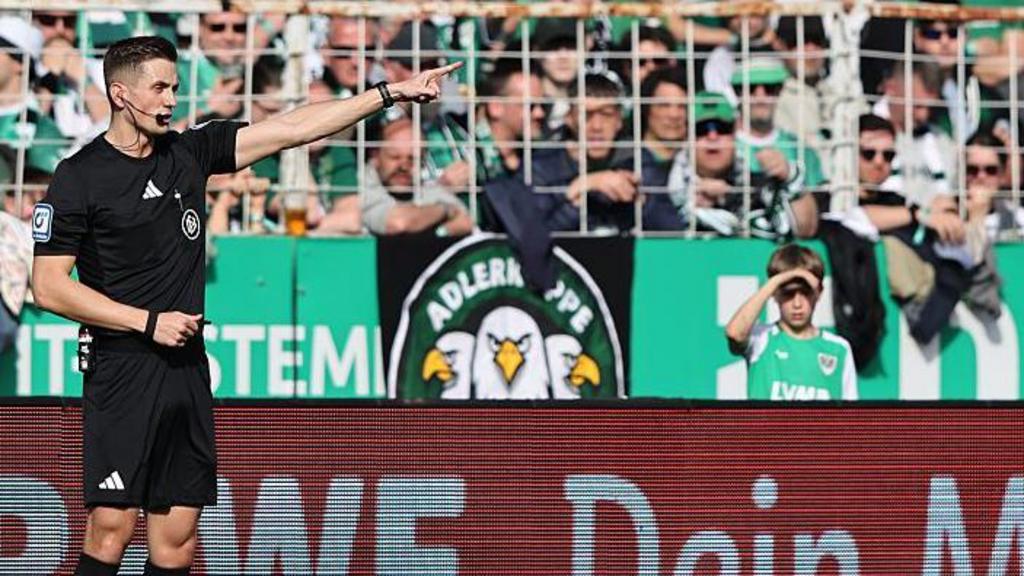
German football was rocked by an unprecedented incident this weekend when a hooded individual stormed onto the pitch and physically unplugged the monitor used by the referee to review VAR (Video Assistant Referee) decisions. The event occurred during the 2. Bundesliga match between FC St. Pauli and Hannover 96 at the Millerntor-Stadion in Hamburg, with the score tied 1-1 in the 68th minute. The intruder, wearing a black hooded sweatshirt, jumped over the advertising hoarding, ran directly to the technical area where the head referee, Daniel Schlager, was standing, and yanked the power cable from the monitor before being subdued by security personnel.
The match context was already one of high tension. Minutes earlier, referee Schlager had been alerted by the VAR team to review a potential foul inside the box that could have resulted in a penalty for the home side, St. Pauli. As the referee made his way to the pitchside monitor, chaos erupted. The intruder's action caused an interruption of nearly ten minutes, during which players from both teams surrounded the scene, security officials tried to restore order, and the visibly dismayed referee consulted with his assistants. The Deutsche Fußball Liga (DFL), the governing body of the professional leagues, has labeled the incident "an unacceptable attack on the integrity of the sport and the safety of the officials."
Relevant data indicates that while pitch invasions are not extremely rare, a direct and premeditated attack on the technological infrastructure of officiating is a wholly novel event in German and European professional football. The VAR was introduced in the Bundesliga in the 2017-18 season with the aim of reducing decisive officiating errors. This system depends on the physical integrity of its on-site components, a security aspect now under scrutiny. Following the incident, the match resumed, but the referee, unable to review the play in question, upheld his initial decision of no penalty, sparking protests from St. Pauli players and staff.
Post-match statements were forceful. FC St. Pauli president Oke Göttlich strongly condemned the action: "We condemn this stupid and dangerous act in the strongest possible terms. It has no place in our stadium or in our sport. We offer our apologies to the DFL, the referee, Hannover 96, and all fans." Referee Daniel Schlager stated to the media: "It was a surreal and concerning situation. Our priority at that moment was to ensure everyone's safety. Technology is a tool, but its sabotage jeopardizes the normal course of the game." Hamburg police confirmed the arrest of the individual, a 32-year-old man, and are investigating charges of trespassing, disruption of a sporting event, and possible assault.
The impact of this event extends beyond the anecdotal. It raises serious questions about perimeter security in stadiums, especially in areas reserved for match officials and technology. Sports security experts warn that this act could inspire copycats, forcing leagues to reinforce protection around VAR stations, possibly with shielded enclosures or less accessible locations. Furthermore, it reignites the debate about football's dependence on technology and its vulnerability. The DFL has announced it will immediately review security protocols for all officiating teams and their equipment in Bundesliga and 2. Bundesliga stadiums.
In conclusion, the incident at the Millerntor-Stadion represents a disturbing turning point. It was not a simple pitch invasion but a targeted sabotage of the officiating decision-making process itself. As authorities investigate and the league implements new measures, the episode casts a shadow over a key match and serves as an urgent wake-up call for world football. Trust in systems like VAR is built not only on their technical accuracy but also on the guarantee that they can operate free from external interference. Restoring that guarantee will be the next challenge for the organizers of the beautiful game in Germany.