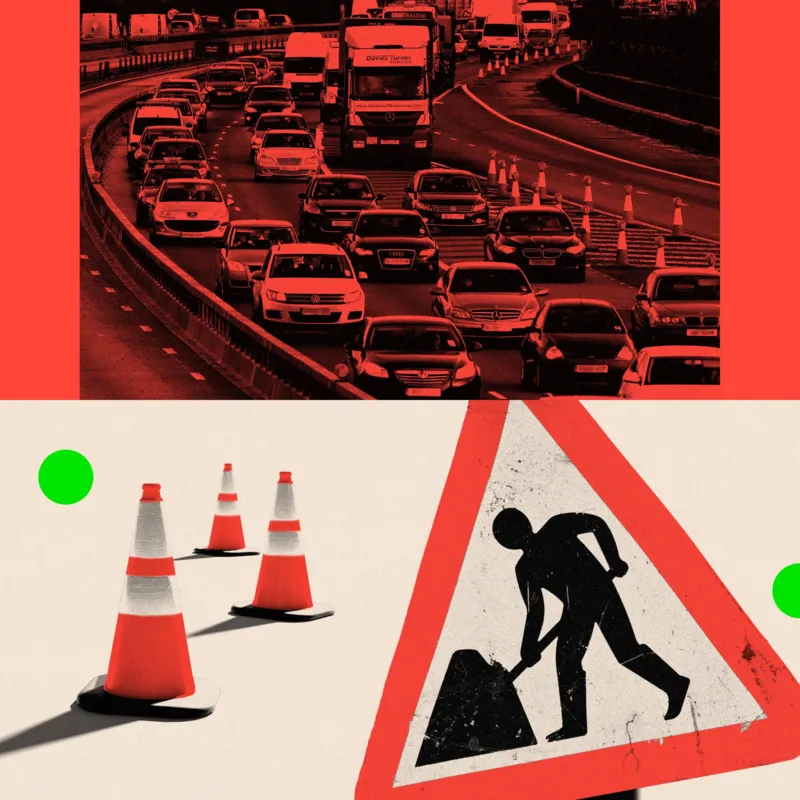
Roadworks, ubiquitous in both urban and rural landscapes, represent far more than just orange cones and detours. Their real impact extends to a nation's economy, environment, public health, and social cohesion, and according to infrastructure and urban planning experts, the situation is far from improving. In fact, a combination of structural factors suggests that disruptions from construction could intensify in the coming years, sparking an urgent debate about the management of national infrastructure.
The context is complex. Many road networks in developed and developing countries were built during the major infrastructure booms of the mid-20th century. These roads and bridges are reaching the end of their designed lifespan, triggering a massive wave of repair, rehabilitation, and replacement projects. According to data from the International Transport Forum (ITF), the global investment gap in road infrastructure maintenance is estimated to exceed hundreds of billions of dollars annually. Delaying these interventions is not an option, as it leads to accelerated deterioration, higher future costs, and, in extreme cases, catastrophic failures risking human life.
The direct economic impact of roadworks is substantial. Prolonged traffic jams increase fuel consumption, vehicle wear and tear, and, most importantly, the lost time of drivers and passengers—a resource economists translate into billions in lost productivity. A recent study by the Transport Research Centre calculated that construction-related delays can reduce freight transport efficiency by up to 15%, driving up the cost of goods and affecting business competitiveness. For local businesses located on construction corridors, the drop in customer access can be devastating, leading to temporary or permanent closures.
Beyond the economy, the social and environmental cost is profound. Noise and air pollution worsen in construction zones due to heavy machinery and idling vehicles. Communities become divided or isolated, hindering access to essential services like hospitals or schools. "We live in a state of perpetual siege," declared María González, a resident of a neighborhood affected by a major subway project. "The dust, constant noise, and the feeling that it never ends are undermining our quality of life and our patience." These statements reflect growing citizen discontent with projects that, although necessary, are often perceived as poorly planned and even worse communicated.
Why is the situation set to worsen? Analysts point to a perfect storm of factors. Firstly, climate change is causing more extreme weather events (floods, heatwaves), which damage road infrastructure more frequently and severely, requiring more urgent and complex repairs. Secondly, the energy transition towards electric vehicles and more sustainable transport modes requires adapting roads (e.g., with charging points), generating new construction. Finally, fiscal pressure and budget constraints in many governments lead to fragmented project execution: instead of comprehensive renewal, successive patches are applied, prolonging the nuisance.
The impact, therefore, is systemic. The chronic congestion stemming from roadworks not only wears down a country's physical capital but also its social capital, eroding trust in the institutions responsible for infrastructure. To mitigate this scenario, experts advocate for smarter, integrated planning. This includes the intensive use of technology (such as sensors for predictive maintenance), ironclad coordination between utilities (water, gas, electricity) to avoid repeated excavations, and transparent, continuous communication with affected communities. The conclusion is clear: roadworks are a necessary evil, but their negative impact can and must be managed more efficiently. Ignoring this challenge will not make the cones disappear; it will only ensure that the road to the future is longer, more costly, and more frustrating for everyone.