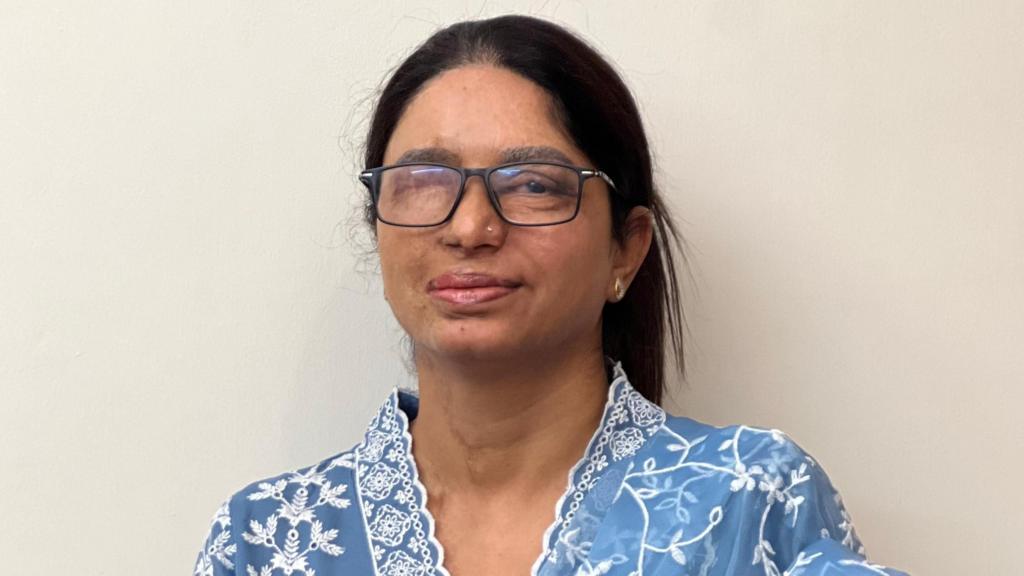
Shaheen Malik has become a symbol of resilience and courage after surviving a brutal acid attack that changed her life forever. Her story, beyond the physical and psychological pain, is a raw testimony of gender-based violence and a tireless fight for justice in a system that often fails victims. This report delves into her journey, from the assault to her transformation into an activist challenging stigmas and demanding legal and social changes.
The attack occurred several years ago, when Shaheen was a young woman with dreams and aspirations. An individual, motivated by rejection or spite, threw acid in her face, causing severe burns that required multiple reconstructive surgeries. This type of violence, although less frequent in some regions, remains a tool of terror used predominantly against women, intended to disfigure and destroy not only physical appearance but also the victim's identity and social life. Global data is alarming: organizations like Acid Survivors Trust International (ASTI) report thousands of cases annually, with a vast majority of victims being women and girls.
Shaheen's path to justice was fraught with obstacles. Initially, she faced bureaucratic delays, the insensitivity of some officials, and a legal process that seemed designed to wear down the victim. "I came to feel that the system was attacking me a second time," Shaheen stated in a recent interview. "But my pain turned into determination. Not just for me, but for all those who have no voice." Her perseverance led to her aggressor being convicted, an outcome that, unfortunately, is the exception rather than the rule in many countries where these crimes go unpunished.
Beyond the judicial aspect, the deepest battle was personal reconstruction. Shaheen had to learn to live with a scarred face, facing public stares, employment discrimination, and social isolation. "Society sees you as a monster, not as the person you were before," she recounts. With the support of survivor groups and psychological therapy, she began to redefine her concept of beauty and self-worth. She founded an organization that provides psychosocial support, legal advice, and awareness campaigns, turning her tragedy into an engine for change.
The impact of her activism transcends the individual. Shaheen has successfully lobbied for stricter laws on the sale and possession of corrosive acids, arguing that regulating access is key to prevention. Furthermore, her testimony has inspired other survivors to break their silence and seek help. Her fight has also highlighted the need for public health systems to offer comprehensive and free reconstructive treatments, as the costs are prohibitive for most.
In conclusion, Shaheen Malik's story is a powerful reminder of the human capacity to overcome extreme cruelty. Her fight is not just for a judicial sentence, but for a paradigm shift: that a person's dignity does not reside in their appearance, and that justice must be restorative, not just punitive. As long as there is even one victim of acid attacks, the voice of Shaheen and thousands like her will remain necessary to demand a world where violence does not have the final say.