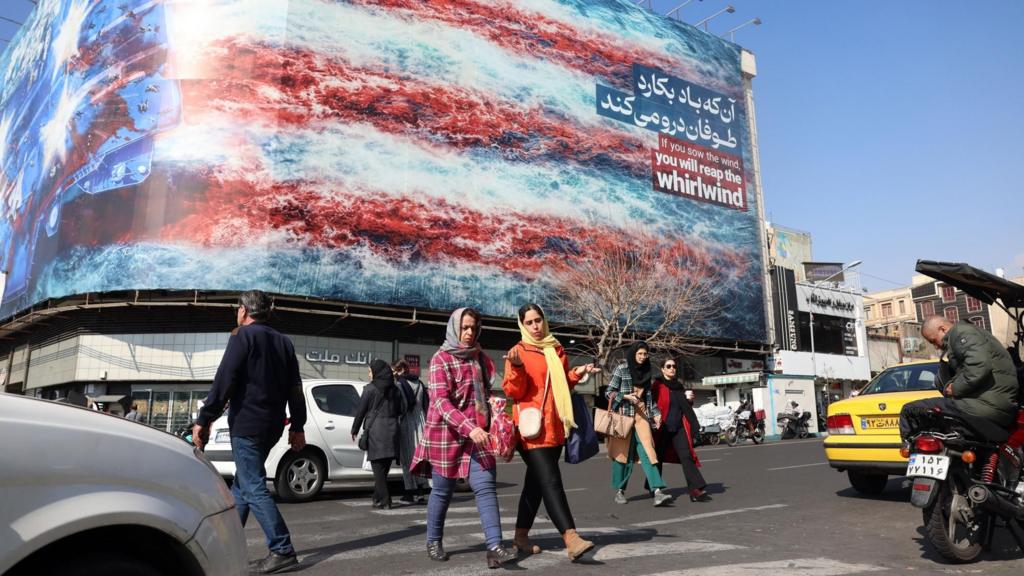
The international community is waiting with growing anticipation and concern for the definition of the Trump administration's strategy towards Iran, following a State of the Union address that, while covering numerous domestic policy issues, deliberately left its intentions regarding one of the most delicate geopolitical crises of the moment in the shadows. The American president avoided any direct mention or substantial announcement about the future of the 2015 Nuclear Deal (JCPOA), from which he withdrew in 2018, or about a possible military escalation. This calculated omission has generated a climate of uncertainty in European capitals, in the Middle East, and, of course, in Tehran, where authorities are cautiously observing every move from Washington.
The context is extremely tense. Relations between the United States and Iran have gone through one of their worst moments in decades following the drone strike that killed powerful General Qasem Soleimani in Baghdad in early January. Iran responded with a ballistic missile attack on Iraqi bases housing US troops, an action from which, miraculously, no casualties were recorded. Since then, the bellicose rhetoric has subsided, but the substance of the conflict remains: US economic sanctions, dubbed 'maximum pressure,' continue to strangle the Iranian economy, and Tehran has responded by progressively reducing its commitments under the nuclear deal, enriching uranium to prohibited levels and expanding its stockpile.
Foreign policy experts and sources close to the administration suggest Trump is at a crossroads. On one hand, his hardcore base and allies like Israel and Saudi Arabia are pushing to maintain and even intensify the pressure, possibly seeking regime change. On the other, the prospect of a new war in the Middle East in an election year is deeply unpopular with the American electorate and has generated warnings even within his own party. 'The president wants to project strength, but he is also aware of the political and military risks of an open confrontation,' a Republican source stated under condition of anonymity. 'The silence in the speech reflects that tactical ambivalence.'
The impact of this waiting game is tangible. Oil markets are sensitive to any rumor about the Strait of Hormuz, a crucial chokepoint for crude oil transport that Iran has threatened to block. European allies, signatories of the JCPOA who are trying to save it with a transaction mechanism (INSTEX), find themselves in an awkward position, trying to appease Washington without completely breaking with Tehran. Meanwhile, on the ground, Iran-backed militias in Iraq, Syria, and Lebanon maintain a state of alert, and any minor incident could trigger a new spiral of violence.
In conclusion, Trump's decision to keep the world waiting is not a mere rhetorical oversight, but a pressure tool in itself. It creates a state of uncertainty that can be as coercive as an explicit threat, forcing Iran to guess US intentions and possibly make mistakes. However, this strategy also carries significant risks, as the lack of clear communication channels and the accumulation of provocative actions by both sides increase the likelihood of a miscalculation with catastrophic consequences. The coming days and weeks will be crucial in determining whether this pause is the prelude to a diplomatic de-escalation or simply the calm before a new storm in a region already devastated by conflict.